Titanium is widely used in aerospace, medical, automotive, and high-performance industrial applications because of its excellent strength-to-weight ratio, corrosion resistance, and durability. However, welding titanium requires much stricter process control than common metals such as aluminum or stainless steel.
Welding titanium with TIG is a specialized manufacturing process for producing high-performance titanium components. Compared with conventional welding methods, welding titanium with TIG requires stricter control of shielding gas, heat input, and surface preparation.
In this guide, we will explore the key techniques, common challenges, welding parameters, and engineering considerations behind successful titanium TIG welding.
Why Is TIG Welding the Preferred Method for Titanium?
TIG welding, also known as Gas Tungsten Arc Welding (GTAW), is widely used for titanium because it offers excellent control over the welding process.
Compared with other welding methods, TIG allows operators to precisely manage:
- Welding current
- Arc length
- Heat input
- Welding speed
- Shielding gas coverage
These factors are especially important for titanium because excessive heat or insufficient protection can easily create weld defects.
Unlike aluminum, which has high thermal conductivity and quickly transfers heat away from the weld area, titanium concentrates heat in a smaller zone. This makes accurate parameter control necessary to prevent distortion and maintain structural integrity.
For applications requiring lightweight and corrosion-resistant welded structures, manufacturers often rely on specialized titanium welding solutions that combine TIG welding expertise with precision fabrication processes.
Key Challenges When Welding Titanium with TIG:
The main difficulty when welding titanium with TIG is not melting the material but maintaining weld purity throughout the entire welding process.
When titanium is heated above approximately 400°C, it begins absorbing gases from the surrounding atmosphere. Oxygen and nitrogen contamination can make the weld brittle, reducing fatigue resistance and overall durability.
Several factors influence titanium TIG welding quality:
| Challenge | Potential Problem | Engineering Solution |
| Oxygen contamination | Brittle weld zone | Use high-purity argon shielding |
| Poor gas coverage | Weld discoloration and weakness | Improve shielding design |
| Excessive heat input | Distortion and deformation | Optimize welding parameters |
| Surface contamination | Porosity and cracking | Strict cleaning procedures |
| Incorrect welding speed | Poor penetration | Control welding movement |
Successful welding titanium with TIG requires a controlled environment, experienced operators, and suitable welding equipment.
Titanium vs Aluminum Welding: What Are the Main Differences?
Titanium and aluminum are both popular lightweight metals, but their welding characteristics are very different.
| Comparison | Titanium | Aluminum |
| Melting Point | 1668°C | 660°C |
| Thermal Conductivity | Low | High |
| Oxidation Sensitivity | Very high | Moderate |
| Shielding Requirement | Extremely strict | Important |
| Welding Difficulty | Higher | Medium |
| Common Welding Method | TIG welding | TIG / MIG welding |
While aluminum welding mainly focuses on oxide removal and heat control, welding titanium with TIG requires additional attention to contamination prevention.
This is why titanium components are usually produced by experienced welding specialists who understand material behavior and process control.
What Are the Key Factors for Successful Titanium TIG Welding?
1. High-Purity Argon Shielding:
Shielding gas is one of the most important factors when welding titanium with TIG.
A proper shielding system protects:
- The molten weld pool
- The heated titanium surface
- The backside of the weld joint
High-purity argon is commonly used because it prevents oxygen and nitrogen from reacting with the hot titanium.
For complex titanium assemblies, proper gas coverage design can determine whether a weld achieves a clean silver appearance or develops oxidation problems.
2. Surface Preparation and Cleanliness:
Titanium welding requires a clean working environment.
Before welding, manufacturers should remove:
- Oil
- Grease
- Dust
- Surface oxides
- Other contaminants
Even fingerprints can introduce contamination into the weld area.
Proper preparation improves weld consistency and supports reliable welding titanium with TIG results.
3. Heat Input Control:
Controlling heat input is essential because titanium has lower thermal conductivity compared with aluminum.
Excessive heat can cause:
- Material distortion
- Larger heat-affected zones
- Reduced mechanical properties
Experienced TIG welders adjust current, travel speed, and welding sequence to achieve consistent results.
Titanium TIG Welding Parameters for Different Applications:
The correct parameters are essential for achieving stable weld quality. In welding titanium with TIG, current selection, material thickness, joint design, and shielding conditions all influence the final result.
Below are general reference parameters:

Common Titanium TIG Welding Defects and How to Prevent Them:
Understanding common defects is essential for companies planning welding titanium with TIG projects because even minor contamination can affect final component performance.
| Welding Defect | Possible Cause | Prevention Method |
| Blue or purple weld color | Insufficient shielding | Increase argon protection |
| Porosity | Surface contamination | Improve cleaning process |
| Cracking | Excessive heat or stress | Optimize welding sequence |
| Distortion | Poor heat management | Use proper fixtures |
During welding titanium with TIG, weld color is often considered an important quality indicator. A bright silver weld usually represents good shielding protection, while darker colors may indicate oxidation.
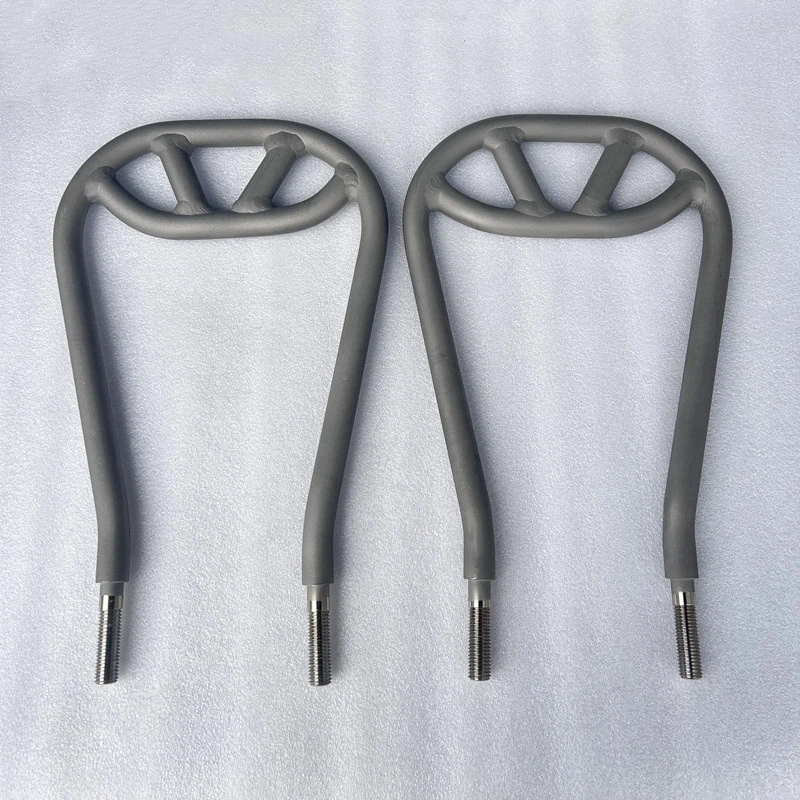
Flow Wing Case Study: Lightweight Titanium Frame Manufactured with TIG Welding
Project Background:
Titanium frames are widely used in applications where weight reduction and structural strength are equally important.
A recent titanium frame project demonstrates how precision TIG welding can be applied to create a lightweight yet durable structure.
The component was developed for applications requiring:
- High strength-to-weight ratio
- Excellent corrosion resistance
- Accurate assembly dimensions
- Clean welded appearance
This type of application highlights the value of precision titanium welding for industries requiring high-performance components.
Manufacturing Process:
The production process included multiple controlled stages:
| Manufacturing Step | Purpose |
| Material inspection | Confirm titanium quality |
| Precision machining | Achieve accurate component dimensions |
| TIG welding assembly | Create strong structural joints |
| Surface cleaning | Remove welding contamination |
| Final inspection | Verify quality requirements |
During the project, welding titanium with TIG was carefully controlled to maintain both structural integrity and visual appearance.
A combination of precision machining and TIG welding was used to achieve the final structure. This type of lightweight welded titanium application demonstrates the importance of integrating fabrication experience with welding technology.
More details about this type of titanium structure can be found in this titanium frame engineering application.

How to Choose a Reliable Titanium TIG Welding Supplier?
When selecting a supplier for welding titanium with TIG, engineers should evaluate technical experience, equipment capability, and quality control procedures.
Engineers should evaluate several key factors:
Titanium Welding Experience:
A capable supplier should understand:
- Titanium material characteristics
- TIG welding requirements
- Shielding gas control
- Welding inspection methods
Integrated Manufacturing Capability:
For complex titanium components, suppliers with additional manufacturing capabilities can provide better production control.
These capabilities may include:
- CNC machining
- Precision fabrication
- Welding fixtures
- Quality inspection
A complete manufacturing process reduces communication issues and improves consistency during production.
Quality Control System:
Professional suppliers should be able to provide:
- Material certificates
- Inspection reports
- Production records
- Traceability documentation
For companies looking for customized titanium TIG welding support, professional engineering assistance can help optimize designs before production begins. You can discuss your project requirements through our engineering contact channel.
FAQ About Titanium TIG Welding:
1. What Grade of Titanium Is Commonly Used for TIG Welding?
Grade 2 titanium and Grade 5 titanium (Ti-6Al-4V) are the most commonly welded titanium materials. Grade 2 is often used for corrosion resistance, while Grade 5 is preferred for applications requiring higher strength and durability.
2. Can Titanium TIG Welding Be Used for Thin Components?
Yes. TIG welding is suitable for thin titanium parts because it provides accurate heat control. Proper welding parameters, fixtures, and shielding protection help prevent distortion and burn-through.
3. Does Welding Titanium with TIG Require Filler Rod?
In many cases, titanium filler rods are used to improve weld strength and maintain material performance. The filler selection depends on the titanium grade and application requirements.
4. How Do You Inspect Titanium TIG Welds?
Titanium welds are commonly inspected through visual checks, dimensional inspection, and non-destructive testing methods such as dye penetrant testing to ensure weld quality and reliability.
5. Can Titanium TIG Welds Be Used in High-Temperature Applications?
Yes. Titanium TIG welded components can perform well in demanding environments when the correct titanium grade, welding process, and quality control methods are applied.
6. What Industries Use Titanium TIG Welded Parts?
Titanium TIG welded parts are widely used in aerospace, medical, automotive, marine, and industrial applications where lightweight design, corrosion resistance, and high strength are required.