Why Does Metal Stamping Matter in Automotive Manufacturing?
Modern vehicles depend on thousands of metal components, from structural reinforcements and mounting brackets to exterior trim and wheel-related parts. These components must meet demanding requirements for dimensional accuracy, mechanical performance, repeatability, and production efficiency.
This is where metal stamping for automotive applications becomes especially valuable. By using precision dies and controlled forming processes, manufacturers can produce large quantities of consistent metal parts while keeping cycle times and unit costs under control.
Automotive stamping is not simply about pressing sheet metal into a shape. Successful production requires coordinated decisions involving material selection, tooling design, forming strategy, secondary operations, and inspection.
For OEMs, Tier 1 suppliers, and automotive component manufacturers, effective metal stamping for automotive requires close coordination between product design, material selection, tooling, forming, inspection, and secondary processing.
What Is Metal Stamping for Automotive?
Metal stamping for automotive is a manufacturing method that uses presses, dies, and forming tools to convert flat metal sheets or strips into precisely shaped components.
Depending on the geometry and production requirements, metal stamping for automotive may involve several operations:
- Blanking – cutting the basic shape from sheet material
- Punching – producing holes and openings
- Bending – creating angles and formed sections
- Embossing – adding ribs, contours, or reinforcing features
- Deep drawing – forming deeper three-dimensional components
- Progressive stamping – performing multiple operations through sequential die stations
The choice of process depends on factors such as material, thickness, geometry, tolerance, production volume, and required surface quality.
For high-volume automotive production, tooling design is particularly important. A well-designed die can maintain dimensional consistency over large production runs while reducing unnecessary material waste and production interruptions.
Which Materials and Parts Are Used in Automotive Stamping?
Material selection is a critical part of metal stamping for automotive because it affects strength, weight, corrosion resistance, formability, appearance, and overall manufacturing cost.
| Material | Key Advantages | Typical Automotive Uses |
| Aluminum | Lightweight, corrosion resistant | Covers, brackets, trim |
| Stainless Steel | Corrosion resistance, durability | Brackets, trim, protective components |
| Carbon Steel | Strength and cost efficiency | Structural supports, mounting parts |
| High-Strength Steel | High strength-to-weight ratio | Reinforcement and structural parts |
The increasing demand for lightweight vehicles has also increased the use of aluminum and high-strength materials. At the same time, steel remains essential for components where strength, rigidity, and cost efficiency are priorities.
Automotive stamped parts can range from relatively simple brackets to more complex formed components. Typical metal stamping for automotive applications include:
- Mounting brackets
- Reinforcement plates
- Structural supports
- Covers and shields
- Interior metal components
- Decorative exterior components
- Wheel-related components
For manufacturers looking for examples of customized production, our metal stamping solutions provide a useful reference for different stamped metal applications.
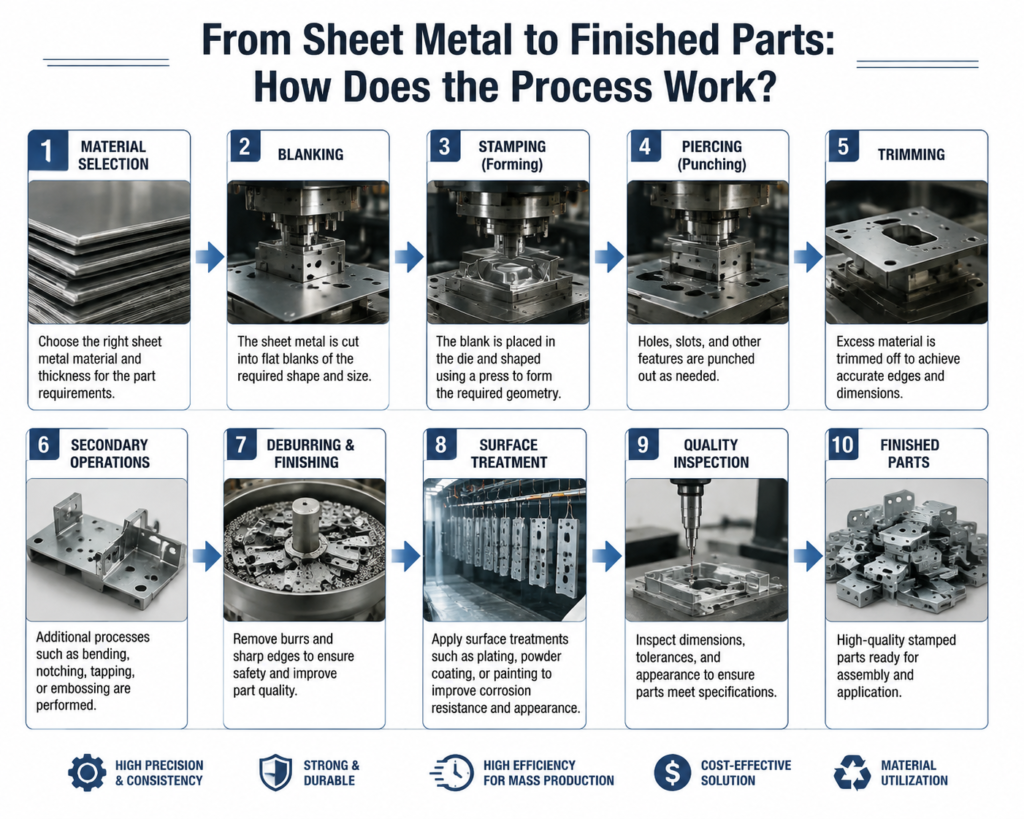
From Sheet Metal to Finished Parts: How Does the Process Work?
Successful metal stamping for automotive involves much more than placing sheet metal into a press. Every stage of the manufacturing chain can affect the final component.
What Determines the Precision and Reliability of Stamped Parts?
In automotive manufacturing, producing a part that looks correct is not enough. Dimensional consistency must be maintained from the first production batch to subsequent deliveries.
Several factors influence stamping quality.
Tooling Accuracy:
The condition and precision of the die directly affect dimensions, hole positions, forming geometry, and repeatability.
Material Consistency:
Variations in material thickness or mechanical properties can affect forming behavior and cause dimensional changes.
Springback Control:
After forming, sheet metal may partially return toward its original shape. Proper tooling compensation and process control are therefore important for maintaining the required geometry.
Process Monitoring:
Stable press parameters, correct feeding, and regular tooling inspection help prevent production variation.
Dimensional Inspection:
Critical dimensions should be checked using appropriate inspection equipment and methods. For automotive projects, inspection requirements may include drawing-based dimensional verification, surface inspection, and batch-level quality records.
A reliable metal stamping for automotive process should therefore focus on repeatability rather than simply achieving acceptable results on individual parts.
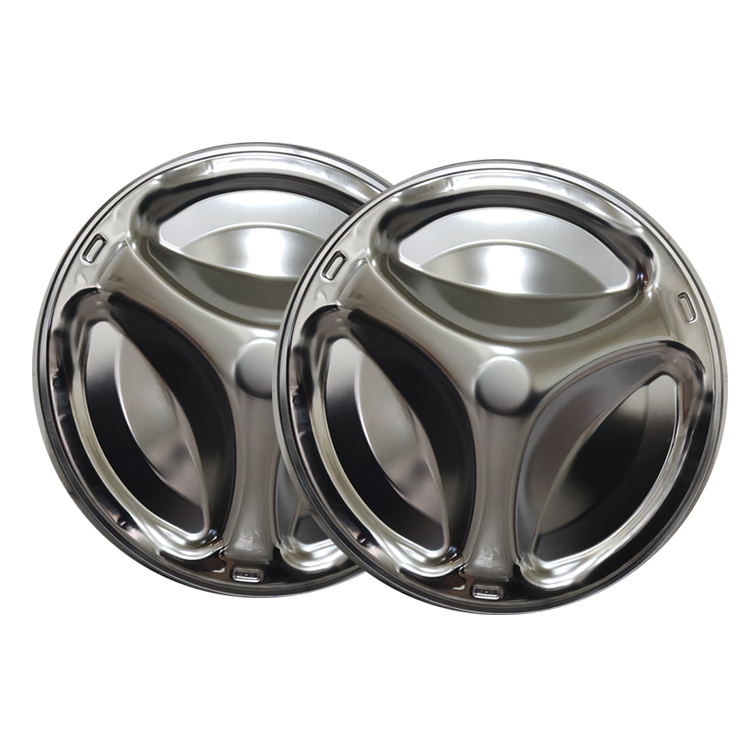
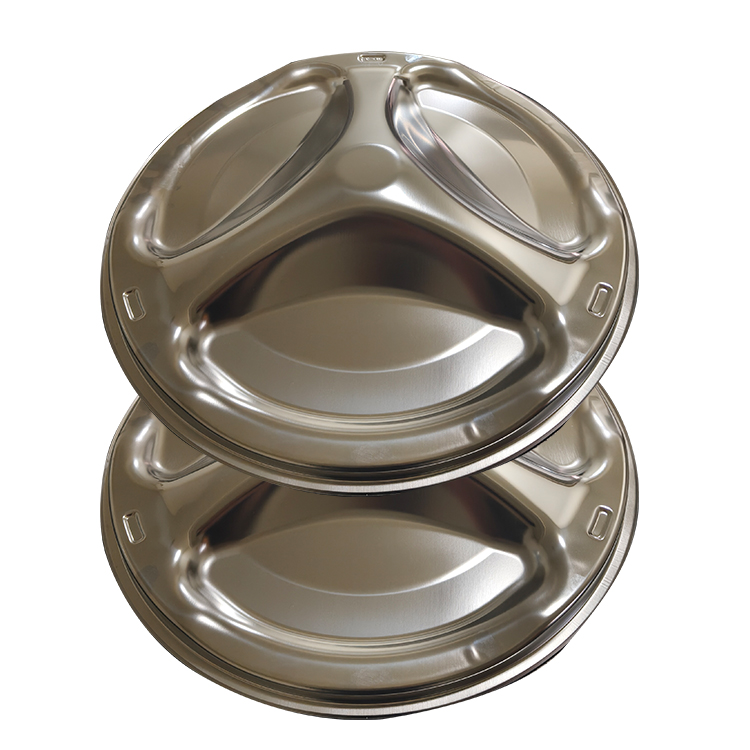
Flow Wing Case Study: Custom Automotive Hubcap Manufacturing
A useful example of how metal stamping for automotive can support both functional and aesthetic requirements is a customized hubcap application.
A hubcap must maintain a consistent circular profile while providing an appropriate appearance and reliable installation. This creates several manufacturing considerations: material selection, forming accuracy, surface quality, and dimensional consistency.
Our custom hubcap project demonstrates this type of customized metal component application.
Project Approach:
1. Component Design:
The required geometry needs to be evaluated before tooling and production. Forming features, dimensions, and installation requirements influence the die structure.
2. Sheet Metal Forming:
The selected sheet material is formed using dedicated tooling to achieve the required curved geometry. Controlled forming is essential to minimize deformation and maintain consistency.
3. Finishing:
After forming, suitable finishing operations can be applied according to the required appearance and service conditions.
4. Inspection:
The finished component can be checked for dimensional consistency, surface quality, and overall forming quality before shipment.
The case illustrates an important advantage of metal stamping for automotive: a properly engineered process can combine repeatability, appearance, and production efficiency in one manufacturing solution.
For a customized automotive component, the engineering team can review drawings, materials, quantities, and finishing requirements before recommending the appropriate production method. Customers can contact our team to discuss a specific project.
How Can Automotive Stamping Improve Cost and Production Efficiency?
The economics of metal stamping for automotive become particularly attractive as production volume increases.
Once tooling has been developed and the process is stabilized, automated or semi-automated stamping can produce large quantities of consistent components with relatively short cycle times.
Key cost factors include:
- Material utilization
- Tooling complexity
- Production volume
- Part geometry
- Secondary operations
- Inspection requirements
- Packaging and logistics
For high-volume projects, optimizing the blank layout can reduce material waste, while progressive tooling can combine several operations into a continuous production sequence.
What Are the Future Trends?
Automotive stamping is also evolving alongside the vehicle industry.
Electric vehicles are increasing demand for lightweight structural components and battery-related metal parts. At the same time, high-strength steels and aluminum alloys are becoming increasingly important for weight reduction and structural performance.
Automation is another major trend. Robotic handling, automated feeding, digital inspection, and process monitoring can improve production consistency and traceability.
As vehicle designs become more complex, the future of metal stamping for automotive will depend increasingly on the integration of engineering, tooling, automation, and quality control rather than stamping equipment alone.
FAQ:
1. Can stamped automotive parts be combined with CNC machining?
Yes. Stamping can be combined with CNC machining when a component requires additional holes, threads, tight-tolerance features, or precision-machined surfaces.
2. When should a part be reviewed for stamping manufacturability?
Ideally, manufacturability should be reviewed before tooling begins. Early evaluation can identify difficult features, reduce tooling risks, and improve production efficiency.
3. How can material waste be reduced in automotive stamping?
Optimizing the blank layout, selecting suitable sheet dimensions, and designing parts with material utilization in mind can help reduce scrap and lower material costs.
4. What information is needed for an automotive stamping quotation?
A supplier typically needs the part drawing or 3D model, material, thickness, surface treatment, estimated quantity, tolerances, and any special quality requirements.
5. Can a stamping supplier handle secondary operations?
Yes. Depending on the supplier’s capabilities, stamped parts can be followed by processes such as CNC machining, welding, deburring, tapping, surface treatment, and assembly.
6. How does production volume affect automotive stamping costs?
Higher volumes generally make stamping more cost-effective because tooling and setup costs can be distributed across more parts. The optimal process depends on geometry, tooling complexity, and annual demand.