Aluminum frames are widely used in transportation equipment, industrial machinery, automation systems, and mobility products because of their lightweight characteristics, corrosion resistance, and excellent strength-to-weight ratio. However, how to build aluminum frame involves much more than cutting aluminum materials and joining components together.
A reliable aluminum frame requires careful consideration of application requirements, material selection, structural design, fabrication processes, welding methods, and quality control. Whether manufacturing an Aluminum Tube Frame, Welded Aluminum Frame, Aluminum Machine Frame, or transportation structure, every manufacturing decision directly influences strength, durability, and long-term performance.
For engineers and procurement teams, understanding the complete aluminum frame manufacturing process helps reduce production risks and select the right fabrication partner.
Define Application Requirements Before Building an Aluminum Frame
Before starting aluminum frame manufacturing, engineers need to understand how the structure will be used. The correct design depends on operating conditions, load requirements, and expected service life.
Key factors include:
- Load capacity
- Operating environment
- Vibration and fatigue requirements
- Required dimensional accuracy
- Assembly requirements
- Weight limitations
Different applications require different structural solutions.
For example, an aluminum trailer frame must withstand continuous vibration, heavy loads, and outdoor exposure. An aluminum RV frame focuses on reducing vehicle weight while maintaining corrosion resistance and structural reliability.
An aluminum machine frame requires higher dimensional accuracy and rigidity because it supports industrial equipment and precision components.
Therefore, professional aluminum frame manufacturing begins with understanding the customer’s actual application rather than selecting materials and welding methods immediately.
Select the Right Aluminum Alloy for Frame Manufacturing
Material selection plays an important role in determining the final performance of an aluminum frame. Different aluminum alloys provide different levels of strength, corrosion resistance, and weldability.
Common aluminum alloys used for frame structures include:
| Aluminum Alloy | Characteristics | Common Applications |
|---|---|---|
| 6061-T6 Aluminum | High strength, excellent weldability, good corrosion resistance | Industrial frames, machine structures, welded assemblies |
| 6063 Aluminum | Good extrusion performance and surface finish | Aluminum profiles and tube structures |
| 7005 Aluminum | High strength and fatigue resistance | Bicycle frames and lightweight transportation structures |
Among these materials, 6061-T6 aluminum is widely used for welded structures because it provides a good balance between mechanical properties and welding performance.
However, material selection should always match the application. A lightweight mobility product and a heavy-duty industrial structure may require completely different aluminum grades, thicknesses, and designs.
Design Aluminum Frames for Strength and Manufacturing Efficiency
A common misconception is that aluminum frame design is only about reducing weight. In professional manufacturing, the goal is to achieve the right balance between strength, rigidity, weight, and production efficiency.
An aluminum structural frame needs to distribute loads effectively while maintaining dimensional stability.
Important design considerations include:
- Tube or profile selection
- Wall thickness
- Joint structure
- Stress concentration areas
- Welding accessibility
- Thermal deformation control
For an aluminum tube frame, engineers must select the appropriate tube diameter and thickness to achieve sufficient strength without unnecessary weight.
For an Aluminum Machine Frame, additional reinforcement may be required because industrial equipment creates continuous vibration and operational forces.
A well-designed structure not only improves performance but also reduces welding difficulties and production costs.

Aluminum Frame Fabrication Process From Raw Material to Finished Structure
Building an aluminum frame requires multiple manufacturing processes to ensure accuracy and consistency.
Cutting and Material Preparation
Aluminum tubes, profiles, and plates are cut according to engineering drawings.
Accurate cutting helps ensure:
- Proper component alignment
- Reduced assembly adjustment
- Better welding consistency
Poor preparation can create excessive gaps or misalignment, increasing welding difficulty and reducing final strength.
CNC Machining and Component Processing
Many custom aluminum frames require additional machining operations, including:
- CNC drilling
- Milling
- Slot machining
- Precision hole processing
These processes are especially important for industrial applications where aluminum frames must connect accurately with other mechanical components.
Fixture Setup and Assembly
Before welding, components are positioned using fixtures to maintain correct geometry.
Professional fixture design helps control:
- Frame alignment
- Welding distortion
- Final dimensional accuracy
This step is critical for large structures and precision applications.
Choosing the Right Joining Method for Aluminum Frames
Although welding is one of the most common methods for aluminum frame manufacturing, it is not the only option. The correct joining method depends on structural requirements, maintenance needs, and production conditions.
Aluminum Welding
Welding creates strong permanent joints and is widely used for:
- Welded Aluminum Frame structures
- Industrial equipment frames
- Transportation components
Advantages include:
- High structural rigidity
- Strong load-bearing capability
- Flexible custom designs
Bolted Connections
Bolted aluminum structures are often used when:
- Components require future maintenance
- Modular assembly is needed
- Replacement is important
Aluminum Extrusion Assembly
Some industrial machine frames use aluminum extrusion profiles combined with mechanical connectors instead of welding.
Advantages include:
- Fast assembly
- Easy modification
- Modular design flexibility
Professional manufacturers select the most suitable connection method based on the customer’s performance requirements rather than using a single manufacturing approach for every project.
Aluminum Frame Welding Methods and Manufacturing Challenges
Aluminum Frame Welding is one of the most critical processes in producing reliable aluminum structures.
Compared with steel welding, aluminum welding presents several technical challenges.
Aluminum Oxide Layer
Aluminum naturally forms an oxide layer on its surface. Aluminum oxide melts at approximately 2050°C, while aluminum melts at about 660°C.
This difference requires proper surface preparation and welding control to achieve stable weld penetration.
High Thermal Conductivity
Aluminum transfers heat quickly, which can affect welding performance.
High thermal conductivity requires careful control of heat input to achieve sufficient penetration while minimizing deformation.
Thermal Expansion and Distortion
Aluminum expands significantly during welding. Without proper fixture control and welding procedures, excessive distortion may affect final frame dimensions.
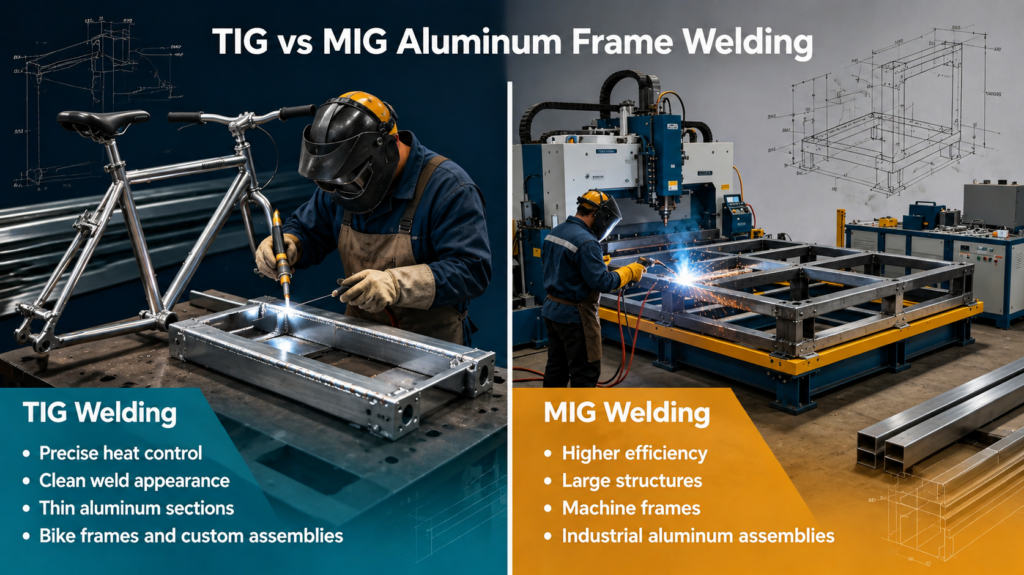
TIG Welding Aluminum Frames
TIG welding is commonly preferred for applications requiring:
- Precise heat control
- High-quality weld appearance
- Thin aluminum sections
Typical applications include:
- Aluminum Bike Frame
- Lightweight structural components
- Custom aluminum assemblies
MIG Welding Aluminum Frames
MIG welding is widely used for production applications because of its higher efficiency.
It is commonly applied to:
- Aluminum Machine Frame
- Large welded structures
- Industrial aluminum assemblies
The correct welding method depends on material thickness, production volume, appearance requirements, and structural performance.
Applications of Aluminum Frame Structures
Aluminum frames are used across multiple industries because they provide lightweight strength and corrosion resistance.
Aluminum Tube Frame
An Aluminum Tube Frame is commonly used where lightweight construction and structural rigidity are required.
Typical applications include:
- Transportation products
- Mobility equipment
- Custom industrial structures
Welded Aluminum Frame
A Welded Aluminum Frame provides a strong integrated structure for applications requiring durability and stability.
Common uses include:
- Equipment supports
- Industrial assemblies
- Custom OEM structures
Aluminum Trailer Frame and Aluminum RV Frame
Transportation manufacturers increasingly use aluminum frames because reducing weight can improve efficiency and corrosion resistance.
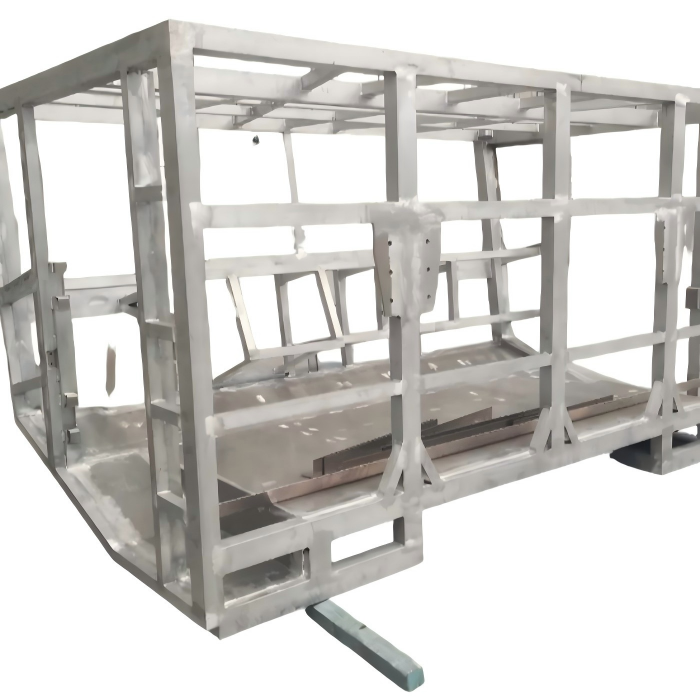
An Aluminum Trailer Frame requires:
- High load capacity
- Fatigue resistance
- Long-term outdoor durability
An Aluminum RV Frame requires:
- Lightweight construction
- Weather resistance
- Structural reliability
Depending on the design, these structures may use welded assemblies, aluminum profiles, or hybrid construction methods.
Aluminum Machine Frame
An Aluminum Machine Frame is widely used in automation equipment and industrial systems.
Typical requirements include:
- Dimensional accuracy
- Structural rigidity
- Stable assembly performance
Manufacturing may combine aluminum profiles, welded structures, and CNC-machined components.
Aluminum Bike Frame and Wheelchair Frames
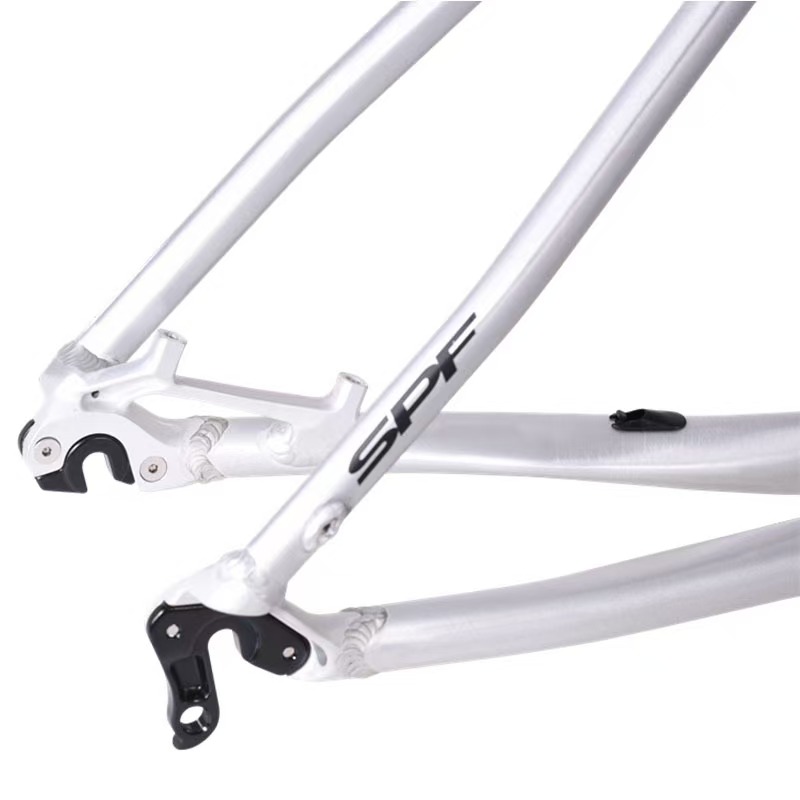
An Aluminum Bike Frame requires precise geometry, fatigue resistance, and reliable weld quality.
Professional manufacturers carefully control welding parameters because poor weld quality can affect long-term durability.
Wheelchair Frames also require a balance between lightweight design and structural strength. Aluminum is commonly selected because it provides mobility advantages while maintaining corrosion resistance.
Quality Control in Aluminum Frame Manufacturing
For industrial buyers, manufacturing capability alone is not enough. Reliable quality control is essential for consistent aluminum frame performance.
Common inspection methods include:
Visual Weld Inspection
Used to identify:
- Surface defects
- Cracks
- Poor weld appearance
- Incomplete fusion
Dimensional Inspection
Ensures:
- Frame geometry accuracy
- Proper assembly compatibility
- Consistent production quality
Welding Process Control
Professional manufacturers manage:
- Welding procedures
- Welder qualifications
- Production parameters
- Inspection records
Following recognized welding practices from organizations such as the American Welding Society helps improve welding consistency and quality management.
Factors Affecting Aluminum Frame Manufacturing Cost
The cost of an aluminum frame depends on multiple factors, including:
- Aluminum alloy selection
- Material thickness
- Structural complexity
- Welding requirements
- CNC machining requirements
- Surface treatment
- Inspection requirements
- Production quantity
For example, a simple aluminum tube structure may require only cutting and welding, while a precision Aluminum Machine Frame may require machining, fixtures, and strict dimensional inspection.
Understanding these factors allows buyers to evaluate quotations more accurately.
How to Choose the Right Aluminum Frame Manufacturer
Selecting an aluminum frame supplier requires evaluating more than price.
A reliable manufacturing partner should provide:
- Aluminum welding experience
- Engineering support
- CNC machining capability
- Prototype and small-batch production support
- Quality inspection procedures
- Stable production consistency
For companies requiring custom aluminum structures, choosing a supplier with both aluminum fabrication and welding expertise can reduce communication issues, production risks, and quality problems.
Conclusion
Understanding how to build aluminum frame requires knowledge of materials, structural design, fabrication processes, welding methods, and quality control.
From Aluminum Tube Frame and Welded Aluminum Frame to Aluminum Trailer Frame, Aluminum RV Frame, Aluminum Machine Frame, Aluminum Bike Frame, and Wheelchair Frames, each application requires different engineering considerations.
A professional aluminum fabrication partner helps companies achieve stronger structures, consistent quality, and reliable production performance while reducing manufacturing risks.