MIG vs. TIG Welding for Bicycle Frame Manufacturing: What’s the Difference?
When it comes to bicycle frame welding, two methods dominate the industry: MIG (Metal Inert Gas) and TIG (Tungsten Inert Gas). Understanding the differences between these two bicycle frame welding techniques is essential for choosing the right approach for your project.
TIG Welding for Bicycle Frames: TIG welding is widely considered the gold standard for bicycle frame welding. This method uses a non-consumable tungsten electrode and a separate filler rod, allowing for precise control over heat input and weld placement. TIG welding produces clean, strong, and aesthetically pleasing welds with minimal spatter. The characteristic “stack of dimes” appearance of a TIG weld is highly prized in custom bicycle frame welding. However, TIG welding requires more skill and practice than MIG, making it better suited for experienced welders and high-end custom frame building.
MIG Welding for Bicycle Frames: MIG welding is a faster and more forgiving process, making it a popular choice for production environments and beginners. MIG welding uses a continuous wire feed that acts as both the electrode and filler material. This makes MIG welding more efficient for high-volume bicycle frame welding projects. While MIG welding produces slightly less refined welds than TIG, modern MIG machines with pulse capabilities can achieve excellent results on thin-wall tubing.
Key Differences in Bicycle Frame Welding: TIG Welding delivers superior, precise weld quality but operates at a slower pace. It demands advanced operator skills and involves higher equipment costs, making it ideal for custom and high-end frame manufacturing. MIG Welding produces good yet slightly less refined welds at a faster speed. It requires only moderate operator skill and carries lower equipment costs, which suits mass production and series frame fabrication.

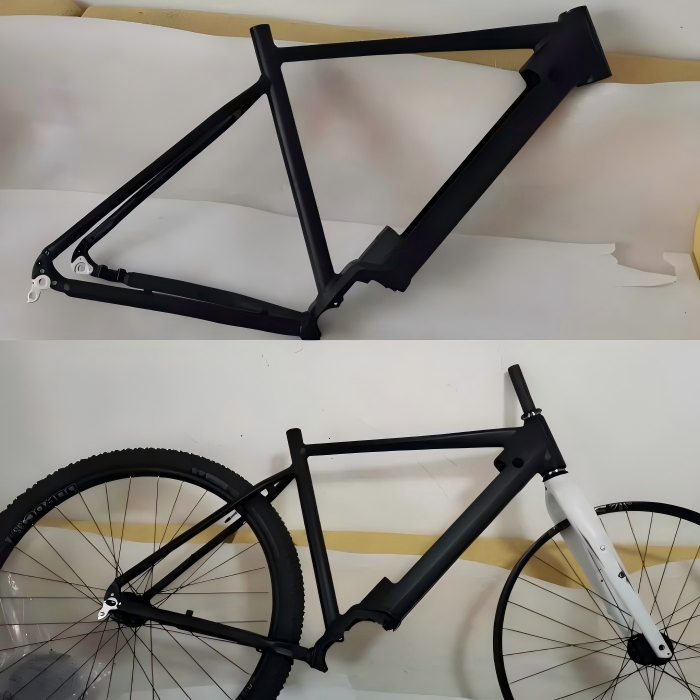
Choosing the Best Process for Bicycle Frame Welding:
Choosing the best bicycle frame welding process depends on a range of factors. For custom, one-off builds where aesthetics and craftsmanship are paramount, TIG welding stands out as the clear frontrunner. Its precision heat control is especially valuable when working with thin-wall tubing and heat-sensitive materials like aluminum and titanium.
In contrast, for high-volume production settings where speed and throughput matter most, MIG welding offers distinct benefits. Modern MIG setups can deliver consistent, reliable results on steel frames while supporting significantly faster production cycles.
That said, for the majority of custom bicycle frame welding applications, TIG welding remains the preferred choice. The combination of superior weld quality, clean visual finish, and fine-tuned control more than justifies the extra skill and time required.
Recommended Robotic Welding Systems for Frame Fabrication:
Robotic welding has become increasingly prevalent in high-volume bicycle frame welding production, and several automated systems have proven particularly effective for this application:
- Fanuc Arc Mate Series: These robotic welding systems deliver exceptional precision for bicycle frame welding, with multiple models engineered to handle complex frame geometries with ease.
- ABB IRB Series: Offering flexible programming capabilities, ABB’s robotic welding solutions are well-suited for bicycle frame welding across both steel and aluminum frame production lines.
- KUKA KR Series: Renowned for their durability and dependability, KUKA robotic welding systems ensure consistent, repeatable outcomes in high-volume bicycle frame welding operations.
- Panasonic TAWERS Systems: Specifically designed for thin-wall tubing applications, these robotic welding systems are particularly adept at bicycle frame welding, where heat input and precision are critical.
- Yaskawa Motoman: This brand provides cost-effective robotic welding solutions for bicycle frame welding, making it an attractive option for small to medium production runs.
When choosing a robotic welding system for bicycle frame welding, key considerations should include repeatability accuracy, programming intuitiveness, compatibility with existing production equipment, and the specific demands of your frame materials and tube geometries.
Cost Estimation for Welding Equipment on Small Frame Projects:
Understanding the cost of welding equipment is essential for planning a small bicycle frame project. Here is a breakdown of typical costs:
Entry-Level TIG Welder: $500–$1,200. Suitable for hobbyist work with steel and light aluminum.
Mid-Range TIG Welder: $1,500–$3,000. Offers AC/DC capability for aluminum frames and better duty cycles.
Professional TIG Welder: $3,500–$6,000+. Professional-grade machines are ideal for serious custom frame builds.
MIG Welder for Frames: $400–$1,500. Suitable for steel frames in a production or beginner setting.
Essential Accessories: Expect to spend an additional $300–$800 for a welding helmet, gloves, filler rods, gas cylinder, regulators, and tungsten electrodes.
Total Estimated Cost for a Basic Setup: $800–$2,500. For a complete professional setup, including a quality TIG welder and all accessories, budget $3,000–$6,000.
For small frame projects, consider renting equipment or using maker spaces to reduce upfront costs.
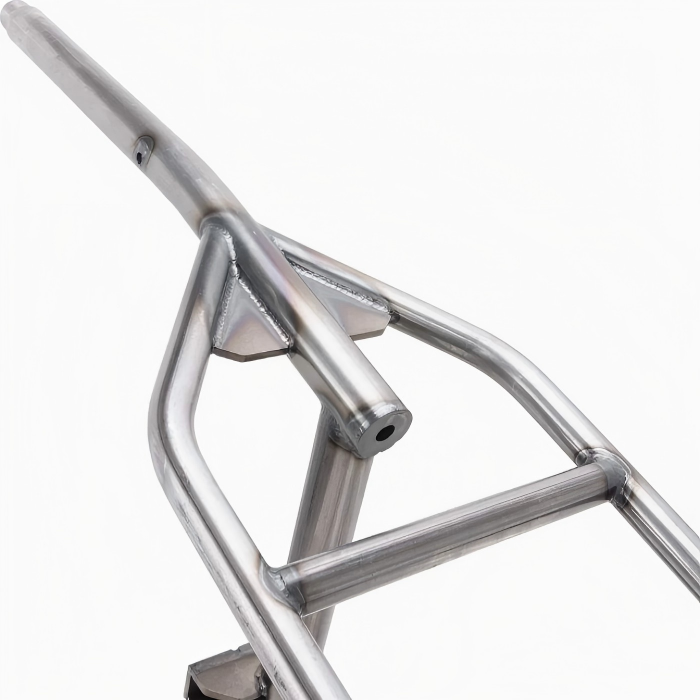
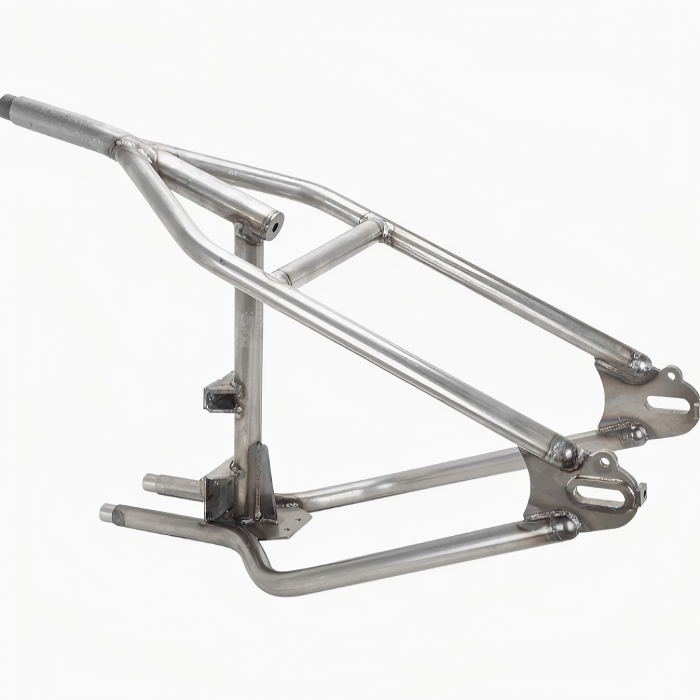
Aluminum Bike Frame Welding: Tips and Precautions
Aluminum bicycle frame welding requires special attention due to the material’s unique properties. Here are essential tips for successful aluminum bicycle frame welding:
Surface Preparation: Aluminum forms a tough oxide layer with a melting point higher than the base metal. Proper cleaning with a stainless steel wire brush and solvent is crucial before beginning aluminum bicycle frame welding.
AC TIG Welding: Aluminum bicycle frame welding requires AC (Alternating Current) TIG welding to break through the oxide layer. Ensure your TIG welder has AC capability before attempting aluminum bicycle frame welding.
Filler Rod Selection: For 6061 aluminum frames, use 4043 or 5356 filler rods. The choice depends on your specific aluminum bicycle frame welding requirements.
Heat Control: Aluminum conducts heat rapidly, requiring higher amperage but careful management to prevent burn-through during aluminum bicycle frame welding.
Preheating: For thicker aluminum sections, preheating can reduce thermal stress during aluminum bicycle frame welding, though most thin-wall tubes do not require it.
Shielding Gas: Use 100% argon for aluminum bicycle frame welding to ensure proper arc stability and weld quality.
Common Aluminum Bicycle Frame Welding Mistakes to Avoid:
- Insufficient cleaning leading to porosity
- Incorrect AC balance settings
- Traveling too slowly and overheating
- Using incorrect filler rod diameter
How to Prevent Common Bicycle Frame Welding Defects:
Even experienced welders encounter defects during bicycle frame welding. Here are the most common issues and how to prevent them:
Porosity: Small holes in the weld caused by gas entrapment. Prevention: ensure thorough cleaning of the joint area and verify proper gas flow during the welding process.
Lack of Fusion: When the weld metal does not fully bond with the base metal. Prevention: maintain proper heat input and travel speed. Ensure tight joint fit-up before starting.
Undercutting: Grooves melted into the base metal along the weld edges. Prevention: reduce amperage or increase travel speed. Maintain correct torch angle and filler rod technique.
Distortion and Warping: Frame components shifting due to heat stress. Prevention: use proper jigs and clamps. Weld in balanced sequences and manage heat input carefully.
Cracking: Cracks in the weld or heat-affected zone. Prevention: proper preheating and post-weld heat treatment where required. Use appropriate filler metal and manage cooling rates.
Sugaring (Oxidation): Dark, grainy appearance on the back of stainless steel welds. Prevention: ensure adequate shielding gas coverage and consider using backing gas (argon purging) for stainless steel frames.
Common Welding Equipment Used in the Frame Welding Industry:
Achieving consistent, high-quality welds in bicycle frame fabrication requires specialized equipment tailored to the demands of both custom and production environments. Below are the most widely used tools and systems in the industry:
Gas Lenses:
Gas lenses enhance shielding gas coverage, which is particularly important when working with thin-wall tubing, where even minor inconsistencies can compromise weld quality.
TIG Welding Machines:
TIG welding is the go-to process for custom frame builders, offering superior control and clean, precise welds. Inverter-based TIG machines are especially favored for their energy efficiency and versatility across different tubing materials.
MIG Welding Machines:
In higher-volume production settings, MIG welding delivers the speed and efficiency needed to meet output targets. Advanced pulse MIG systems can achieve weld quality approaching that of TIG, making them suitable for many frame applications.
Positioners and Turntables:
These rotating fixtures enable welders to maintain optimal torch positioning and consistent angles throughout the welding process, reducing operator fatigue and improving weld uniformity.
Tube Mitering Equipment:
Precision notching tools are essential for creating accurate tube-to-tube intersections, ensuring tight fit-ups that are critical to frame integrity.
Alignment Jigs and Fixtures:
These are indispensable for preserving proper frame geometry during both assembly and welding, helping to prevent distortion and misalignment.
Welding Torches:
For extended welding sessions—common in complex, multi-tube frame builds—water-cooled torches are preferred for their superior heat management and operator comfort.
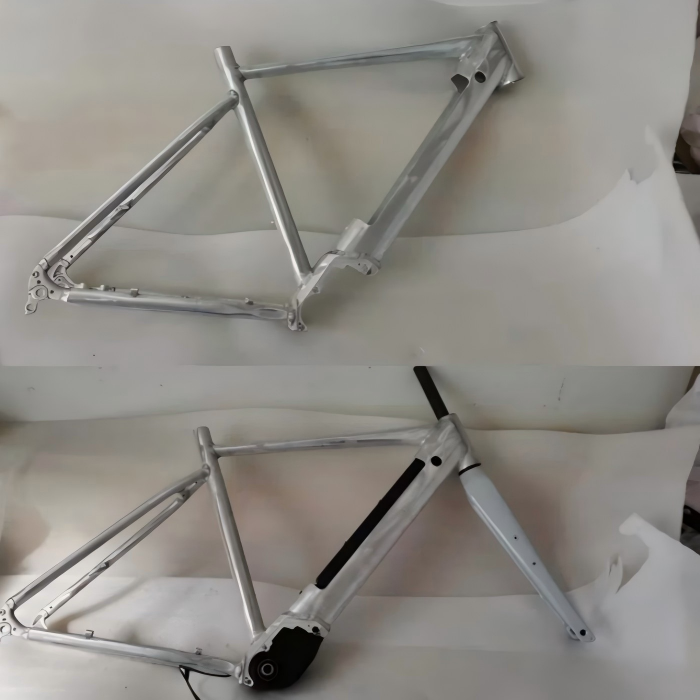
Conclusion:
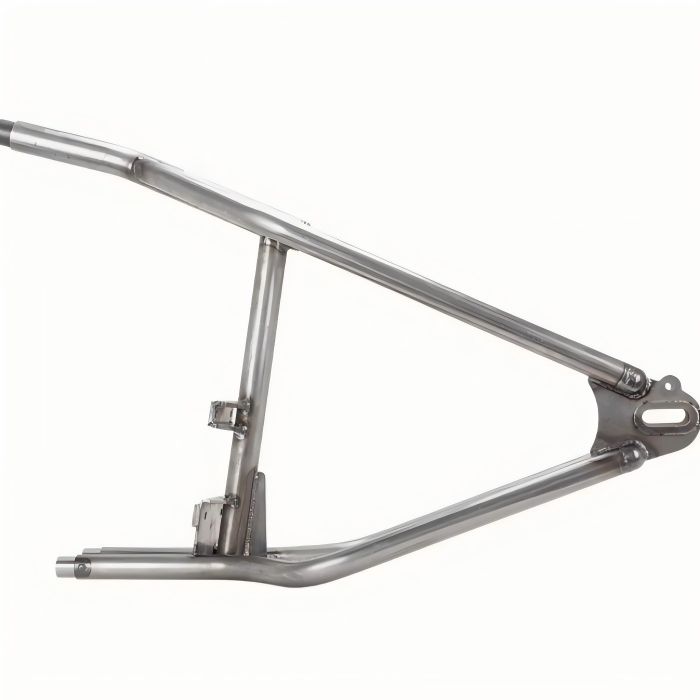
Bicycle frame welding is a sophisticated process that combines technical knowledge with hands-on craftsmanship. Whether you choose TIG or MIG welding, work with steel or aluminum, build one frame or a production run, understanding the fundamentals of bicycle frame welding is essential for success. From selecting the right equipment and materials to preventing common defects and finding professional services, every aspect of bicycle frame welding requires attention to detail and a commitment to quality.
With proper equipment, careful preparation, and consistent technique, you can achieve bicycle frame welding results that are both functional and beautiful. Whether you are building your first custom frame or expanding a production facility, the knowledge in this guide will help you make informed decisions about your bicycle frame welding journey.