Sheet metal welding parts are fundamental components across countless industries, from automotive manufacturing and aerospace engineering to construction, electronics, and household appliances. These thin, flat metal pieces—typically ranging from 0.5 mm to 6 mm in thickness—require specialized welding approaches to achieve strong, durable, and aesthetically pleasing joints. Unlike heavy structural steel welding, working with sheet metal welding parts demands precision, heat control, and a deep understanding of how different metals behave under thermal stress.
The versatility of sheet metal welding parts makes them indispensable in modern manufacturing. Whether you are a professional fabricator producing sheet metal welding parts for industrial equipment, an engineer designing new products that rely on sheet metal welding parts for structural integrity, or a hobbyist setting up a workshop, mastering the fabrication of sheet metal welding parts is essential for producing high-quality work that stands the test of time.
From automotive body panels to electronic enclosures, sheet metal welding parts are everywhere. Their ability to be formed, joined, and finished into complex shapes makes sheet metal welding parts a preferred choice for designers and manufacturers alike. By investing in proper techniques for sheet metal welding parts, you can achieve consistent results across production runs, minimize rework, and extend the service life of your finished assemblies.
What Type of Weld Is Suitable for Sheet Metal?
When dealing with sheet metal welding parts, selecting the correct weld type is perhaps the most critical decision you will make. The thin nature of the material means that excessive heat can easily cause warping, burn-through, or distortion. Therefore, the most suitable weld types are those that allow for controlled heat input and localized fusion.
Butt welds are commonly used for joining two pieces of sheet metal edge-to-edge on the same plane. This type is ideal when you need a flush surface, such as in automotive body panels or appliance casings. However, butt welds on thin sheet metal require meticulous edge preparation and often benefit from a backing bar to prevent melt-through.
Lap welds involve overlapping two pieces of sheet metal and welding along the joint. This is a forgiving option for sheet metal welding parts because it provides a larger surface area for the weld pool, reducing the risk of burning through. Lap joints are frequently used in HVAC ductwork and sheet metal enclosures.
T-joints and corner joints are also prevalent, especially in framing and box constructions. For these, a fillet weld is typically applied. On very thin gauges, a series of intermittent tack welds or stitch welds—rather than a continuous bead—is often more suitable. This approach minimizes heat buildup and distortion while still providing adequate structural integrity.
Ultimately, the most suitable weld for sheet metal is one that matches the material thickness, the alloy type, and the service requirements of the final part. For most general applications, a continuous butt weld on thicker sheets (above 1.5 mm) and intermittent fillet or lap welds on thinner materials are the gold standards. Pulse welding techniques, which alternate between high and low current, are also highly suitable as they reduce heat input while maintaining penetration.
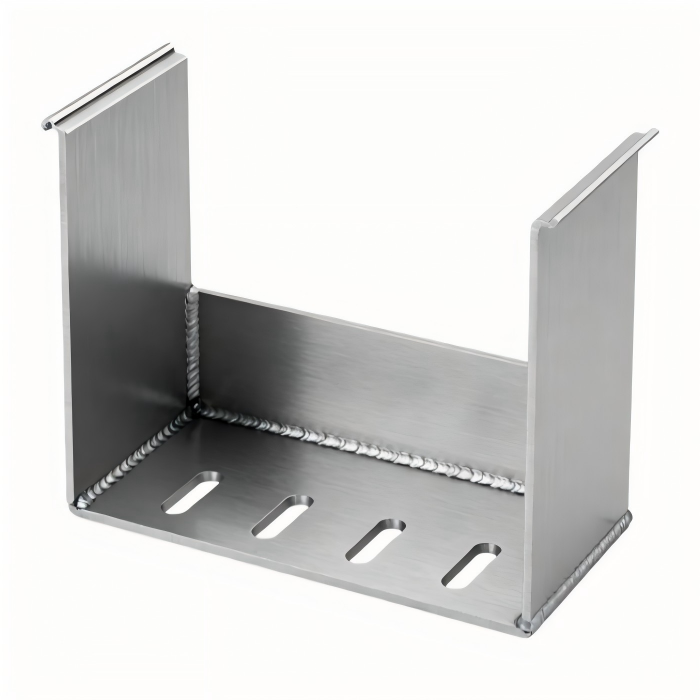
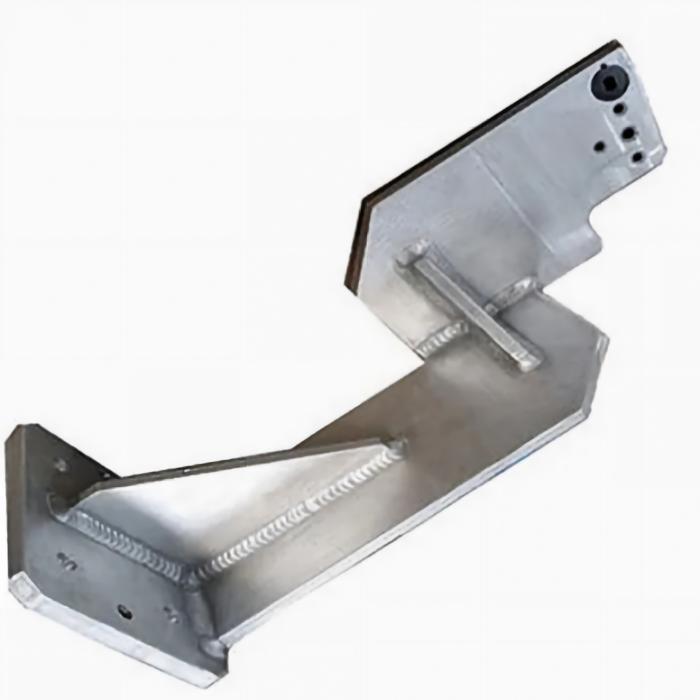
Is TIG or MIG Welding Better for Sheet Metal?
This is one of the most debated questions among fabricators working with sheet metal welding parts. Both TIG (Tungsten Inert Gas) and MIG (Metal Inert Gas) welding have their advocates, but the “better” choice depends entirely on your specific project requirements, material type, and desired finish.
TIG welding is often considered the superior choice for thin sheet metal—especially aluminum, stainless steel, and copper alloys. The primary advantage of TIG is the exceptional level of control it offers. The welder uses a non-consumable tungsten electrode and manually feeds filler rod into the weld pool, allowing precise regulation of heat and filler addition. This precision results in clean, spatter-free welds with minimal distortion—crucial for visible sheet metal welding parts in architectural or automotive applications. TIG also excels at welding dissimilar metals and thin gauges down to 0.5 mm without burn-through. However, TIG is slower, requires a higher skill level, and is less forgiving on dirty or oily surfaces.
MIG welding, on the other hand, uses a continuously fed consumable wire electrode and is generally faster and more economical for production environments. For sheet metal welding parts that are moderately thick (1.5 mm to 6 mm), MIG welding offers excellent penetration and high deposition rates. Modern MIG welders with pulse functionality can handle thinner materials with reduced spatter. MIG is more tolerant of minor surface contaminants and is easier to learn, making it a popular choice for general fabrication shops. However, standard MIG can produce more spatter and heat, increasing the risk of warping on very thin sheets.
So, which is better? For intricate, cosmetic, or ultra-thin sheet metal work, TIG is unequivocally superior. For high-volume production of thicker sheet metal parts where speed matters more than perfect aesthetics, MIG is often the better choice. Many professional fabricators keep both processes available, using TIG for critical or delicate jobs and MIG for larger assemblies and structural components.
What’s the Most Effective Way to Weld Sheet Metal?
Effectiveness in welding sheet metal welding parts goes beyond just choosing the right process—it encompasses a holistic approach to preparation, technique, and post-weld treatment. The most effective way to weld sheet metal is a systematic method that prioritizes heat management and joint fit-up.
1. Thorough Cleaning and Preparation: The most effective weld begins with a clean surface. Remove all oils, paints, rust, and oxides using acetone, a wire brush, or a grinder. Contaminants cause porosity, weak welds, and excessive spatter. For aluminum sheet metal, removing the oxide layer with a stainless-steel brush dedicated only to aluminum is critical.
2. Proper Joint Fit-Up: Sheet metal welding parts demand tight, consistent gaps. Ideally, the gap should be less than the material thickness. Use clamps, magnets, or fixturing to hold pieces firmly. Poor fit-up forces you to use more heat and filler metal, increasing distortion risk.
3. Heat Control and Technique: The single most effective technique is to weld in short bursts or use a skip-welding pattern. Instead of running a long, continuous bead, weld 10–25 mm segments, then move to a different area of the part to allow the previous weld to cool. This “back-stepping” or “stitch welding” method evenly distributes heat and minimizes warping. For TIG, using a foot pedal or torch-mounted amperage control allows real-time heat adjustment. For MIG, using pulsed spray transfer or short-circuit transfer modes (with lower voltage and wire speed) is highly effective for thin materials.
4. Use Appropriate Filler Metal: Match the filler metal to the base material. For instance, use ER70S-6 for mild steel, ER4043 or ER5356 for aluminum, and ER308L for stainless steel. The wrong filler can lead to cracking or poor corrosion resistance.
5. Post-Weld Stress Relief: After welding, allow the part to cool slowly or use gentle peening (striking the weld with a hammer) to relieve residual stresses. For critical sheet metal welding parts, annealing or stress-relief heat treatment may be warranted.
Ultimately, the most effective way combines preparation, low-heat input, intermittent welding, and the correct consumables. Practice on scrap pieces of the same thickness before welding the final part, and always prioritize preventing distortion over welding speed.
What Type of Welder Do You Need for Sheet Metal?
Choosing the right welding machine for sheet metal welding parts is a strategic decision that influences quality, productivity, and cost. Not every welder is suitable for thin materials, and using the wrong machine can lead to frustration and ruined parts.
For TIG Welding: You need a TIG welder with DC (Direct Current) capability for steel, stainless, and titanium, and AC (Alternating Current) capability for aluminum and magnesium. The machine should offer pulse functionality—this allows you to set a background current and a peak current, which dramatically reduces heat input on thin sheets. Look for a machine with a high-frequency start (to avoid tungsten contamination) and a foot pedal or fingertip amperage control. For sheet metal up to 3 mm thick, a 150–200 amp TIG welder is generally sufficient. Water-cooled torches are beneficial for extended welding sessions, but air-cooled torches work fine for hobby and light production.
For MIG Welding: A MIG welder with short-circuit transfer capability is essential for thin sheet metal welding parts. This transfer mode creates a low-heat, shallow-penetration arc that is ideal for materials under 1.5 mm. For thicker sheets (up to 6 mm), pulsed spray transfer is highly recommended—it reduces spatter and gives a smoother weld appearance. The machine should have a minimum amperage control down to 30–40 amps for thin steel or aluminum. A 180–200 amp MIG unit is versatile for most sheet metal work. Additionally, ensure the machine can handle 0.8 mm or 0.9 mm wire diameter for steel, and 1.0 mm for aluminum—smaller wires require less current and are easier to control.
Multi-Process Welders: For maximum flexibility, consider a multi-process machine that offers both TIG and MIG (and sometimes Stick). These are cost-effective for small shops and allow you to switch processes without buying separate equipment.
Additional Considerations:
- Duty cycle – For occasional work, a 20–30% duty cycle at 150 amps is acceptable. For production, aim for 60% or higher.
- Gas supply – Always use 100% argon for TIG, and a mix of argon/CO2 (e.g., 75/25 for steel) or argon/helium for MIG.
- Torch/consumables – Invest in a small, lightweight torch for TIG and a gooseneck MIG gun for better maneuverability around sheet metal parts.
In summary, a pulsed DC TIG welder (150A) plus a pulse-capable MIG welder (180A) is the dream combination. If forced to choose one for general sheet metal welding parts, a quality inverter-based TIG welder with AC/DC capability offers the greatest versatility and control.
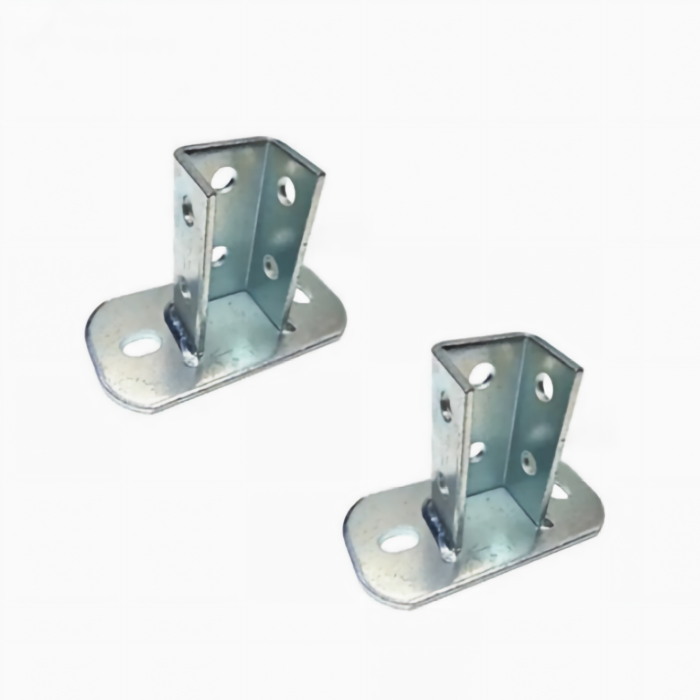
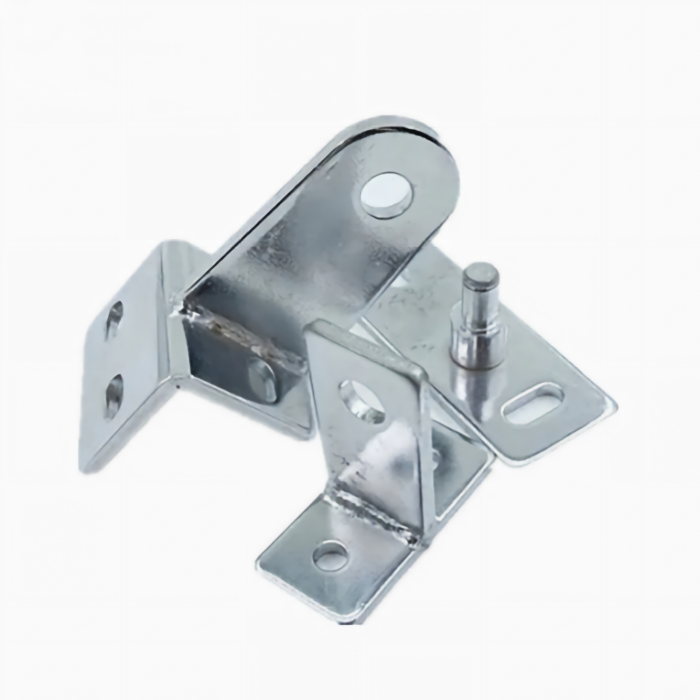
What Are the 7 Basic Types of Welding?
Understanding the broader landscape of welding processes helps contextualize the techniques used for sheet metal welding parts. The seven basic types of welding, as generally recognized by industry standards, are:
1. Shielded Metal Arc Welding (SMAW) – Stick Welding: This is the most traditional and widely used process, employing a consumable electrode coated in flux. The flux decomposes to produce a shielding gas and slag. While SMAW is excellent for heavy structural steel, it is rarely used on thin sheet metal welding parts due to the high heat, deep penetration, and large electrode size, which easily burn through thin sections.
2. Gas Metal Arc Welding (GMAW) – MIG Welding: As discussed, this process uses a continuously fed solid wire and an external shielding gas (argon/CO2). It is highly productive and one of the primary methods for sheet metal, especially on steel and aluminum of moderate thickness. Variants include short-circuit, globular, spray, and pulse transfer.
3. Gas Tungsten Arc Welding (GTAW) – TIG Welding: This uses a non-consumable tungsten electrode and a separate filler rod. The arc is shielded by inert gas (argon or helium). TIG is the gold standard for precision sheet metal welding parts, offering unmatched control and clean, spatter-free welds on thin and exotic materials.
4. Flux-Cored Arc Welding (FCAW): Similar to MIG, but uses a tubular wire filled with flux. It can be self-shielded (no external gas) or gas-shielded. FCAW offers high deposition rates and good penetration, but it produces more spatter and smoke. It is not typically recommended for thin sheet metal due to excessive heat and slag cleanup requirements, though gas-shielded versions can be used on thicker sheets above 3 mm.
5. Submerged Arc Welding (SAW): In this process, the arc is submerged under a granular flux blanket. It is a high-productivity, mechanized method used for thick, long seams—common in shipbuilding and pipe manufacturing. SAW is completely unsuitable for sheet metal welding parts due to the immense heat and lack of manual control.
6. Resistance Welding (RW): This encompasses spot welding, seam welding, and projection welding. Instead of using an arc, resistance welding uses electrical current and pressure to join metals at specific points. Spot welding is extremely common for sheet metal assemblies (e.g., automotive body panels) because it is fast, clean, and causes minimal distortion. While not an arc welding process, it is undeniably a fundamental welding type for thin materials.
7. Laser Beam Welding (LBW) and Electron Beam Welding (EBW): These high-energy-density processes use focused beams to melt and fuse metal. They are highly precise, produce narrow heat-affected zones, and are ideal for thin sheet metal welding parts in high-tech industries like medical devices and electronics. However, the equipment is expensive and typically automated, making them less accessible for general fabrication.
Among these seven, TIG, MIG, and Resistance Welding are the most relevant and practical for everyday sheet metal work. While Stick and FCAW are important in heavy fabrication, they are rarely the first choice for thin gauges.
Practical Tips for Successful Sheet Metal Welding Parts:
To wrap up this comprehensive guide, here are some additional practical tips that can make a significant difference in the quality of your sheet metal welding parts:
- Use a copper backing bar: Placing a thick copper plate behind the weld joint acts as a heat sink, absorbing excess heat and preventing burn-through. Copper also doesn’t stick to steel, making cleanup easy.
- Reduce travel speed: Moving too quickly creates a narrow, convex bead with poor penetration. Move at a steady pace, watching the weld pool wet out to the edges of the joint.
- Adjust gas flow: For TIG, 10–15 CFH (cubic feet per hour) of argon is standard. For MIG, 15–25 CFH is typical. Too much gas can create turbulence, drawing in air and causing porosity.
- Use smaller wire and electrode diameters: For MIG, use 0.8 mm wire; for TIG, use 1.6 mm or 2.4 mm tungsten. Smaller diameters require less amperage, which is easier on sheet metal.
- Clamp strategically: Use as many clamps as possible to hold the parts rigidly. However, avoid clamping so tightly that you restrict natural expansion, which can cause buckling.
- Practice on scrap: Before committing to the final piece, replicate the joint on scrap of the exact same thickness and material. Adjust your settings until you achieve a clean, flat weld with good penetration on the backside.
- Consider the direction of heat flow: When welding a long seam, start at the most rigid part of the assembly and weld toward the free edge. This allows the metal to expand and contract with less distortion.
- For aluminum, preheat moderately: Aluminum conducts heat rapidly. Preheating to 150–200°F (65–95°C) can help achieve better fusion, but be careful not to overheat, which can cause grain growth and softening.