For OEM manufacturers, reducing the cost of CNC Machined Parts is not simply about selecting the lowest quotation. A cheaper supplier may reduce the initial purchase price, but hidden costs caused by poor quality, unstable delivery, repeated adjustments, or production delays can increase the total manufacturing cost.
For engineers and purchasing teams, the real challenge is finding the right balance between cost, precision, reliability, and production efficiency. Optimizing CNC Machined Parts costs requires a combination of better part design, suitable machining strategies, reasonable tolerance requirements, and effective supplier cooperation.
A successful cost optimization strategy does not focus on making parts cheaper. It focuses on making the entire manufacturing process more efficient while maintaining the performance required for the final application.
Why Reducing CNC Machined Parts Costs Is More Than Finding a Lower Price
Understanding Total Manufacturing Cost
When purchasing CNC Machined Parts, many buyers initially compare unit prices between different suppliers. However, the lowest price does not always represent the lowest overall cost.
A CNC component with a lower quotation may create additional expenses if it causes:
- Assembly problems
- Dimensional inconsistencies
- Rework requirements
- Production interruptions
- Delayed product delivery
For example, a precision mechanical component used in industrial equipment may require additional adjustments if machining accuracy is inconsistent. The cost of downtime and engineering changes can exceed the original price difference.
Therefore, manufacturers should evaluate the total manufacturing value, including:
- Part quality stability
- Supplier communication efficiency
- Production flexibility
- Engineering support
- Delivery reliability
The goal is not to find the cheapest CNC Machined Parts supplier, but to find a manufacturing partner who can reduce unnecessary costs throughout the product lifecycle.
Key Factors That Influence CNC Machined Parts Costs
Material Selection Based on Application Requirements
Material selection directly affects CNC machining cost because different materials require different machining methods, cutting speeds, tooling conditions, and production time.
For example:
- Aluminum is widely used when lightweight design and good machinability are important.
- Stainless steel is selected when corrosion resistance and durability are required.
- Alloy steels may be preferred for components exposed to high mechanical stress.
Choosing a material with higher performance than necessary can increase manufacturing costs without providing additional value.
Engineers should consider:
- Required strength
- Operating environment
- Weight requirements
- Surface treatment needs
- Expected service life
A proper material selection strategy helps manufacturers avoid unnecessary expenses while maintaining product performance.
Design for Manufacturing (DFM) and Part Optimization
One of the most effective ways to reduce CNC Machined Parts costs starts before production begins.
Design decisions influence:
- Machining time
- Tool selection
- Setup complexity
- Production efficiency
A part with unnecessary complexity may require additional machining operations, special tooling, or multiple setups.
Common design factors that increase CNC costs include:
- Excessively tight tolerances
- Deep internal pockets
- Difficult-to-machine features
- Unnecessary complex surfaces
- Non-standard dimensions
Through Design for Manufacturing (DFM), engineers and suppliers can review drawings together and identify possible improvements.
For example:
A component may maintain the same function while reducing machining difficulty through:
- Simplifying geometry
- Adjusting non-critical tolerances
- Using standard tooling
- Improving workholding methods
This approach reduces cost without affecting the final performance of the component.
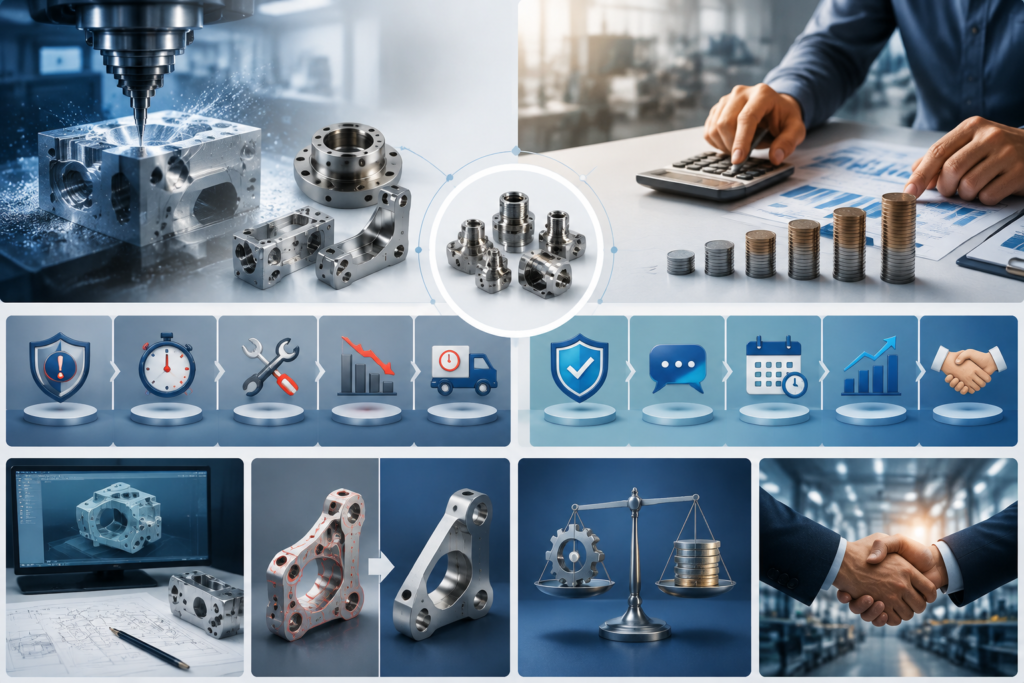
Machining Strategy, Setup Time, and Production Efficiency
CNC machining costs are not only determined by cutting time. Setup time is also a major factor, especially for prototypes and small-batch production.
Setup operations may include:
- Machine preparation
- Fixture installation
- Tool selection
- Program adjustment
- First-piece inspection
A supplier with strong process planning can reduce unnecessary setup time and improve production efficiency.
The machining strategy also affects cost.
For example:
A simple component may be efficiently produced through 3-axis CNC milling, while more complex parts may require multi-axis machining.
The correct process selection depends on:
- Part geometry
- Production quantity
- Accuracy requirements
- Functional requirements
The objective is to select the most suitable manufacturing method rather than automatically choosing the most advanced process.
Tolerance Requirements and Quality Control
Precision is one of the key advantages of CNC Machined Parts, but excessive tolerance requirements can increase manufacturing costs.
Not every dimension requires the same level of accuracy.
Engineers should distinguish between:
- Critical assembly dimensions
- Functional surfaces
- Appearance-related features
- Non-critical dimensions
For example, a mounting surface that affects mechanical alignment may require strict tolerance control, while an external cosmetic surface may not require the same level of precision.
A practical tolerance strategy helps manufacturers achieve reliable performance while avoiding unnecessary machining costs.
How CNC Machined Parts Support Different Manufacturing Applications
CNC machining is widely used in industries where accuracy, repeatability, and mechanical performance are important. Different applications require different manufacturing considerations.
Supporting High-Load Mechanical Systems
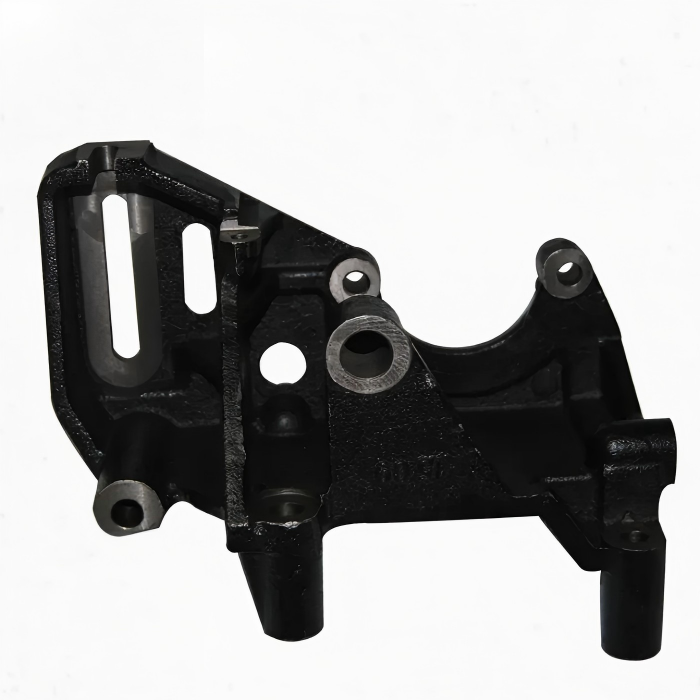
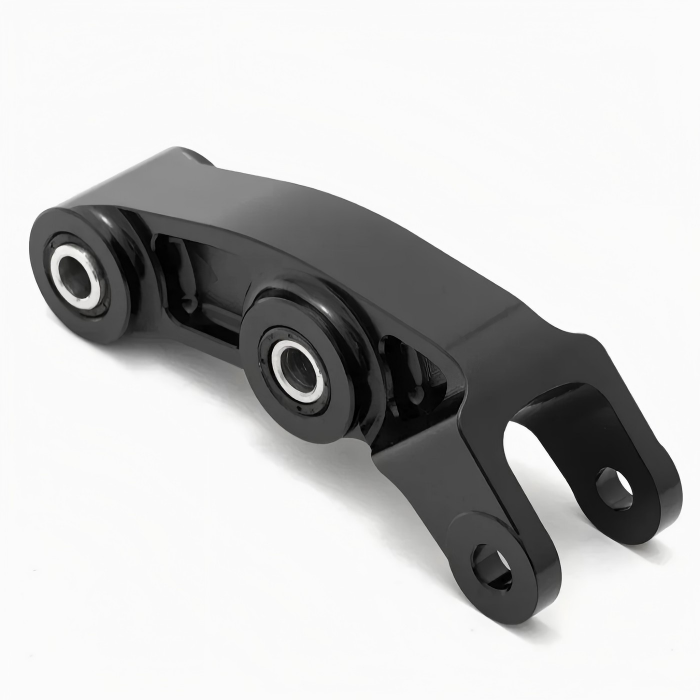
Automotive and mobility components often operate under repeated mechanical loads and vibration conditions.
Components such as a chassis support bracket and rear suspension linkage require:
- High dimensional accuracy
- Structural reliability
- Consistent material performance
- Stable production quality
For these applications, CNC Machined Parts provide advantages because manufacturers can achieve precise geometry and repeatable production results.
From an engineering perspective, cost optimization does not mean reducing material quality or simplifying critical structures. Instead, it involves improving manufacturability while maintaining safety and performance requirements.
From a purchasing perspective, supplier capability in handling mechanical components, quality control, and production consistency is often more valuable than a small price difference.
Hydraulic Manifold Valve Manufacturing Requirements
Hydraulic systems depend on precision because internal passages, sealing areas, and connection surfaces directly affect system performance.
A hydraulic manifold valve is a typical example where machining accuracy is essential.
Manufacturing considerations include:
- Internal channel accuracy
- Surface finish requirements
- Dimensional control
- Pressure performance
For hydraulic components, a supplier must understand that small machining variations can influence final system reliability.
Therefore, buyers should evaluate not only machining capability but also inspection methods, technical communication, and the ability to follow engineering requirements.
Achieving Lightweight and Durable Mechanical Designs
Handlebar Clamp Motorcycle Applications
Motorcycle components require a balance between strength, weight, appearance, and manufacturing efficiency.
A Handlebar Clamp Motorcycle is a good example of a CNC component where design optimization plays an important role.
Manufacturers need to consider:
- Structural strength
- Weight reduction
- Surface appearance
- Assembly accuracy
CNC machining allows engineers to create lightweight components while maintaining reliable mechanical performance.
For motorcycle manufacturers, cost optimization comes from efficient design and manufacturing planning rather than simply reducing material usage.
Ensuring Accurate Connections in Industrial Equipment
Integral Ring Flange Applications
Industrial equipment often requires connection components that provide accurate positioning and long-term reliability.
An Integral Ring Flange is commonly used where alignment and secure connections are important.
The manufacturing process must consider:
- Dimensional accuracy
- Material characteristics
- Surface requirements
- Assembly compatibility
For equipment manufacturers, consistent CNC production helps reduce assembly issues and improves overall product reliability.
How Should Buyers Evaluate CNC Machined Parts Suppliers?
Evaluate Engineering Support Before Production
A reliable CNC supplier should provide more than manufacturing capacity.
For OEM manufacturers, valuable suppliers can support:
- Drawing review
- Manufacturability suggestions
- Process improvement
- Material recommendations
This engineering cooperation can identify cost-saving opportunities before production begins.
A supplier who understands manufacturing challenges can help reduce unnecessary complexity and improve production efficiency.
Consider Quality Control and Production Stability
Quality control is a critical factor when selecting a CNC Machined Parts supplier.
Buyers should evaluate whether suppliers can provide:
- Dimensional inspection records
- Material verification
- Process control
- Consistent production results
Stable quality reduces risks during assembly and final product manufacturing.
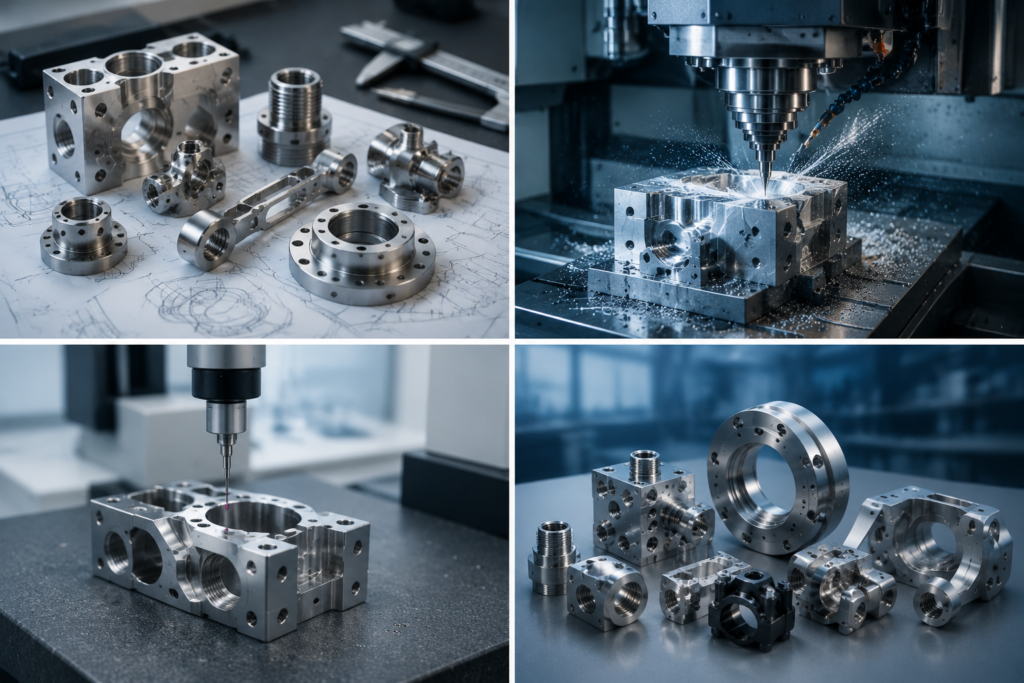
Balance Cost, Flexibility, and Long-Term Value
OEM manufacturers often experience changing project requirements, including:
- Design modifications
- Different production quantities
- New product development stages
A flexible CNC supplier can better support these changes.
When selecting suppliers, buyers should consider:
- Response speed
- Manufacturing flexibility
- Communication efficiency
- Ability to support future projects
A long-term manufacturing relationship often creates more value than short-term price savings.
Creating Long-Term Value Through CNC Manufacturing Partnership
Optimizing CNC Machined Parts costs requires cooperation between engineers, manufacturers, and purchasing teams. The most effective approach combines smart design decisions, suitable machining processes, and reliable supplier support.
For manufacturers, the right CNC partner can help improve production efficiency, reduce unnecessary costs, and maintain consistent quality throughout the product lifecycle.
If you have any CNC Machined Parts requirements, please feel free to contact us.