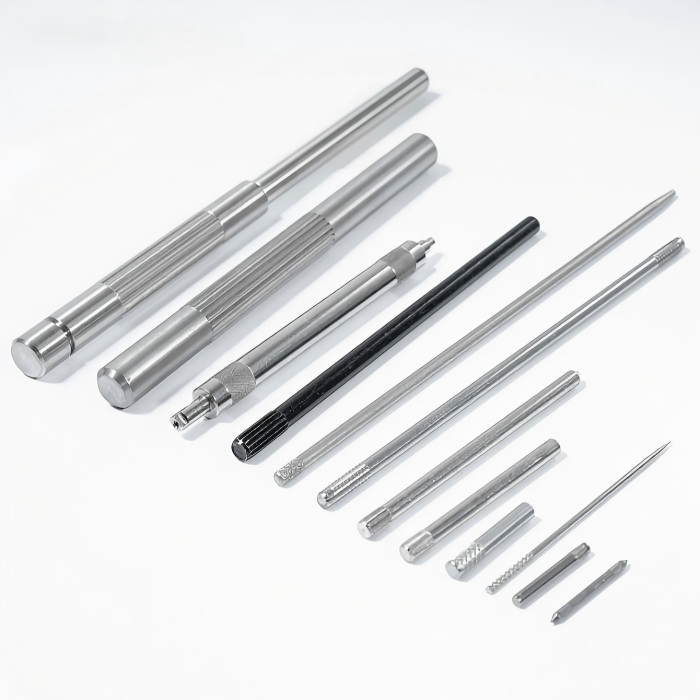
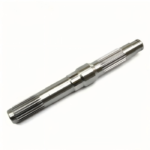
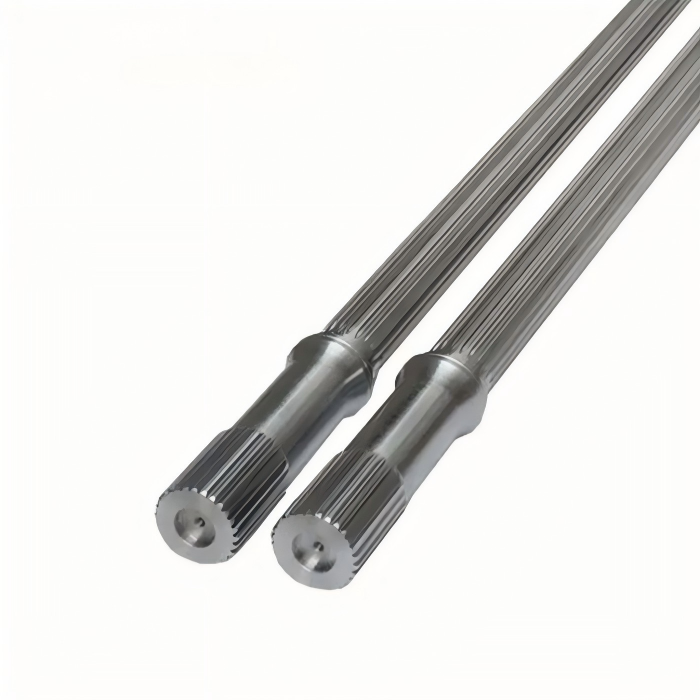
Шлицевые валы 17-4 PH Нержавеющая сталь Прецизионные валы OEM на заказ
Нестандартные шлицевые валы, изготовленные из нержавеющей стали 17-4 PH, обеспечивают высокую прочность, коррозионную стойкость и точную передачу крутящего момента для требовательных промышленных применений.
Request a Quote
Enter the quantity you need and add to your quote list for pricing inquiries.
Product Details
What Is a Spline Shaft?
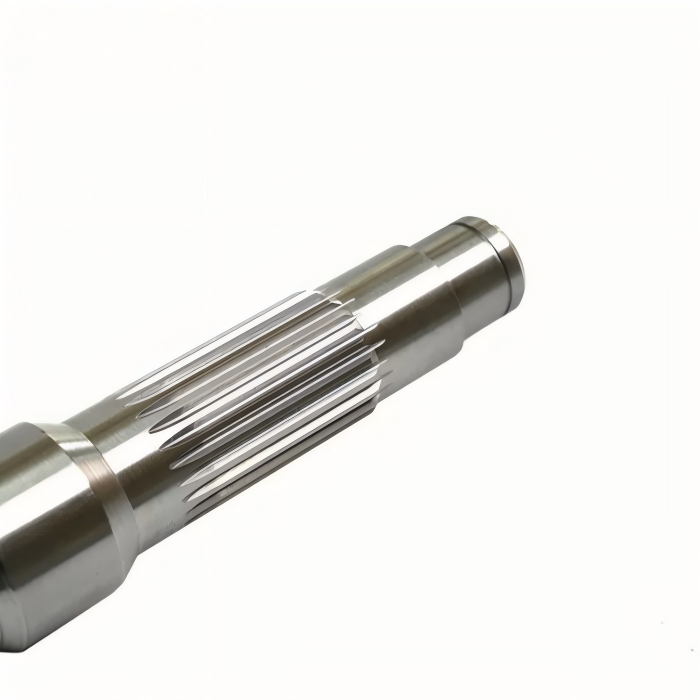
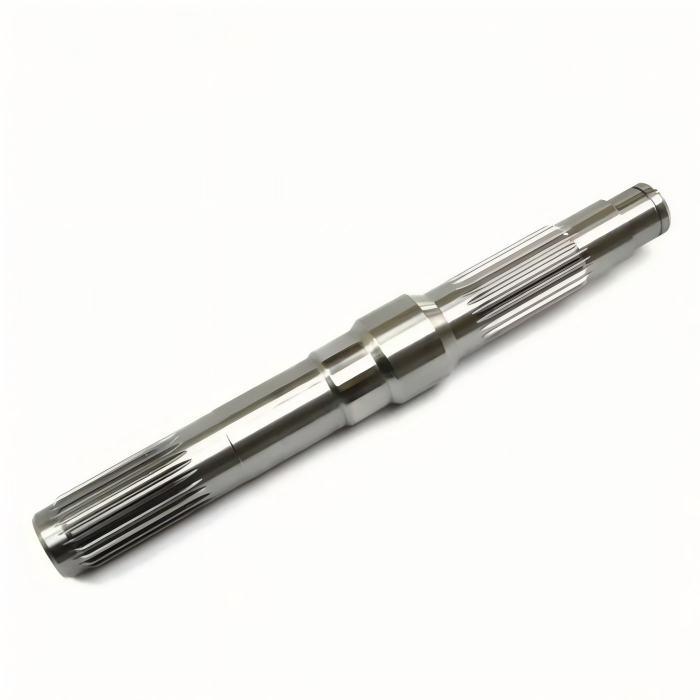
A spline shaft is a mechanical component with longitudinal ridges (splines) that mesh with corresponding grooves in a mating part such as a gear, hub, or bearing. Unlike keyed shafts that use a single key to transmit torque, spline shafts distribute stress across multiple teeth, resulting in greater durability, higher load capacity, and superior torque transmission. The multiple contact points also provide better centering of the shaft, reducing vibration and wear.
The spline shaft is characterized by its spline profile, tooth geometry, and overall dimensions. Typical features include precision-ground spline teeth for smooth engagement, heat-treated surfaces for wear resistance, and end machining for mounting. Spline shafts are available in various profiles including involute, straight-sided, serrated, and helical types, each offering specific advantages for different applications.
Why Choose Custom CNC Machined Spline Shafts?
Off-the-shelf spline shafts may not always fit your specific application. Standard lengths, spline profiles, or materials may not align with your design requirements. Custom CNC machined spline shafts provide the perfect solution for applications requiring precise fitment.
With CNC machining, every aspect of the spline shaft can be customized. The spline profile can be matched to your specific requirements. The length can be adjusted for your assembly. The material can be selected for strength, corrosion resistance, or weight. Heat treatment can be tailored for durability. Additional features such as threaded ends, keyways, or cross-holes can be added.
Our CNC machining process ensures that each spline shaft achieves tight tolerances, typically within ±0.01mm, with excellent surface finish and consistent quality across every part, from prototypes to high-volume production runs.
Materials for Custom Spline Shafts:
The choice of material for a spline shaft depends on load requirements, operating environment, and wear resistance needs.
2. Alloy Steel (4140, 4340) is the most common material for spline shafts. These grades offer high strength, excellent fatigue resistance, and good wear resistance after heat treatment. They are suitable for automotive drivelines, industrial gearboxes, and heavy machinery.
3. Carbon Steel (1045, 1144) provides good strength at lower cost. Suitable for light to medium-duty applications where extreme wear resistance is not required.
4. Stainless Steel (303, 304, 316) offers corrosion resistance for marine, food processing, and medical applications.
5. Titanium provides exceptional strength-to-weight ratio and outstanding corrosion resistance. Ideal for aerospace and high-performance applications.
6. Inconel offers high-temperature strength and corrosion resistance for extreme environments such as jet engines and gas turbines.
7. Spline Profiles:
8. Involute splines are the most common profile and are standardized for high-load applications. The tapered teeth reduce stress concentration and provide smooth engagement. This profile is widely used in automotive transmissions and industrial gearboxes.
9. Straight-sided splines are simpler to produce but less efficient than involute splines. They are suitable for lower torque applications where cost is a primary concern.
10. Serrated splines are designed for precision alignment rather than high torque transmission. They are often used in positioning and indexing applications.
11. Helical splines offer smooth torque transfer and accommodate axial movement. They are ideal for aerospace systems and robotics where smooth motion is critical.
12. The production of a spline shaft follows a precise sequence of operations depending on the spline type and required precision.
13. Hobbing uses a spline hob on a milling or gear hobbing machine to cut splines. This method offers high productivity and accuracy, suitable for mass production of involute splines.
Alloy Steel (4140, 4340) is the most common material for spline shafts. These grades offer high strength, excellent fatigue resistance, and good wear resistance after heat treatment. They are suitable for automotive drivelines, industrial gearboxes, and heavy machinery.
Carbon Steel (1045, 1144) provides good strength at lower cost. Suitable for light to medium-duty applications where extreme wear resistance is not required.
Stainless Steel (303, 304, 316) offers corrosion resistance for marine, food processing, and medical applications.
Titanium provides exceptional strength-to-weight ratio and outstanding corrosion resistance. Ideal for aerospace and high-performance applications.
Inconel offers high-temperature strength and corrosion resistance for extreme environments such as jet engines and gas turbines.
Spline Profiles:
Involute splines are the most common profile and are standardized for high-load applications. The tapered teeth reduce stress concentration and provide smooth engagement. This profile is widely used in automotive transmissions and industrial gearboxes.
Straight-sided splines are simpler to produce but less efficient than involute splines. They are suitable for lower torque applications where cost is a primary concern.
Serrated splines are designed for precision alignment rather than high torque transmission. They are often used in positioning and indexing applications.
Helical splines offer smooth torque transfer and accommodate axial movement. They are ideal for aerospace systems and robotics where smooth motion is critical.
Процесс производства:
The production of a spline shaft follows a precise sequence of operations depending on the spline type and required precision.
Hobbing uses a spline hob on a milling or gear hobbing machine to cut splines. This method offers high productivity and accuracy, suitable for mass production of involute splines.
Milling uses a special forming cutter on a universal milling machine. This method is suitable for single piece and small batch production where tooling cost is a concern.
2. Grinding uses a formed grinding wheel for hardened spline shafts or shafts requiring higher precision. This method achieves the tightest tolerances and finest surface finishes.
3. Cold beating (also known as spline rolling) is a plastic deformation method that forms splines through high-speed hammering. Efficiency is about 5 times higher than milling and produces a work-hardened surface.
4. Applications of Custom Spline Shafts:
5. Automotive Drivelines:
6. Spline shafts play a critical role in transmissions, differentials, transfer cases, and driveshaft assemblies. Their toothed profile allows efficient torque transmission while accommodating limited axial movement, helping ensure smooth and reliable power delivery.
7. These power transmission components are widely used to connect electric motors, reducers, and gearbox assemblies in heavy-duty industrial equipment. Common applications include conveyors, pumps, compressors, packaging machinery, and machine tools.
8. Aircraft Systems:
9. Precision-machined spline shafts are utilized in flight control systems, landing gear mechanisms, engine accessory drives, and other aerospace applications where strength, reliability, and dimensional accuracy are essential.
10. Robotics:
11. High-precision drive components support accurate motion transfer in robotic arms, servo actuators, automated positioning systems, and industrial automation equipment, contributing to repeatable and precise movement control.
Grinding uses a formed grinding wheel for hardened spline shafts or shafts requiring higher precision. This method achieves the tightest tolerances and finest surface finishes.
Cold beating (also known as spline rolling) is a plastic deformation method that forms splines through high-speed hammering. Efficiency is about 5 times higher than milling and produces a work-hardened surface.
Applications of Custom Spline Shafts:
Automotive Drivelines:
Spline shafts play a critical role in transmissions, differentials, transfer cases, and driveshaft assemblies. Their toothed profile allows efficient torque transmission while accommodating limited axial movement, helping ensure smooth and reliable power delivery.
Промышленные редукторы:
These power transmission components are widely used to connect electric motors, reducers, and gearbox assemblies in heavy-duty industrial equipment. Common applications include conveyors, pumps, compressors, packaging machinery, and machine tools.
Aircraft Systems:
Precision-machined spline shafts are utilized in flight control systems, landing gear mechanisms, engine accessory drives, and other aerospace applications where strength, reliability, and dimensional accuracy are essential.
Robotics:
High-precision drive components support accurate motion transfer in robotic arms, servo actuators, automated positioning systems, and industrial automation equipment, contributing to repeatable and precise movement control.
Our CNC Machining Capabilities:
Наше предприятие оснащено современными токарными и фрезерными центрами с ЧПУ, способными изготавливать шлицевые валы в соответствии с высочайшими стандартами. Мы предлагаем услуги шлицефрезерования, протягивания, шлифования и термообработки — все в рамках одного производства. Мы поддерживаем изготовление прототипов от одной штуки и серийное производство до тысяч единиц. Наш контроль качества включает проверку размеров, испытания на твердость и контроль качества поверхности.
Frequently Asked Questions:
В: Для чего используется шлицевой вал?
О: Шлицевой вал предназначен для передачи крутящего момента между соединенными компонентами, обеспечивая при необходимости осевое перемещение. Он широко применяется в карданных передачах, редукторах, коробках передач и промышленных системах передачи мощности.
В: Какие материалы можно использовать для шлицевых валов?
О: Распространенные материалы включают легированную сталь 4140, легированную сталь 4340, нержавеющую сталь, титан и инконель. Выбор материала зависит от требований к нагрузке, условий эксплуатации и температурного режима.
В: В чем разница между эвольвентными и прямобочными шлицами?
О: Эвольвентные шлицы имеют стандартизированный профиль зуба, который более равномерно распределяет нагрузку и снижает концентрацию напряжений. Прямобочные шлицы проще по конструкции, но обычно используются в менее ответственных применениях.
В: Какие допуски вы можете обеспечить на шлицевых валах?
О: Мы можем обрабатывать шлицевые валы с допусками до ±0,01 мм и достигать шероховатости поверхности до Ra 0,4 мкм для прецизионных применений.
В: Предоставляете ли вы услуги термообработки?
О: Да. Мы предлагаем процессы цементации, индукционной закалки, азотирования и сквозной закалки для повышения износостойкости и увеличения срока службы.
Заключение:
Шлицевой вал является критически важным компонентом для систем передачи мощности, обеспечивая передачу крутящего момента с возможностью осевого перемещения. Когда стандартные варианты не соответствуют вашим требованиям, изготовленные на заказ шлицевые валы с ЧПУ представляют собой идеальное решение. Благодаря нашим возможностям прецизионной обработки, выбору материалов и приверженности качеству, мы поставляем валы, которые идеально подходят и надежно работают.