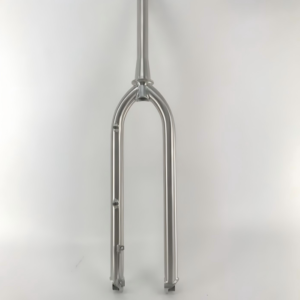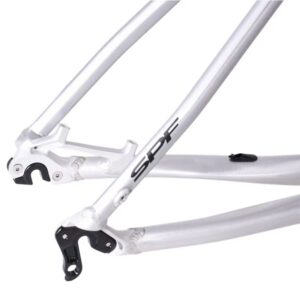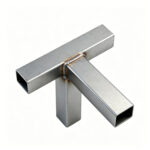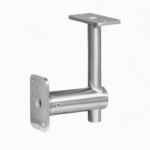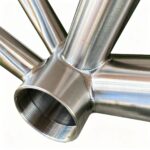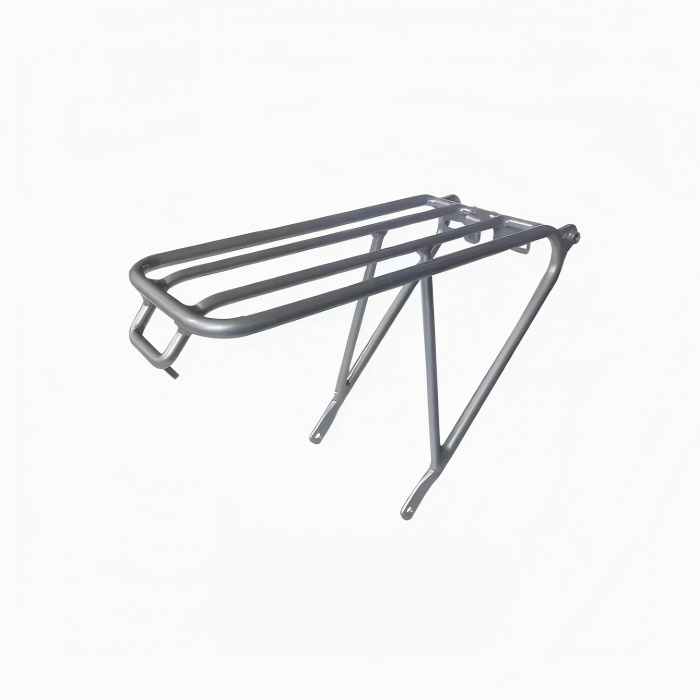

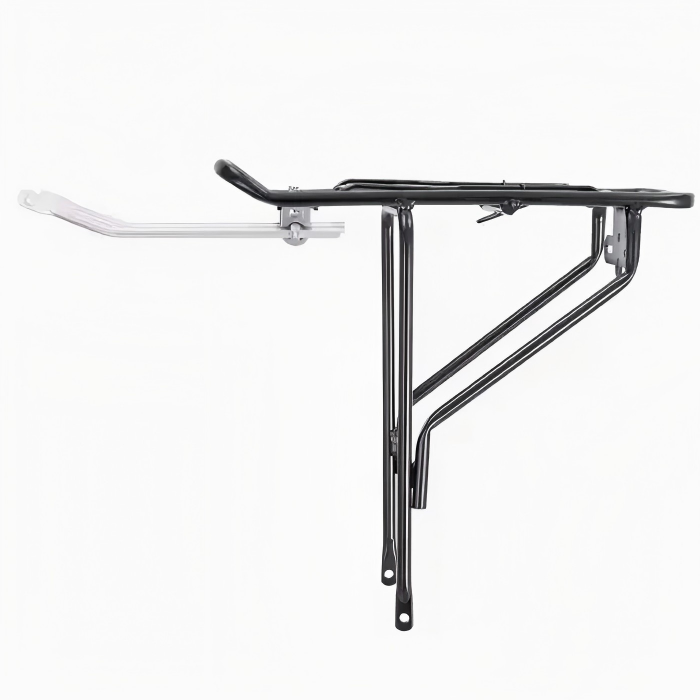
Porte-vélos en titane de haute qualité, construction en titane soudé TIG à l'arrière
Ce porte-vélos arrière en titane est fabriqué sur mesure avec une technologie de soudage TIG de précision pour les vélos haute performance et le cyclisme en extérieur.
Request a Quote
Enter the quantity you need and add to your quote list for pricing inquiries.
Product Details
Why Traditional Rear Bike Racks Fall Short?
Le porte-bagages arrière en titane pour vélo offre une solution supérieure par rapport aux porte-bagages arrière traditionnels en aluminium et en acier. La plupart des porte-bagages conventionnels sont limités par les faiblesses des matériaux. Les porte-bagages en aluminium sont légers mais peuvent souffrir de fissures de fatigue, en particulier au niveau des soudures après des années de transport de charges lourdes sur des routes accidentées. Les porte-bagages en acier offrent une excellente résistance mais ajoutent un poids considérable, augmentant souvent la charge du vélo de trois à cinq livres et affectant l’efficacité de montée et les performances de maniabilité.
Contrairement aux alternatives en aluminium et en acier, le porte-bagages en titane combine haute résistance, légèreté et durabilité exceptionnelle. Le titane offre un rapport résistance/poids similaire à celui de l’acier tout en restant beaucoup plus léger, et il offre une résistance exceptionnelle à la corrosion sans nécessiter de peinture ni de revêtements protecteurs. Même dans des environnements difficiles tels que les zones côtières ou les conditions de tourisme longue distance, un porte-bagages arrière en titane maintient son intégrité structurelle et son apparence pendant des années.
The Titanium Advantage for Rear Bike Racks:
Titanium offers four distinct advantages for rear rack applications.
.
First, weight.
. A titanium rear rack typically weighs 40 to 60 percent less than a steel rack of equal strength. For a touring or commuting cyclist, saving two to three pounds at the rear of the bike improves acceleration and handling.
.
Second, strength.
. Titanium has an exceptional strength-to-weight ratio. A properly designed titanium rack can carry loads exceeding 50 pounds without permanent deflection. The material also has excellent fatigue resistance, meaning it will not crack after thousands of miles of vibration.
.
Third, corrosion resistance.
. Titanium forms a stable oxide layer that protects against all forms of corrosion. A titanium rack will never rust, even after years of exposure to rain, road salt, or coastal air. No paint, powder coating, or anodizing is required.
.
Fourth, durability.
. A titanium rack, when welded correctly, will outlast the bicycle. Many cyclists consider titanium racks to be lifetime purchases.
.

Design Features of a Quality Titanium Bike Rack Rear:
A well-designed titanium bike rack rear includes several important features. The platform should be wide enough to accept standard panniers and trunk bags. Typical width ranges from 120mm to 160mm. The length should accommodate various trunk bag sizes while clearing the rear wheel.
.
Mounting points are critical. A titanium bike rack rear must attach securely to the bicycle frame. Common mounting locations include seat stay braze-ons, seatpost clamps, and dropout eyelets. The rack should include multiple mounting options to fit different frame geometries.
.
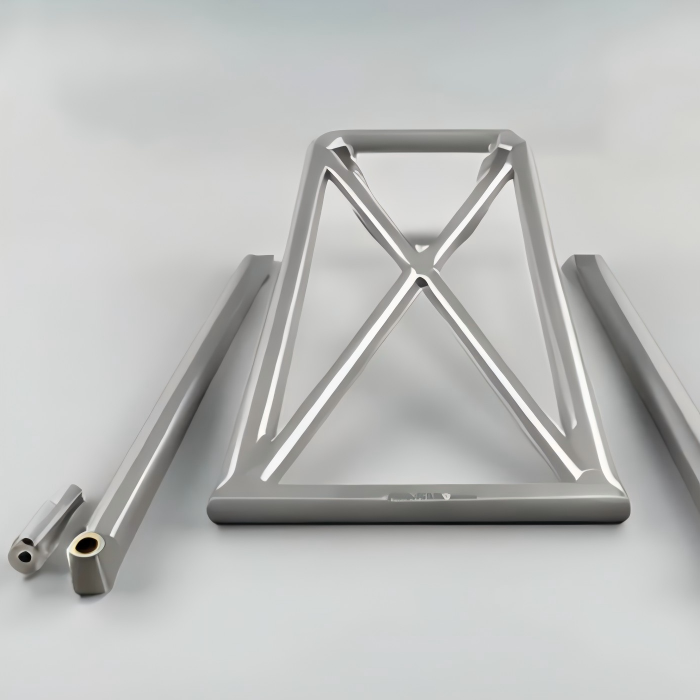
The struts or support arms transfer load from the platform to the frame. For a titanium bike rack rear, these struts should be made from the same titanium alloy as the main structure. Strut diameter typically ranges from 8mm to 12mm depending on load rating.
.
Welded joints are the most vulnerable points on any rack. On a titanium bike rack rear, every weld must be fully penetrated and properly shielded to prevent oxidation. Poor welds will fail under load.
.
Challenges of Welding a Titanium Bike Rack Rear:
Titanium presents serious fabrication challenges. Titanium is highly reactive when exposed to oxygen, nitrogen, and hydrogen at elevated temperatures. During welding of a titanium bike rack rear, the weld zone must be completely shielded from atmospheric contamination. If shielding fails, the titanium absorbs these elements, resulting in embrittlement and cracking.
.
Rear racks involve thin-walled tubing, typically 0.8mm to 1.5mm thick. Thin titanium requires precise heat control to avoid burn-through. Additionally, a titanium bike rack rear has multiple joints: platform to struts, struts to mounting tabs, and mounting tabs to the main structure. Each weld must be sound to withstand vibration and load cycling.
.
For these reasons, a titanium bike rack rear should only be fabricated by welders experienced with reactive metals. General welding shops rarely have the equipment or training for titanium.
.
Critical Steps for Welding a Titanium Bike Rack Rear:
Successful fabrication of a titanium bike rack rear begins long before the arc is struck:
Material selection: Grade 2 commercially pure titanium or Grade 9 (3Al-2.5V) titanium is commonly used for a titanium bike rack rear. Grade 2 offers excellent formability and weldability. Grade 9 provides higher strength while maintaining good ductility.
.
Tube preparation: Titanium tubes must be cut square, deburred, and cleaned inside and out. Use acetone or isopropyl alcohol followed by a dedicated stainless steel brush used only on titanium. Never use tools that have touched steel.
.
Fit-up: For a titanium bike rack rear, joint gaps should not exceed 0.5mm. Use fixtures to maintain alignment. Poor fit-up leads to burn-through or incomplete fusion.
.
Back-purging: For critical joints, the inside of tubes should be purged with pure argon at 99.999 percent purity. Without back-purging, the root side of the weld oxidizes, creating a brittle layer that cracks under load.
.
Torch setup: Gas tungsten arc welding (GTAW/TIG) is the only process recommended for a titanium bike rack rear. Use a 2 percent ceriated or lanthanated tungsten electrode. A gas lens improves coverage. Set post-flow to at least 15 seconds.
.
Common Defects in Titanium Bike Rack Rear Welding:
Even experienced welders may encounter defects when fabricating a titanium bike rack rear:
Oxidation and discoloration: Silver or light straw welds indicate proper shielding. Blue, purple, or grey means contamination requiring weld rejection. A titanium bike rack rear with oxidized welds will fail under load.
.
Burn-through: Excessive heat creates holes in thin tubing. Reduce amperage or increase travel speed. Burn-through typically means scrapping the part.
.
Incomplete penetration: The weld does not fully bond through the tube wall. This results in weak joints. Adjust parameters and refit the joint.
.
Cracking: Hydrogen embrittlement or rapid cooling causes cracks. Ensure thorough cleaning and adequate post-flow.
.
Applications and Market Demand :
La demande pour un porte-bagages arrière en titane haut de gamme couvre plusieurs marchés. Les cyclotouristes ont besoin de porte-bagages capables de supporter de lourdes charges sur des milliers de kilomètres sans défaillance. Les navetteurs veulent des porte-bagages légers qui ne rouillent pas à cause de l'exposition quotidienne aux intempéries. Les bikepackers et les cyclistes d'aventure exigent des porte-bagages résistants aux terrains accidentés.
Les propriétaires de vélos électriques bénéficient également d'un porte-bagages arrière en titane. Les vélos électriques sont lourds de base, donc économiser du poids au niveau du porte-bagages est utile. La résistance à la corrosion est également précieuse pour les vélos électriques utilisés dans des conditions humides.
Conclusion :
Un porte-bagages arrière en titane représente l'expression ultime de l'utilité du vélo. Lorsqu'il est soudé correctement par des professionnels expérimentés, il offre des économies de poids inégalées, une résistance permanente à la corrosion et des décennies de service fiable. Pour les cyclistes qui exigent le meilleur, le titane est le choix évident.
Foire aux questions sur le porte-bagages arrière en titane :
Q1 : Un porte-bagages arrière en titane vaut-il le coût supplémentaire par rapport à l'aluminium ou à l'acier ?
R : Oui pour les cyclistes sérieux. Un porte-bagages arrière en titane dure toute une vie, ne rouille jamais et pèse 40 à 60 pour cent de moins que l'acier tout en étant plus résistant que l'aluminium.
Q2 : Combien de poids un porte-bagages arrière en titane peut-il transporter en toute sécurité ?
R : Un porte-bagages arrière en titane correctement soudé peut transporter en toute sécurité 50 à 70 livres selon la conception et la configuration de montage.
Q3 : Un porte-bagages arrière en titane s'adaptera-t-il à n'importe quel vélo ?
R : La plupart des porte-bagages arrière en titane sont conçus pour des points de montage standard. Une fabrication sur mesure est disponible pour les cadres avec une géométrie non standard.
Q4 : Un porte-bagages arrière en titane nécessite-t-il un entretien particulier ?
R : Aucun entretien n'est nécessaire. Le titane ne rouille ni ne se corrode, donc aucune peinture ou revêtement n'est jamais nécessaire.
Q5 : Un porte-bagages arrière en titane endommagé peut-il être réparé ?
R : Oui, mais uniquement par un soudeur expérimenté avec des tubes à paroi mince en titane. Les ateliers de soudure généralistes ne peuvent pas effectuer de réparations sur le titane.