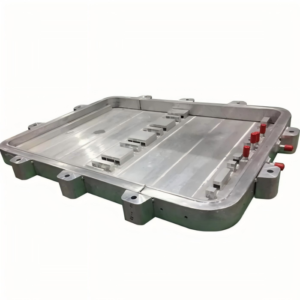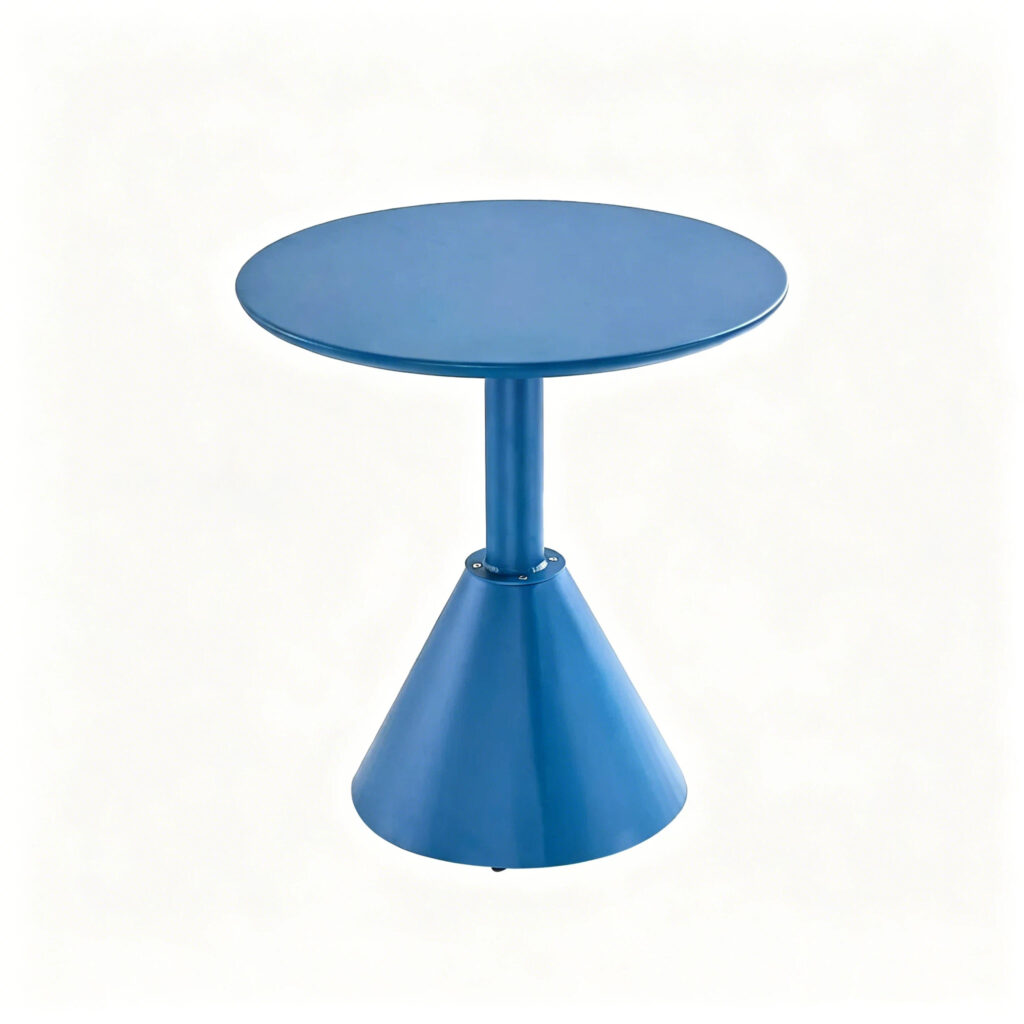


Mesa de Soldagem de Precisão em Alumínio com Padrão de Furos de Fixação em Grade de 5mm
A Mesa de Soldagem em Alumínio oferece soluções de soldagem de precisão com construção durável em alumínio, fabricação personalizada e desempenho confiável.
Request a Quote
Enter the quantity you need and add to your quote list for pricing inquiries.
Product Details
Welding Service Process for Aluminum Welding Tables:
- Preparação do Material: CNC precision cutting of aluminum profiles and plates, followed by machining of mounting holes, slots, or grid patterns.
. - Sub-Assembly Fit-Up:
Fixture-assisted alignment of frame beams, support legs, and top plates to ensure flatness before tack welding.
. - Execução da Soldagem: Pulsed MIG (GMAW) or TIG (GTAW) applied per qualified WPS. Our 20+ certified welders follow controlled heat input sequences to minimize distortion on each Aluminum Welding Table.
. - In-Process Flatness Checks:
Laser or straight-edge verification at each welding stage.
. - Alívio de Tensão Pós-Soldagem: Mechanical vibration or natural aging to stabilize dimensional accuracy.
. - Final Machining & Surface Prep:
Fly-cutting or grinding of top surface to final flatness, followed by cleaning for anodizing or leaving as-machined.
.
With ISO 3834, EN 1090, and ASME IX, we deliver industrial-grade weld integrity and flatness-critical performance for every Aluminum Welding Table.
.

Key Advantages of Custom Welding for Aluminum Welding Tables:
- Flatness Control:
Achievable post-weld flatness of ±0.5mm per meter across the entire table top surface.
. - Distortion Mitigation:
Symmetrical welding sequences + pre-set clamping reduce angular deflection to ≤1.0mm on 1000mm spans.
. - Joint Strength:
Full-penetration butt welds on frame-to-top connections achieve ≥85% of base material tensile strength (tested per AWS D1.2).
. - Modular Repeatability:
Fixtured production ensures bolt-hole patterns and grid spacing repeat within ±0.3mm from table to table.
. - Material Preservation:
Heat input limited to ≤0.9 kJ/mm to maintain 6061-T6 temper in HAZ, preventing softening around mounting points.
.
Data-backed parameter control translates directly into welding tables that stay flat under heavy clamping loads.
.
Applications of Aluminum Welding Tables:
- Fabrication Shops:
Portable, corrosion-resistant workstations for TIG welding of aluminum components, where a steel table would cause contamination.
. - Aerospace & Automotive Jig Building:
Lightweight tables with precision grid patterns for modular fixture assembly.
. - R&D & Training Labs:
Non-magnetic, clean-surface tables for prototype welding or student practice – requiring consistent flatness for process documentation.
.
Each Aluminum Welding Table is welded to deliver structural stability with full traceability from raw material to final surface flatness report.
.
Material Choices for Aluminum Welding Tables:
Opções de Material Comuns:
- 6061-T6: Best weldability-to-strength ratio. Standard choice for frames and top plates requiring durability.
. - 5083-H111:
Higher corrosion resistance for marine or chemical-environment welding labs.
. - Cast Tooling Plate (MIC-6 or equivalent):
Optional for top surface – flat as-received, but requires backing bar support for frame welding to prevent distortion.
.
Tratamento de Superfície & Acabamento:
- As-Welded + Machined:
Top surface fly-cut to final flatness; frame remains in mill finish – most practical for shop use.
. - Clear Anodized (10–15µm):
Prevents oxidation staining without adding thickness that affects flatness.
. - Hard Anodized (25–50µm):
For high-wear applications where clamps and fixtures slide repeatedly across the table surface.
.
We do not outsource post-weld machining or finishing – all operations in-house to maintain flatness and schedule control.
.

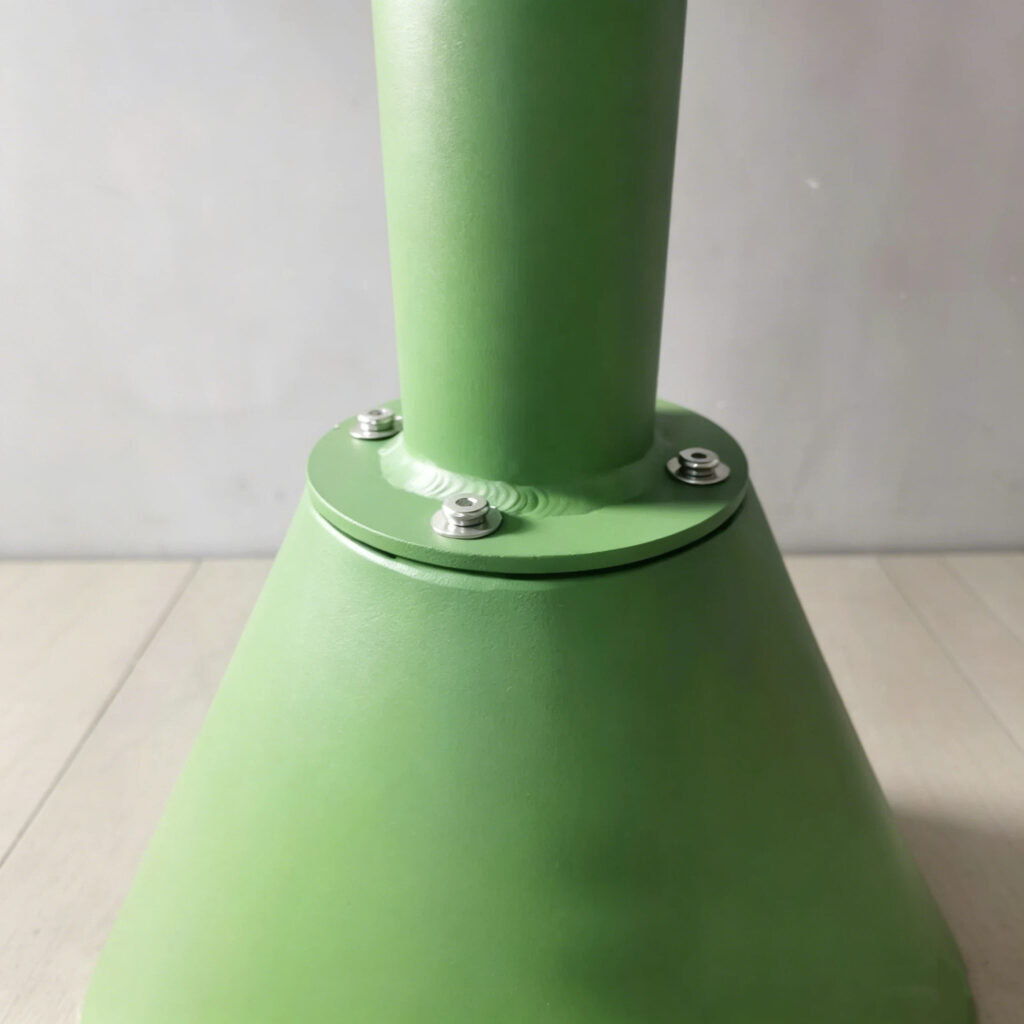
Customer Case – Aluminum Welding Tables for a Motorsport Fabrication School:
A UK-based motorsport engineering academy ordered 24 custom-sized Aluminum Welding Tables (1500mm x 800mm x 20mm top thickness) for their TIG welding curriculum.
.
Previously, they used refurbished steel tables, which caused magnetic arc blow and surface rust contamination on aluminum practice pieces. They required flatness of ≤0.5mm across the full length and a 100x100mm grid of 16mm locating holes.
.
Our team designed a 6061-T6 frame with cross-bracing welded using pulsed MIG (1.2mm 5356 filler). The top plate was MIC-6 tooling plate, welded to the frame from underneath to avoid top-surface distortion. After final fly-cutting, flatness measured 0.3–0.4mm across all 24 units.
.
Customer comment (public review):
“Finally, welding tables that stay flat. The hole pattern accuracy is repeatable table to table, and no more arc blow. Our students’ weld quality improved immediately.”
”
All 24 tables passed a 12-month field follow-up with zero reported flatness degradation.
.
FAQ:
Q: What is the MOQ for custom Aluminum Welding Tables?
A: MOQ is 20 units for fully custom dimensions and hole patterns. For single-unit prototypes or school lab evaluations, we accept 1–5 pieces with full process documentation.
.
P: Qual é o prazo de entrega típico?
A: Engineering & fixture setup: 2–3 weeks (including welding sequence planning). Production batch (20–50 tables): 4–5 weeks. For 1–5 units, we offer a 10–15 working day rapid prototype service.
.
P: Quais termos de entrega vocês suportam?
A: EXW (Suzhou), FOB Shanghai, or DDP to EU/US addresses for volume orders. Each Aluminum Welding Table is crated with edge protection and anti-moisture wrapping – bolted to a plywood base to prevent freight flexing.
.
P: Vocês podem lidar com pedidos pequenos e repetidos abaixo do MOQ?
A: Yes. Many fabrication schools and small job shops use blanket orders with monthly releases of 3–5 tables. We maintain fixture tooling for repeat customers to avoid MOQ minimums on subsequent batches.
.
Q: How do you ensure flatness if the customer welds directly on the table surface?
A: We design for real-world use. Frame cross-bracing and perimeter stiffening are calculated per your intended clamping loads. For heavy hammering or fixture bolting, we recommend 25–30mm top thickness and hard anodizing. Post-weld, we provide a certified flatness report (measured with CMM or laser tracker).
.
Q: Can you integrate casters, tool drawers, or grounding lugs?
A: Yes – all as add-on options. Grounding lugs are welded to the frame during assembly. Casters are bolted to reinforced corner brackets after final flatness inspection to avoid welding distortion.
.