Introduction:
Why is welding aluminum difficult compared with other metals such as steel? Although aluminum is widely used in automotive, aerospace, marine, electronics, and industrial equipment because of its lightweight properties, corrosion resistance, and excellent strength-to-weight ratio, producing reliable aluminum welds requires specialized knowledge and precise process control.
Many people assume that aluminum welding is easier because aluminum is soft, lightweight, and easy to machine. However, aluminum behaves very differently during welding due to its oxide layer, high thermal conductivity, thermal expansion, and sensitivity to heat input. These characteristics make aluminum welding more challenging than many traditional welding applications.
From basic aluminum welding knowledge to advanced processes such as TIG welding for aluminum and GTAW welding aluminum, understanding the material properties, welding techniques, and common challenges is essential for achieving strong, consistent, and high-quality welds.
Understanding the Characteristics of Aluminum Before Welding
Before discussing Why is welding aluminum difficult, it is important to understand the unique properties that influence the welding process.
Compared with steel, aluminum has several characteristics that directly affect weld quality:
- Structure légère
- Conductivité thermique élevée
- Low melting temperature
- High thermal expansion rate
- Natural oxide layer formation
- Different levels of weldability among aluminum alloys
These properties make aluminum an excellent material for weight-sensitive applications, but they also require careful control during fabrication.
For example, aluminum machine frame structures benefit from aluminum’s lightweight and corrosion resistance, but maintaining dimensional accuracy during welding requires proper fixture design, heat management, and welding sequence planning.
Why Is Welding Aluminum Difficult? Key Challenges Explained
Aluminum Oxide Layer Creates Fusion Problems
One of the primary reasons why is welding aluminum difficult is the aluminum oxide layer that naturally forms on the surface.
When aluminum contacts oxygen, it quickly develops a thin protective oxide film. This layer helps prevent corrosion, but it creates challenges during welding because aluminum oxide melts at a much higher temperature than the aluminum base material.
If the oxide layer is not properly removed before welding, it may cause:
- Poor fusion between materials
- Weld contamination
- Uneven weld appearance
- Reduced mechanical strength
Proper cleaning, surface preparation, and appropriate welding techniques are essential to overcome this challenge.
This is especially important for precision applications where weld consistency and appearance are critical, such as custom aluminum enclosures, electronic housings, and lightweight structural components.
High Thermal Conductivity Makes Heat Control More Difficult
Another major reason welding aluminum requires experience is its high thermal conductivity.
Aluminum transfers heat much faster than steel. During welding, heat spreads away from the weld area quickly, making it difficult to maintain the correct temperature.
If insufficient heat is applied:
- The weld may lack penetration
- Fusion quality may decrease
- The joint may become weaker
If excessive heat is applied:
- Aluminum may distort
- Thin sections may burn through
- The final dimensions may change
Because of this, welders must carefully control:
- Le courant de soudage
- Vitesse de déplacement
- La longueur de l'arc
- La distribution de la chaleur
Advanced processes such as GTAW welding aluminum allow better control of heat input, making them suitable for applications requiring high precision.
Thermal Expansion Causes Distortion
Aluminum expands and contracts more significantly than many other metals during heating and cooling.
During welding, uneven temperature changes can result in:
- Warping
- Dimensional changes
- Misalignment
- Residual stress
For example, when manufacturing an aluminum machine frame, excessive welding heat can affect assembly accuracy and create problems during final installation.
To minimize distortion, manufacturers often consider:
- Welding sequence optimization
- Proper clamping methods
- La conception du joint
- Apport de chaleur contrôlé
Understanding aluminum’s thermal behavior is one of the most important factors in producing reliable welded components.
Common Misconceptions About Welding Aluminum
Myth 1: Aluminum Is Easy to Weld Because It Is Soft
A common misunderstanding is that aluminum should be easier to weld because it is a soft and lightweight material.
In reality, aluminum requires more attention because its physical properties create additional welding challenges.
The difficulty does not come from the hardness of the material but from:
- Surface oxide formation
- Heat transfer characteristics
- Distortion risks
- Alloy differences
Myth 2: Any Welding Process Can Be Used for Aluminum
Another misconception is that aluminum can be welded using the same methods and settings used for steel.
However, aluminum requires specific welding procedures.
Common methods include:
- TIG welding for aluminum
- MIG welding for aluminum
- Pulse MIG welding
- GTAW welding aluminum
Each process has different advantages depending on material thickness, application requirements, and production volume.
Myth 3: Stronger Welds Always Require More Heat
Applying more heat does not necessarily create stronger aluminum welds.
Excessive heat can actually reduce weld quality by causing:
- Distorsion
- Fissuration
- Material weakening
- Poor dimensional accuracy
Successful welding aluminum depends on controlling heat rather than simply increasing it.
Aluminum Welding Techniques: TIG, MIG, and GTAW Processes
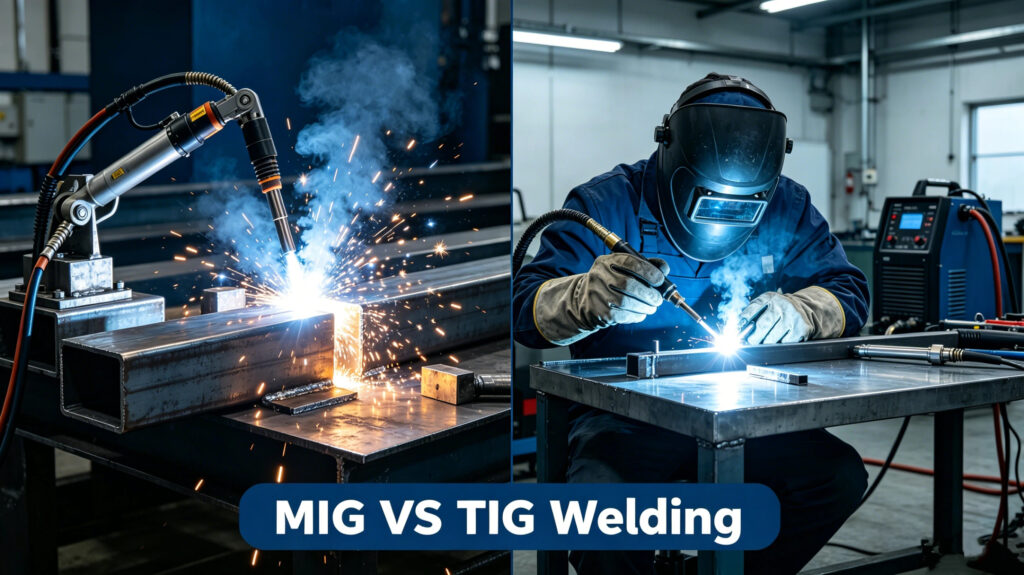
TIG Welding for Aluminum
TIG welding for aluminum is widely used when precision, appearance, and weld quality are important.
Le soudage TIG offre :
- Excellent heat control
- Aspect de soudure propre
- Precise arc control
- Ability to weld complex geometries
It is commonly used for:
- Precision aluminum components
- Thin aluminum materials
- Prototypes
- High-quality assemblies
Because TIG welding allows better control over the welding process, it is often selected for applications where appearance and accuracy are critical.
GTAW Welding Aluminum
GTAW welding aluminum is another term commonly used for tungsten inert gas welding.
The process uses a non-consumable tungsten electrode and shielding gas to protect the weld area from contamination.
Les avantages incluent :
- High-quality welds
- Good control of heat input
- Un risque de contamination réduit
- Suitable for demanding applications
GTAW welding aluminum requires skilled operators because maintaining proper arc stability and controlling filler material addition are essential for consistent results.
Soudage MIG de l'aluminium
MIG welding is commonly used for higher productivity applications.
Compared with TIG welding, MIG welding offers:
- Faster welding speed
- Efficacité de production plus élevée
- Better suitability for larger structures
It is often used for:
- Aluminum frames
- Les équipements industriels
- Large welded assemblies
For production environments, MIG welding can provide an effective balance between quality and manufacturing efficiency.
Precision Aluminum Welding: Tips for Small and Complex Applications
Precision welding aluminum requires even greater attention because small errors can significantly affect final performance.
Les considérations importantes incluent :
Control Heat Input
For small aluminum components, excessive heat can quickly cause deformation.
Welders must carefully manage:
- Les paramètres de soudage
- Welding sequence
- Cooling time
This is especially important for thin-wall components and detailed structures.
Select the Correct Filler Material
Different aluminum alloys require suitable filler materials to achieve reliable weld performance.
Incorrect filler selection may result in:
- Fissuration
- Reduced strength
- Poor corrosion resistance
Material compatibility should always be considered before welding.
Maintain Clean Welding Conditions
Because aluminum is sensitive to contamination, proper preparation is essential.
Common preparation steps include:
- Removing surface contaminants
- Cleaning oxide layers
- Using appropriate tools
- Protecting the welding area
A clean welding environment helps improve consistency and reduce defects.
Tools and Safety Considerations for Aluminum Welding
Successful welding aluminum depends not only on welding techniques but also on proper tools and safe operating practices.
Common equipment includes:
- TIG welding machines
- MIG welding machines
- Appropriate tungsten electrodes
- Aluminum filler rods
- Cleaning tools
- Gabarits de soudage
Safety considerations include:
- Proper ventilation
- Protective equipment
- Correct handling of shielding gases
- Protection from welding radiation
Following proper procedures helps maintain both operator safety and weld quality.
Industrial Applications of Aluminum Welding
Because aluminum combines lightweight performance with corrosion resistance, it is widely used in many industries.
Aluminum Machine Frames
Aluminum machine frame is commonly used in automation equipment, production lines, and industrial systems.
Les avantages incluent :
- Construction légère
- Assemblage facile
- La résistance à la corrosion
- Good structural performance
However, welding these structures requires careful control of distortion to maintain accurate dimensions.
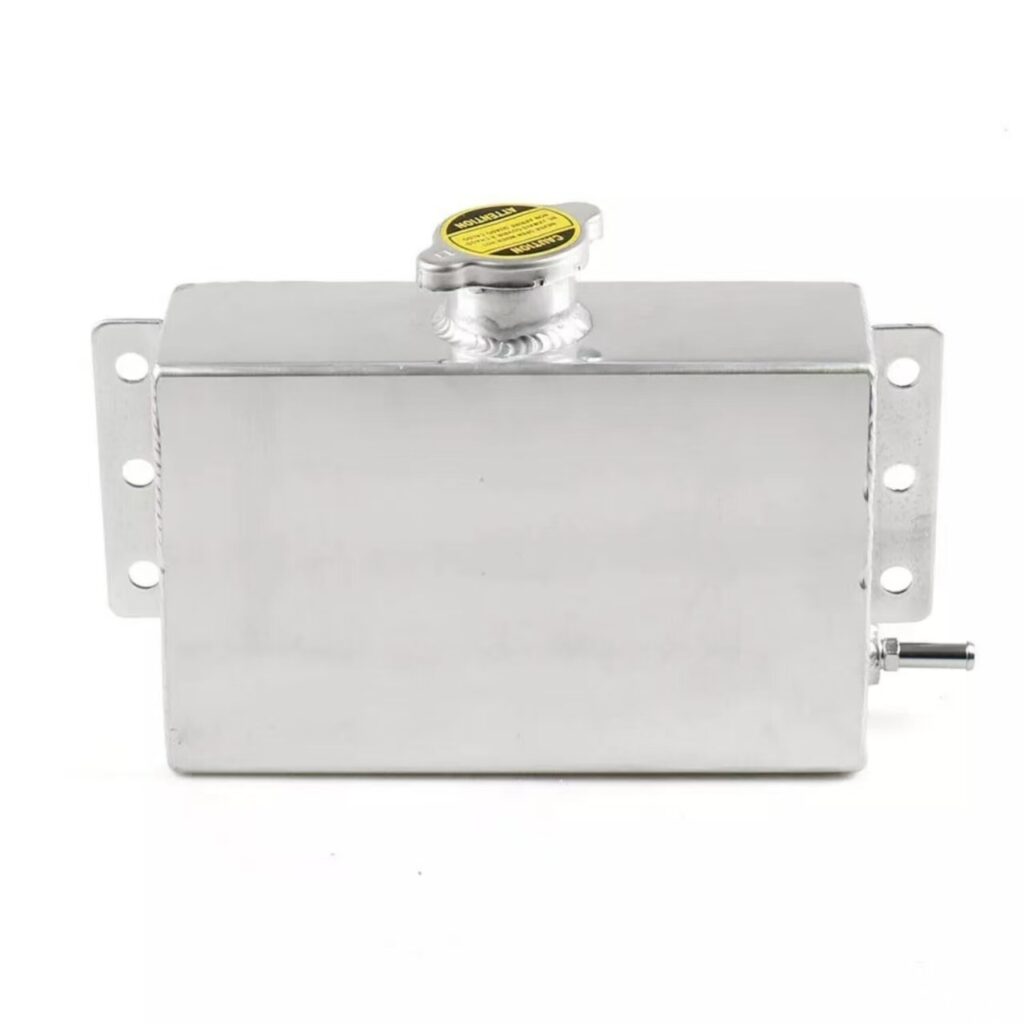
Boîtiers en aluminium sur mesure
Boîtiers en aluminium sur mesure are widely used for protecting electrical systems, industrial equipment, and electronic components.
Important requirements include:
- Accurate dimensions
- Reliable weld seams
- Good surface appearance
- La durabilité à long terme
Welding aluminum plays an important role in producing lightweight and protective enclosure solutions.
Automotive and Transportation Components
Welding aluminum is widely applied in transportation industries because reducing weight can improve efficiency.
Les applications incluent :
- Vehicle structures
- Battery-related components
- Supports légers
- Support frames
Marine Structures
Aluminum’s corrosion resistance makes it suitable for marine applications.
Common examples include:
- Structures de bateau
- Équipement marin
- Composants offshore
Reliable welding quality is essential because these applications often operate in demanding environments.
How Professional Aluminum Welding Improves Product Reliability
Although aluminum welding is challenging, proper knowledge and techniques can significantly improve results.
High-quality aluminum welding depends on:
- Understanding material characteristics
- Selecting suitable welding methods
- Controlling heat input
- Preventing contamination
- Designing weld-friendly structures
For manufacturers providing aluminum welding services, maintaining consistent welding procedures and quality control is essential for producing reliable components.
Conclusion: Mastering the Challenges of Aluminum Welding
So, why is welding aluminum difficult?
The answer comes from a combination of unique material properties and strict process requirements. The oxide layer, high thermal conductivity, thermal expansion, and sensitivity to heat make aluminum welding more challenging than many other metals.
However, with proper techniques, suitable equipment, and a strong understanding of aluminum behavior, high-quality welds can be consistently achieved.
Whether used for precision components, aluminum machine frames, custom aluminum enclosures, or industrial structures, aluminum welding remains an important manufacturing process that requires both technical knowledge and practical experience.
Understanding these challenges allows engineers, designers, and manufacturers to make better decisions when developing reliable aluminum products.