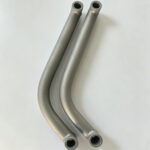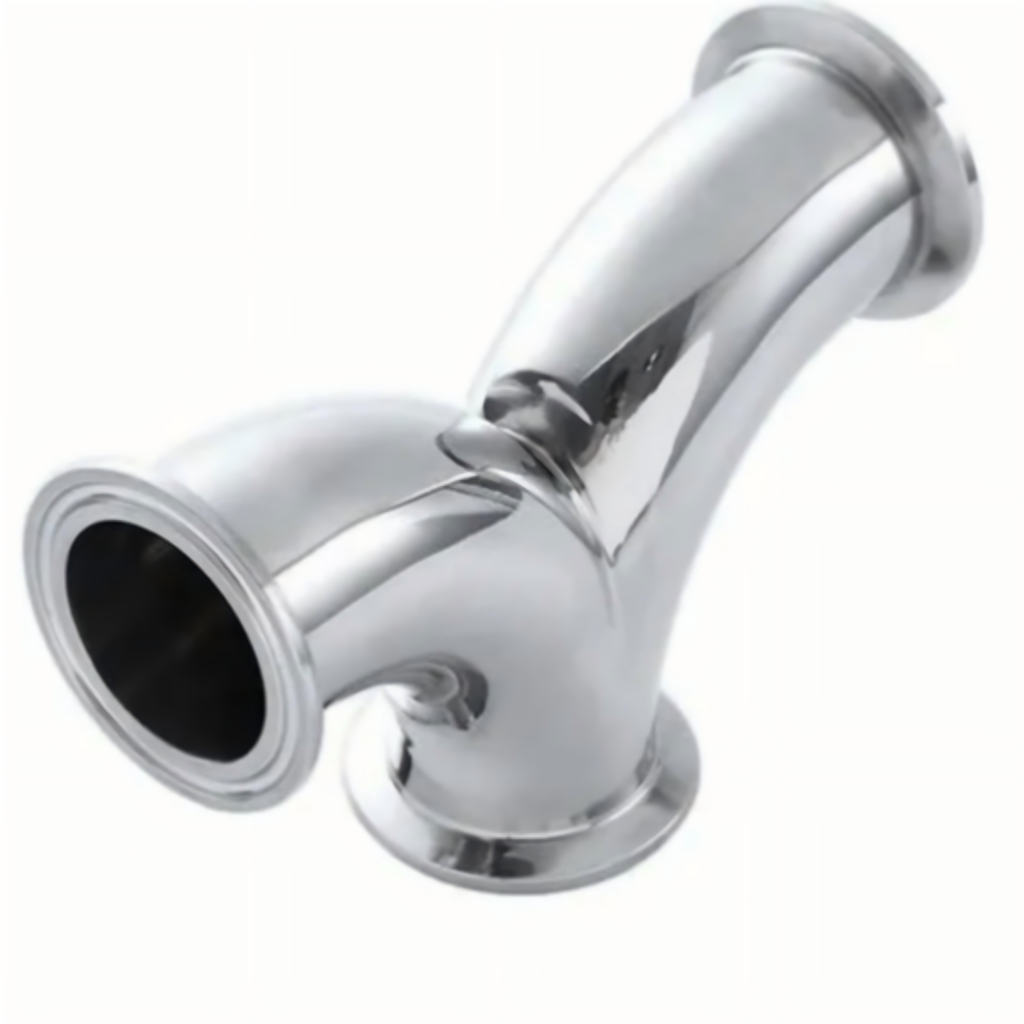
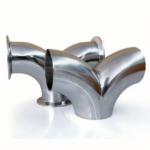
Servicio de Soldadura Experto para Fabricación Personalizada de Accesorio de Tubería en Y
La conexión de tubería en Y tipo tee proporciona una división de flujo suave con construcción soldada, alta resistencia, resistencia a fugas y rendimiento industrial confiable.
Request a Quote
Enter the quantity you need and add to your quote list for pricing inquiries.
Product Details
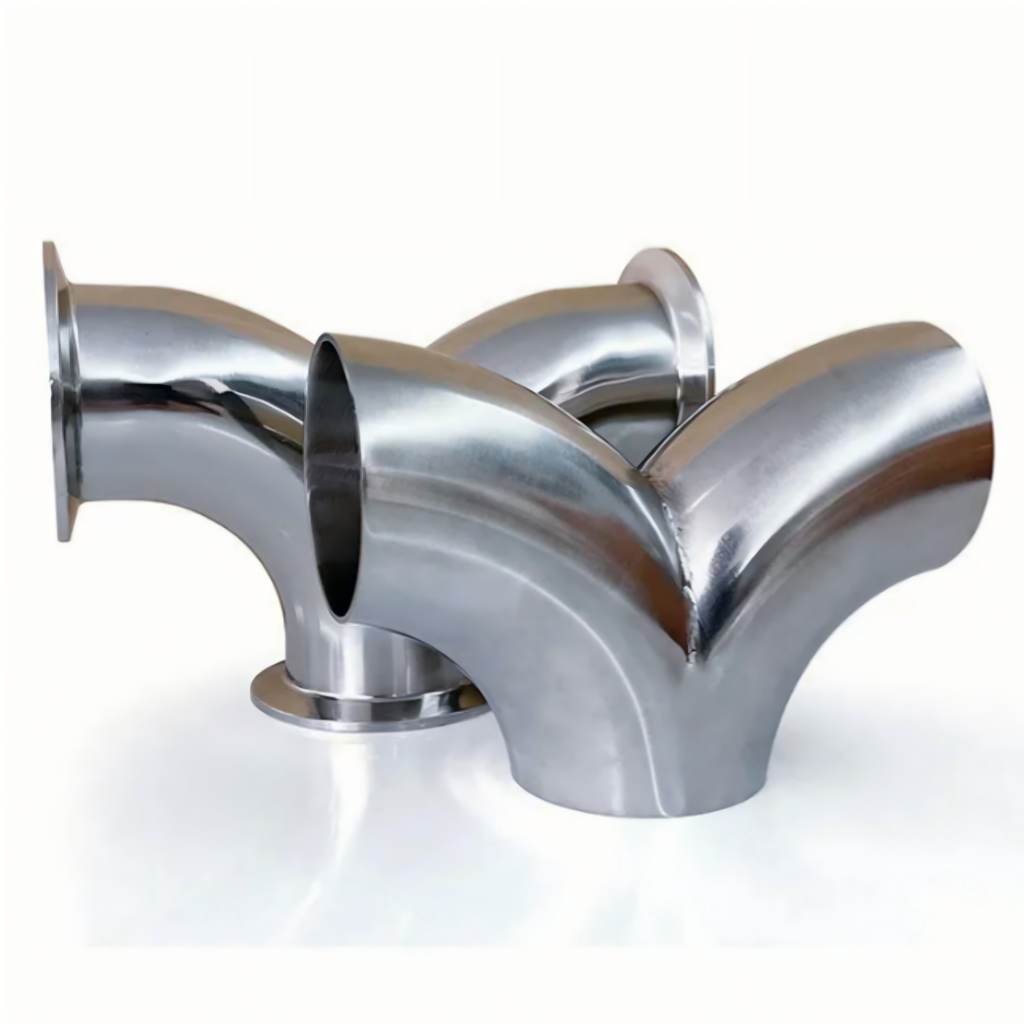
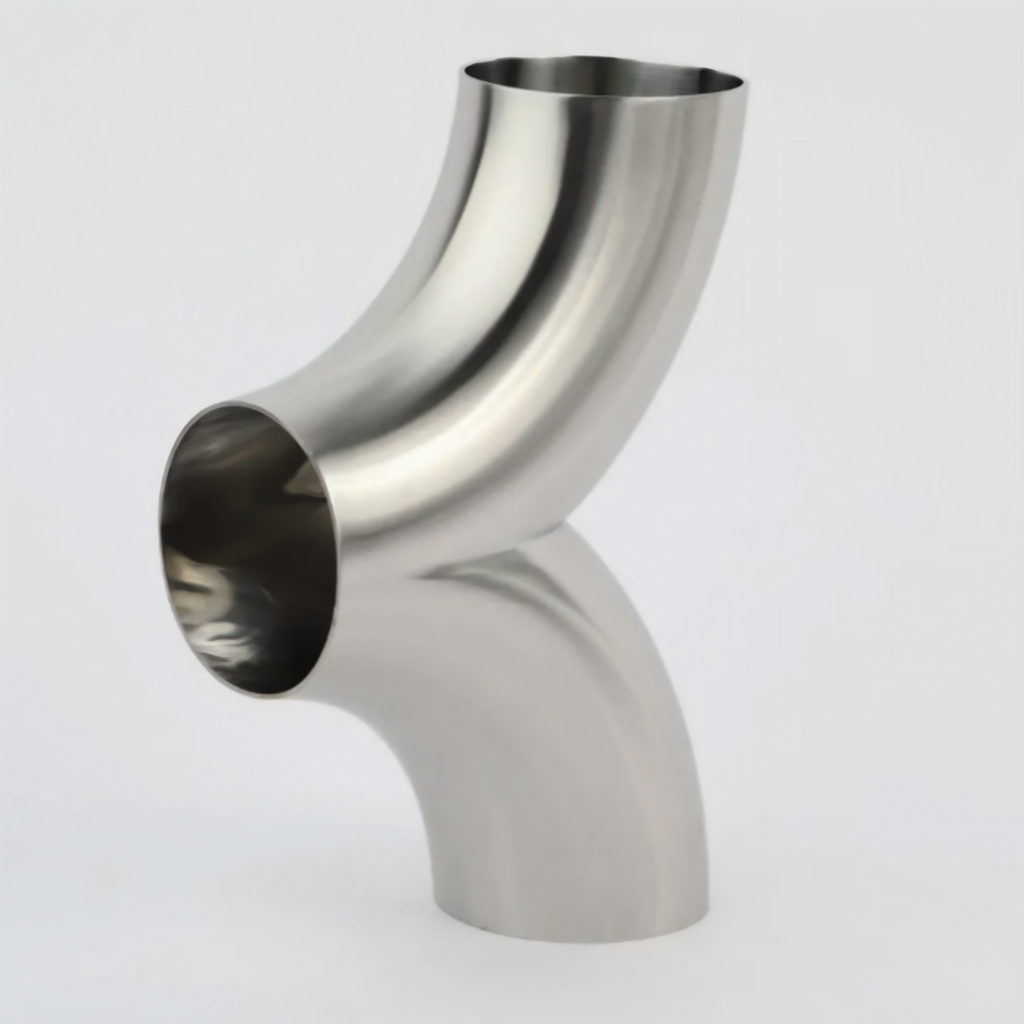
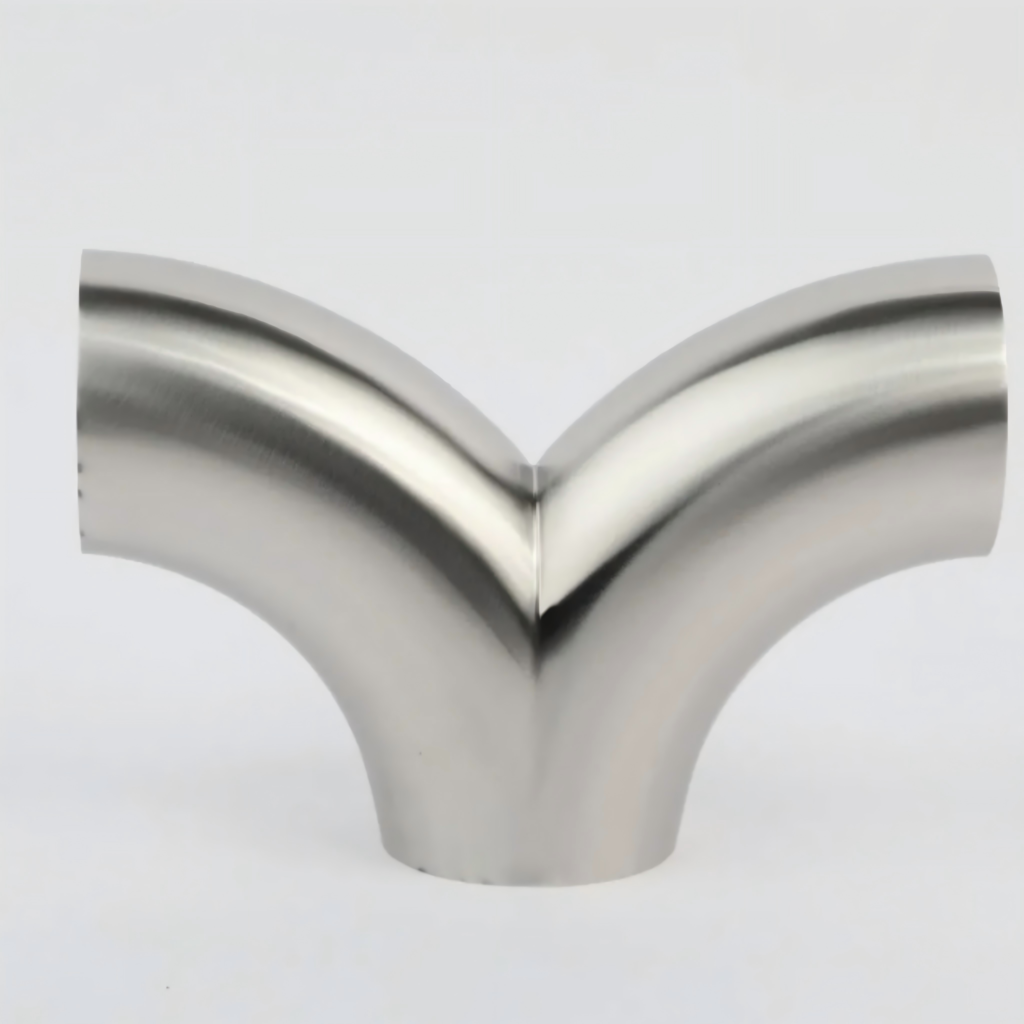
¿Qué es un accesorio de tubería en Y?
Un accesorio de tubería en Y es un conector de tres puertos donde la línea de derivación se une a la línea principal en un ángulo agudo. El nombre “tipo Y” proviene de su parecido con la letra Y. La línea principal permanece recta o ligeramente curvada, mientras que la línea de derivación sale en un ángulo entre 45° y 60°, según el estándar. Esta geometría hace que el accesorio de tubería en Y sea particularmente adecuado para aplicaciones donde se requiere una fusión o separación gradual del flujo.
Los materiales comunes incluyen acero al carbono (ASTM A234 WPB), acero inoxidable (ASTM A403 WP304/316) y acero aleado (ASTM A234 WP11/WP22). Los espesores de pared varían desde Sch10 hasta Sch160, lo que permite la compatibilidad con tuberías soldadas estándar. Los tratamientos de superficie pueden incluir pintura negra, galvanizado o decapado y pasivación.
¿Por qué elegir un accesorio de tubería en Y en lugar de tes estándar?
Los accesorios de te estándar (ramal a 90°) crean cambios abruptos en la dirección del flujo, lo que provoca erosión, cavitación y una mayor pérdida de presión. En contraste, el accesorio de tubería en Y ofrece:
- Reducción de la resistencia al flujo, mejorando la eficiencia de bombeo
- Menor riesgo de acumulación de partículas sólidas en líneas de lodos
- Mejor compatibilidad con tuberías principales formadas por curvado
- Acceso más fácil para revestimiento interno y limpieza con pig en algunos diseños
Para sistemas soldados, proporciona un perfil de soldadura más suave al unir secciones de tubería curvada, especialmente en aplicaciones de gran diámetro o pared gruesa.
Consideraciones de soldadura:
La soldadura es el método de unión más confiable para sistemas de alta presión y alta temperatura. Al incorporarlo en una tubería soldada, se deben controlar varios factores.
Preparación del bisel y ajuste:
La mayoría de los extremos del accesorio de tubería en Y están biselados según los estándares ASME B16.9 o B16.25. El ángulo del bisel (típicamente 37.5°) y la cara de la raíz deben coincidir con la tubería curvada o recta correspondiente. Para conexiones de derivación, la alineación adecuada de los centros del orificio es crítica. Una desalineación superior a 1.5 mm puede causar socavación o falta de fusión en la soldadura.
Procedimiento de soldadura:
For carbon steel y type tee pipe fitting, SMAW (stick) or GMAW (MIG) with E7018 electrodes is common. Stainless steel versions require GTAW (TIG) root pass followed by SMAW or GMAW, using ER308/316 filler metals. Preheating is not required for austenitic stainless steel but may be necessary for carbon steel above 25mm wall thickness. Post-weld heat treatment (PWHT) applies to alloy steel y type tees.
Inspección de Soldadura:
After welding a y type tee pipe fitting to the main pipe and branch pipe, non-destructive testing (NDT) should include:
- Visual inspection for surface cracks
- Dye penetrant (PT) for stainless steel
- Magnetic particle (MT) for carbon steel
- Radiography (RT) or ultrasonic (UT) for full-penetration butt welds
A properly welded y type tee pipe fitting should have no porosity, slag inclusions, or incomplete fusion at the branch junction.
Integration with Pipe Bending:
Many piping systems require bent sections to navigate obstacles or reduce fitting counts. This Product works seamlessly with induction bends, cold bends, or hot bends. Here is how bending affects the fitting selection.
Matching Bend Radius:
When a bent pipe connects to a y type tee pipe fitting, the bend radius should be at least 3D to 5D (where D = nominal pipe size). Smaller radii may cause ovality at the weld end, making fit-up difficult. For tight bends, a forged or seamless y type tee pipe fitting is preferred over welded-seam versions.
Orientation of the Branch:
The branch angle of a y type tee pipe fitting can be rotated relative to the bend plane. For example, a 45° y type tee installed on a 90° horizontal bend creates a three-dimensional offset. This reduces the need for additional elbows or custom miter bends.
Stress Analysis:
Because a y type tee pipe fitting introduces an asymmetric geometry, stresses near the branch junction can be higher than in straight tees. When combined with a bent pipe, flexibility analysis (using Caesar II or AutoPIPE) should include the y type tee intersection SIF (stress intensification factor). Proper gussets or external reinforcement may be needed for high-cycle fatigue applications.
Common Applications Using Y Type Tee Pipe Fitting with Welding and Bending:
Industries that frequently use the y type tee pipe fitting include:
: Where lateral lines join main trunk lines at low angles to minimize pigging interference.
: For mixing two streams with different temperatures or viscosities.
Power plant cooling water systems
: Diagonal branches reduce debris accumulation.
Shipbuilding and offshore platforms
: Space constraints often require bent pipe + y tee combinations.
HVAC large chilled water systems
: Low-pressure-drop branch connections.
In each case, welded connections ensure leak-tight performance, while bending avoids extra flanges or couplings.
Comparison of Manufacturing Methods: Forged, Seamless, and Welded Y Type Tee Pipe Fitting
The production method affects weldability and bending compatibility.
Seamless y type tee pipe fitting
(extruded from pipe or bar): Best for high-pressure and corrosive services. Provides uniform wall thickness for welding to bent pipes. Size range usually up to DN600.
Welded y type tee pipe fitting
(fabricated from plate or two pipes): Cost-effective for large diameters (above DN600). Requires longitudinal seam weld inspection before final branch welding.
Forged y type tee pipe fitting
(hammered or pressed from solid billet): Used for heavy-wall or high-alloy materials. Offers excellent grain flow orientation near the branch.
For most welding and bending applications, seamless or forged y type tee pipe fittings are preferred due to consistent metallurgy and predictable thermal expansion.
Dimensional Standards and Marking for Y Type Tee Pipe Fitting:.
Common Applications Using Y Type Tee Pipe Fitting with Welding and Bending:
Industries that frequently use the y type tee pipe fitting include:
- Líneas de recolección de petróleo y gas: Where lateral lines join main trunk lines at low angles to minimize pigging interference.
- Procesamiento químico: For mixing two streams with different temperatures or viscosities.
- Power plant cooling water systems: Diagonal branches reduce debris accumulation.
- Shipbuilding and offshore platforms: Space constraints often require bent pipe + y tee combinations.
- HVAC large chilled water systems: Low-pressure-drop branch connections.
In each case, welded connections ensure leak-tight performance, while bending avoids extra flanges or couplings.
Comparison of Manufacturing Methods: Forged, Seamless, and Welded Y Type Tee Pipe Fitting
The production method affects weldability and bending compatibility.
- Seamless y type tee pipe fitting (extruded from pipe or bar): Best for high-pressure and corrosive services. Provides uniform wall thickness for welding to bent pipes. Size range usually up to DN600.
- Welded y type tee pipe fitting (fabricated from plate or two pipes): Cost-effective for large diameters (above DN600). Requires longitudinal seam weld inspection before final branch welding.
- Forged y type tee pipe fitting (hammered or pressed from solid billet): Used for heavy-wall or high-alloy materials. Offers excellent grain flow orientation near the branch.
For most welding and bending applications, seamless or forged y type tee pipe fittings are preferred due to consistent metallurgy and predictable thermal expansion.
Dimensional Standards and Marking for Y Type Tee Pipe Fitting:
Para garantizar un ajuste adecuado con tuberías dobladas, siempre adquiera una pieza de tubería en Y fabricada según:
- ASME B16.9 (accesorios de soldadura a tope de fabricación industrial)
- EN 10253-2 (accesorios de soldadura a tope de acero inoxidable)
- MSS SP-75 (accesorios de acero al carbono de alta resistencia)
Las dimensiones a verificar incluyen:
- Dimensión centro a extremo para la rama (generalmente medida a lo largo del eje de la rama)
- Longitud extremo a extremo del recorrido principal
- Ángulo de la rama (comúnmente 45° o 60°)
- Tolerancia del espesor de pared (±12,5% según ASME)
Las marcas deben incluir tamaño nominal, cédula, grado del material, número de calor y la designación y type tee pipe fitting o simplemente Y-TEE.