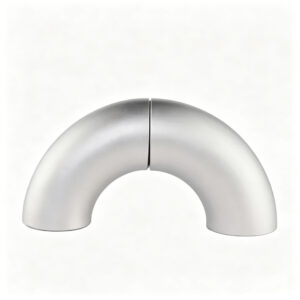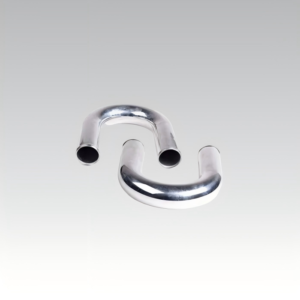
Manillar Personalizado Para Curvado de Tubos de Acero Inoxidable para Motocicleta
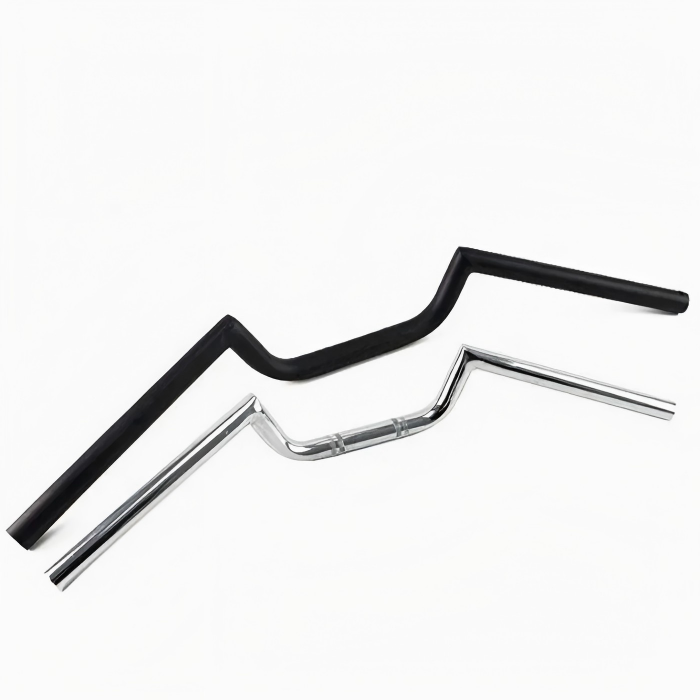
Este Manillar para Motocicleta está fabricado a medida con tecnología de curvado de precisión y construcción de acero inoxidable.
Request a Quote
Enter the quantity you need and add to your quote list for pricing inquiries.
Product Details
Why Tube Bending Quality Defines a Handlebar for Motorcycle?
A handlebar for motorcycle looks simple but requires surprisingly tight tolerances. The left and right sides must be perfect mirrors. The bend angles must match the intended riding position. The surface must be smooth enough for grips and controls to slide on easily. Any deviation from the design creates problems that riders notice immediately.
.
Poor bending creates several common issues. First, mismatched left and right pullback angles cause the handlebar to feel crooked when riding straight. Second, wrinkles on the inner bend radius create stress points that can crack over time, especially on off road motorcycles. Third, inconsistent wall thinning creates weak spots that bend further during hard use. Fourth, poor surface finish damages grips or prevents throttle tubes from rotating smoothly.
.
Precision tube bending eliminates all of these problems. A professionally bent handlebar for motorcycle fits the intended motorcycle model perfectly, feels balanced in the rider hands, and lasts for years without cracking or deforming.
.
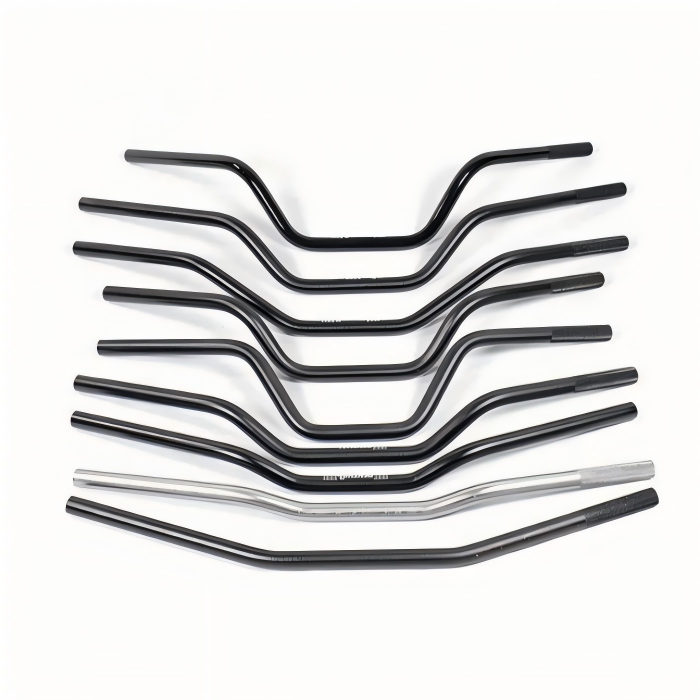
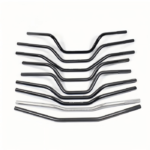
Common Handlebar for Motorcycle Bend Types:
Different riding styles require different handlebar geometries. Understanding these bend types helps you communicate with customers and set up your bender correctly.
.
The rise is the vertical distance from the handlebar clamp center to the grip center. A flat track handlebar for motorcycle might have only one inch of rise. A touring bike handlebar can have six to ten inches of rise. The sweep or pullback is the horizontal angle that brings the grips back toward the rider. Sweep typically ranges from 8 to 14 degrees per side. The width is the total distance from grip end to grip end. Widths range from 28 inches for sport bikes to 34 inches for cruisers.
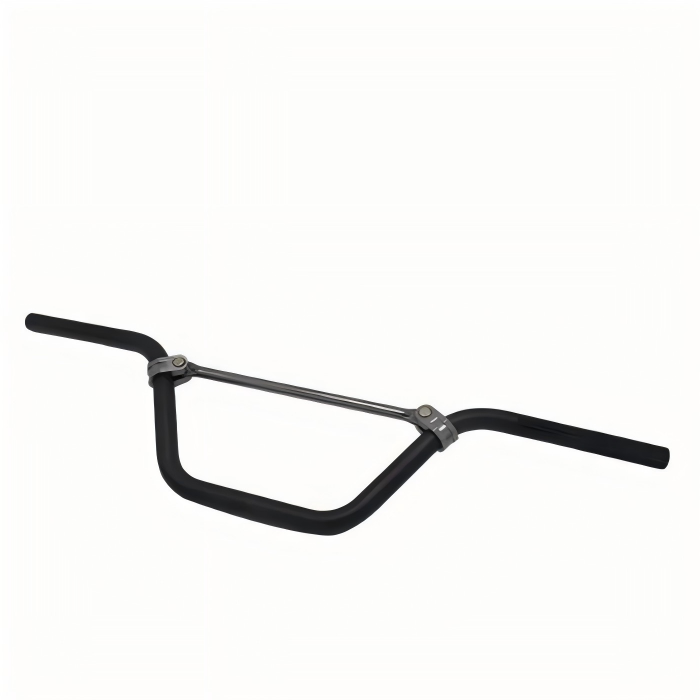
Some handlebars also include a center crossbar for added strength on off road or adventure motorcycles. This crossbar requires additional bending and notching operations.
Best Tube Bending Methods for a Handlebar for Motorcycle:
Not all bending methods are suitable for motorcycle handlebars. The visible nature of the part and the need for symmetrical bends demand specific approaches.
Mandrel bending is the standard for any handlebar for motorcycle that will be visible and finished with chrome or powder coating. A flexible mandrel inside the tube prevents ovality and wrinkling. This is essential when the handlebar has tight radius bends such as the sharp curve near the clamp area on a cafe racer handlebar.
Rotary draw bending without a mandrel can work for wider radius bends or heavier wall tubes. However, for the typical 7/8 inch or 1 inch OD handlebar tube, mandrel bending produces a noticeably better result. The extra cost of mandrel tooling pays for itself through fewer rejected parts and happier customers.
CNC bending is non negotiable for producing left and right mirrors of a handlebar for motorcycle. Manual bending almost always introduces small errors that accumulate across multiple bend operations. A CNC bender repeats the same bend sequence exactly every time, producing identical left and right sides within plus or minus 0.5 degrees.
Critical Design Specifications for Handlebar for Motorcycle Tube Bending:
To deliver a superior handlebar for motorcycle, your team must control several parameters with precision.
Tube diameter is typically 7/8 inch or 1 inch OD for most motorcycles. Some heavy touring or custom bikes use 1.25 inch OD tubing. Wall thickness ranges from 0.065 inches for lightweight handlebars to 0.095 inches for heavy duty off road applications. Thicker walls resist bending and cracking but add weight. Thinner walls reduce weight but can flex too much during aggressive riding.
Bend radius determines how tightly the handlebar for motorcycle can curve. The minimum centerline bend radius for most handlebar applications is 2.5 to 3 inches. With mandrel bending, radii as tight as 1.8 times the tube diameter are achievable. For a 7/8 inch OD tube, that equals approximately a 1.6 inch radius.
.
Wall thinning allowance is critical for safety and durability. During bending, the outer wall stretches and becomes thinner. For a handlebar for motorcycle that will see off road or heavy use, wall thinning should not exceed 15 percent of the original thickness. Exceeding this limit creates a weak spot that could crack during a hard landing or crash.
.
Springback compensation ensures final angles match the intended rise and sweep. Steel tubes spring back slightly after bending. A precision bending service calculates springback in advance and over bends the tube by 1 to 2 degrees. Without this compensation, the final handlebar for motorcycle will have incorrect angles that change the riding position.
.
Material Selection for Handlebar for Motorcycle:
The choice of material directly affects bending difficulty, final weight, durability, and cost. Each material has a place in the market.
.
Mild steel is the most common material for a handlebar for motorcycle. It bends easily, welds well, and accepts chrome plating or powder coating. AISI 1020 or 1026 DOM tube is preferred because it has no internal weld seam that could split during bending. DOM stands for drawn over mandrel, which means the tube already has a smooth interior surface.
.
Stainless steel offers excellent corrosion resistance and a premium appearance that never rusts or pits. However, stainless steel work hardens during bending, requiring higher tonnage and more frequent tooling changes. A handlebar for motorcycle made from 304 stainless looks beautiful but costs more to produce and takes longer to bend.
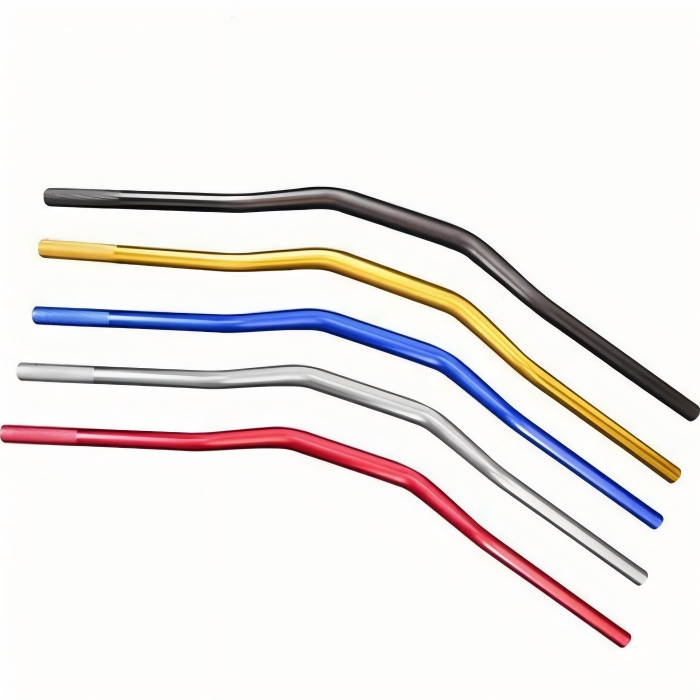
El aluminio se utiliza para manillares ligeros de competición o personalizados. El aluminio 6061 se dobla razonablemente bien con soporte de mandril, pero tiene menor resistencia a la fatiga que el acero. Los manillares de aluminio suelen tener un diámetro mayor para compensar la debilidad del material. También es más probable que se agrieten por la vibración después de muchos años de uso.
El acero dulce cromado sigue siendo la opción más popular para manillares de producción porque equilibra costo, durabilidad y apariencia.
Control de calidad para el doblado de tubos de manillar para motocicleta:
Cada lote de tubos de manillar para motocicleta debe pasar estos controles de calidad antes de enviarse a su cliente.
La medición de ovalidad garantiza que la sección transversal del tubo doblado permanezca al menos un 92 por ciento circular. La ovalidad aceptable es inferior al 8 por ciento para manillares de acero. Una ovalidad mayor debilita el tubo y puede impedir la rotación del tubo del acelerador.
La verificación de tolerancia de ángulo asegura que cada ángulo de doblado esté dentro de más o menos 0.5 grados de la especificación. Los lados izquierdo y derecho deben coincidir dentro de 0.5 grados. Una discrepancia tan pequeña como 1 grado se vuelve obvia cuando el manillar para motocicleta está montado en la moto y los puños apuntan en direcciones ligeramente diferentes.
La inspección de la condición de la superficie busca arrugas, torceduras, rayones o marcas de matriz en cualquier radio de doblado. Cualquier defecto superficial se vuelve visible después del cromado o recubrimiento en polvo. Incluso los rayones pequeños pueden atrapar la humedad y provocar óxido con el tiempo.
La inspección dimensional verifica que el ancho total, la altura de elevación y la distancia de barrido coincidan con el dibujo del cliente. Una máquina de medición por coordenadas o un dispositivo de calibre personalizado generalmente realiza esta verificación.
Preguntas frecuentes sobre el doblado de tubos de manillar para motocicleta:
¿Qué espesor de pared recomienda para un manillar para motocicleta?
Recomendamos 0.065 pulgadas para manillares de calle ligeros y 0.095 pulgadas para manillares de motocicleta todoterreno o de aventura de servicio pesado que utilizan acero DOM.
¿Pueden doblar un tubo de 1 pulgada de diámetro exterior para mi pedido de manillar para motocicleta?
Sí, nuestra dobladora CNC con mandril maneja tubos de 7/8 de pulgada, 1 pulgada y 1.25 pulgadas de diámetro exterior con menos del 8 por ciento de ovalidad y sin arrugas.
¿Cuál es el radio de doblado mínimo para un manillar para motocicleta?
Nuestro radio mínimo en la línea central es 1.8 veces el diámetro del tubo. Para un tubo de 7/8 de pulgada de diámetro exterior, eso equivale aproximadamente a un radio de 1.6 pulgadas.
¿Ofrecen creación de prototipos para un manillar para motocicleta antes de la producción en masa?
Sí, ofrecemos creación de prototipos de bajo volumen de una a cinco unidades para pruebas de ajuste y sensación antes de escalar a la producción completa.
¿Cómo evitan el colapso del tubo al doblar radios ajustados para un manillar para motocicleta?
Utilizamos un mandril rectificado de precisión, un troquel limpiador y un troquel de presión para soportar la pared interior del tubo durante el doblado.