Why Aluminum Pipe Welding Matters for Modern OEM Manufacturing?
Aluminum has become a preferred material for modern manufacturing due to its lightweight properties, excellent corrosion resistance, and high strength-to-weight ratio. From automotive components and industrial equipment to automation systems and custom structural assemblies, aluminum tube structures are increasingly replacing traditional steel solutions.
However, producing reliable aluminum structures requires more than simply joining two tubes together. Aluminum pipe welding involves precise control of heat input, material preparation, welding parameters, and inspection processes to achieve strong and consistent joints.
For OEM manufacturers, choosing the right aluminum welding method and production partner directly affects product performance, durability, and manufacturing efficiency. TIG welding is widely recognized as one of the most effective solutions for aluminum pipe and tube applications because it provides excellent weld control, clean appearance, and high-quality results.
This article explores the aluminum pipe welding process, key manufacturing considerations, common applications, and how professional welding solutions help OEM customers achieve reliable aluminum assemblies.
Understanding Aluminum Pipe Welding for OEM Projects:
Aluminum pipe welding is the process of joining aluminum pipes or tubes through controlled welding techniques to create strong and permanent connections. Unlike steel welding, aluminum welding requires additional expertise because aluminum has unique physical characteristics, including high thermal conductivity and a naturally formed oxide layer.
For OEM projects, aluminum tube assemblies are commonly used when manufacturers need lightweight structures without sacrificing strength. Applications include equipment frames, automotive components, heat exchanger systems, and customized industrial assemblies.
Although several welding methods can be used for aluminum, TIG welding is often preferred for precision applications. It allows welders to control the arc, filler material, and heat input more accurately, making it suitable for thin-wall aluminum pipes and complex joint designs.
A successful aluminum pipe welding project depends on several factors:
| Key Factor | Warum es wichtig ist |
| Auswahl der Aluminiumlegierung | Different alloys have different weldability and strength characteristics |
| Tube design and joint structure | Proper design improves welding stability and product performance |
| Welding method | The right process ensures consistent and durable joints |
| Qualitätsprüfung | Inspection prevents defects and maintains production reliability |
For OEM customers, working with an experienced aluminum welding manufacturer can help reduce development risks and improve overall product quality.
TIG Welding Process: The Key to High-Quality Aluminum Pipe Joints
Among different aluminum welding technologies, TIG welding is widely used for applications requiring precision, strength, and excellent appearance. Professional TIG aluminum welding provides better control compared with many conventional welding methods, especially when working with thin aluminum tubes or complex geometries.
One of the main challenges in aluminum welding is the oxide layer that forms naturally on the surface. Aluminum oxide has a much higher melting point than the base material, which means proper surface preparation and welding control are essential. TIG welding, especially AC TIG welding, helps effectively manage this challenge by providing stable arc performance and controlled cleaning action.
Key advantages of TIG welding for aluminum pipe applications include:
| TIG Welding Advantage | Benefit for OEM Aluminum Projects |
| Präzise Wärmekontrolle | Minimizes distortion during welding |
| Clean and attractive welds | Improves final product appearance |
| Excellent arc stability | Supports complex aluminum structures |
| Suitable for thin materials | Enables lightweight tube designs |
For manufacturers producing custom aluminum assemblies, professional welding capabilities are important to ensure repeatable quality from prototype development to mass production. Advanced TIG welding solutions are commonly used for aluminum components that require both functional performance and visual quality.
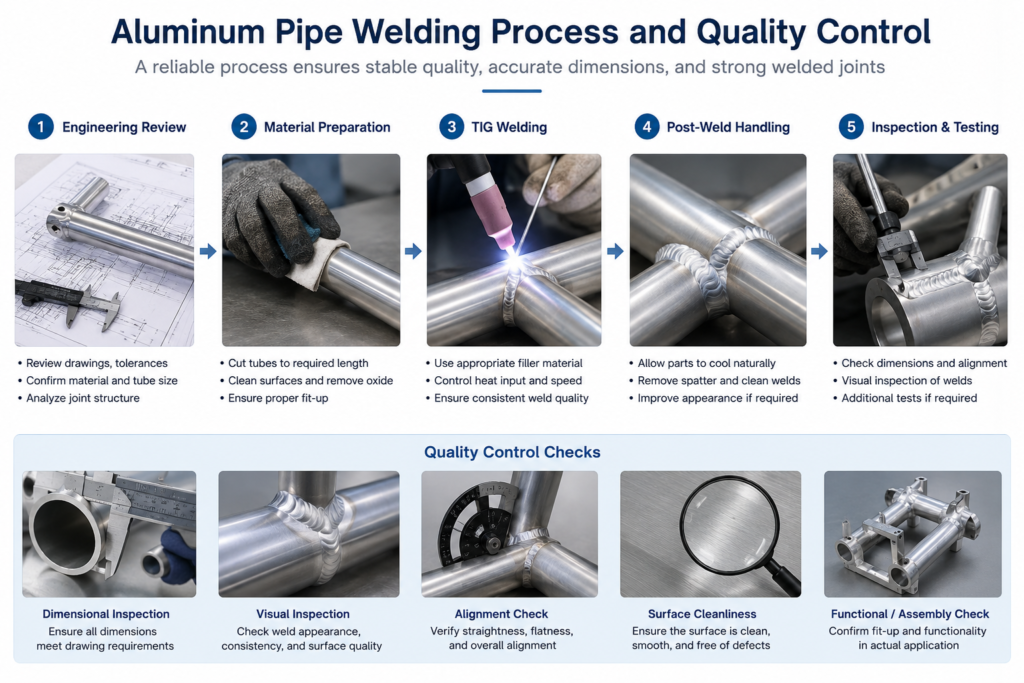
Aluminum Pipe Welding Process and Quality Control:
A reliable aluminum pipe welding project requires a well-controlled manufacturing process from design review to final inspection. For OEM customers, consistent quality depends not only on welding skills but also on proper preparation, process control, and inspection procedures.
Applications of Custom Aluminum Pipe Welding Solutions:
The demand for lightweight and high-performance structures has made aluminum pipe welding an important manufacturing solution across various industries. Aluminum welded assemblies provide excellent strength-to-weight performance, corrosion resistance, and design flexibility, making them suitable for both standard and customized OEM applications.
Automotive and Transportation Components:
The automotive industry increasingly uses aluminum structures to reduce overall weight while maintaining mechanical performance. Aluminum welded tubes are commonly applied in support brackets, lightweight frames, battery-related structures, and customized components.
For these applications, welding quality is critical because components must withstand vibration, mechanical loads, and long-term operating conditions.
Industrial Equipment and Automation Systems:
Industrial equipment manufacturers often require aluminum tube assemblies for machine structures, protective frames, and customized mechanical systems.
Compared with heavier materials, aluminum provides easier handling and better corrosion resistance while still maintaining sufficient structural strength. Precision welding allows manufacturers to create complex designs while meeting strict dimensional requirements.
Custom OEM Manufacturing Projects:
For OEM customers, aluminum pipe welding is particularly useful when standard off-the-shelf components cannot meet the required dimensions or assembly configuration.
Custom welding allows tube length, joint position, connector design, and overall structure to be developed around the customer’s product requirements.
For projects involving more complex tube fabrication, custom aluminum tube welding solutions can be combined with cutting, machining, finishing, and assembly to create a more complete manufacturing solution.
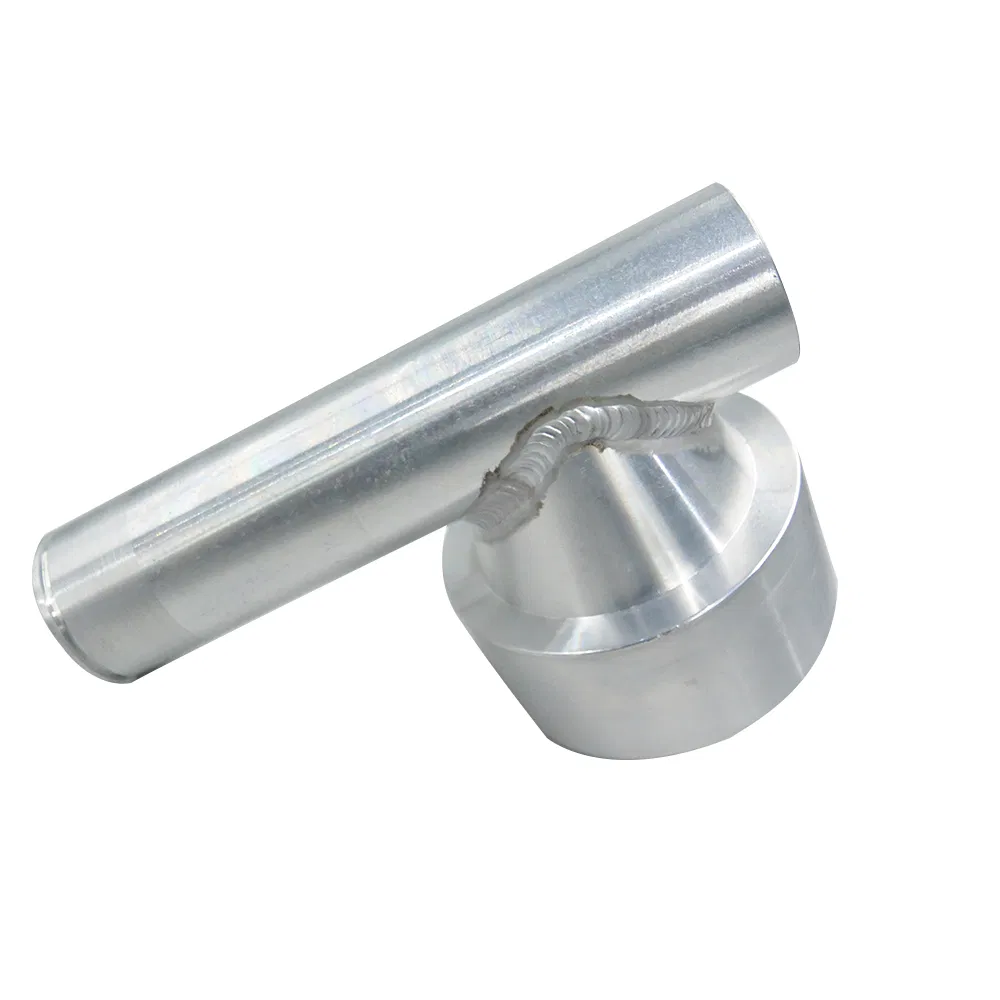
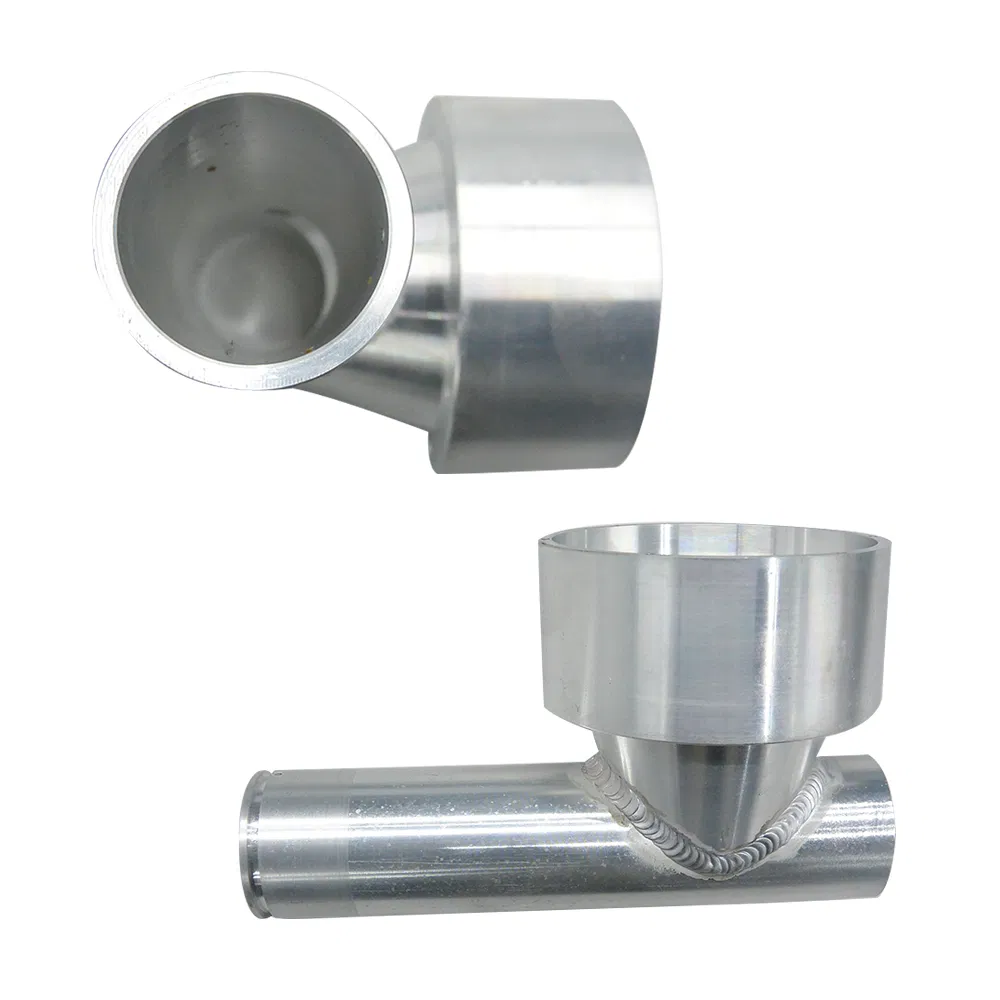
Case Study: Custom Aluminum Tube Connector Welding Project
Real manufacturing experience is one of the most important factors when selecting an aluminum welding partner. A custom tube connector project demonstrates how professional aluminum pipe welding capabilities can solve practical OEM challenges.
Projektanforderungen:
The customer required a lightweight aluminum tube connector for an industrial assembly. The component needed to provide reliable structural support while maintaining accurate dimensions and a clean welded appearance.
The main requirements included:
- Lightweight aluminum construction
- Strong and consistent welded joints
- Stabile Produktionsqualität
- Compatibility with the final assembly
Welding Challenges and Solution:
The biggest challenge was controlling heat during the welding process. Aluminum has high thermal conductivity, meaning excessive heat input can easily cause distortion and affect dimensional accuracy.
To overcome this challenge, the manufacturing team used TIG aluminum welding with optimized welding parameters and proper fixture support. Careful surface preparation and process control helped achieve stable weld quality.
Project Result:
The finished aluminum tube connector achieved the required strength, appearance, and dimensional accuracy. The project demonstrated how experienced welding engineers can help OEM customers transform custom designs into reliable production components.
More details about this application can be found in this custom aluminum tube connector project.
How to Choose the Right Aluminum Pipe Welding Manufacturer:
Choosing the right aluminum pipe welding manufacturer can directly affect product quality, production consistency, and project lead time.
For OEM projects, look for a supplier with:
- Proven TIG aluminum welding experience
- Engineering support for custom designs
- Prototype and production capabilities
- Reliable quality inspection processes
It is also important to consider whether the manufacturer can support your project beyond welding, such as CNC machining, surface finishing, and final assembly.
A supplier with integrated manufacturing capabilities can simplify communication and reduce the need to coordinate multiple vendors.
If you have drawings or specifications for a custom aluminum pipe welding project, you can contact our engineering team to discuss your requirements and request a quotation.
FAQ About Aluminum Pipe Welding:
1. What aluminum alloys are commonly used for pipe welding?
6061 and 6063 are commonly considered for aluminum tube applications because of their combination of weldability, strength, and corrosion resistance. The appropriate alloy depends on the final application.
2. Can aluminum pipe welding be used for thin-wall tubes?
Yes. TIG welding is well suited to many thin-wall aluminum applications because the welding process allows precise control of heat input and arc stability.
3. Can aluminum welded parts be machined after welding?
Yes. CNC machining can be performed after welding when critical dimensions, mounting surfaces, holes, or other features require tighter tolerances.
4. Can aluminum pipe welding be customized for OEM projects?
Yes. OEM aluminum welding can be adapted to different tube sizes, joint configurations, materials, quantities, and product requirements.
5. What affects the cost of an aluminum pipe welding project?
Material, tube dimensions, welding complexity, production volume, inspection requirements, machining, and surface finishing can all affect the final project cost.
6. What information is needed for an aluminum welding quotation?
A 2D drawing or 3D model, material specification, quantity, dimensions, tolerances, surface finish, and special quality requirements can help a manufacturer prepare an accurate quotation.