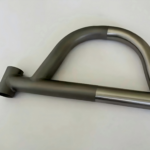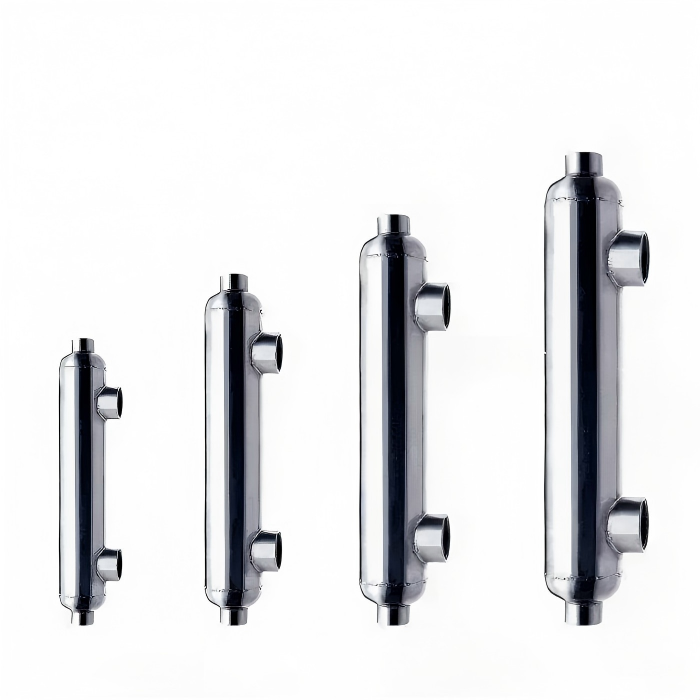
Überlegener Titan-Wärmetauscher-Pool-Schweißdienst 3X längere Lebensdauer
Dieser Titan-Wärmetauscher-Pool wird mit präziser Orbital-WIG-Schweißtechnik für Schwimmbadheizungsanwendungen kundenspezifisch gefertigt. Mit einer Titan-Konstruktion bietet er hervorragende Korrosionsbeständigkeit, effiziente Wärmeübertragung und langanhaltende Haltbarkeit.
Request a Quote
Enter the quantity you need and add to your quote list for pricing inquiries.
Product Details
Why Traditional Pool Heat Exchangers Fail?
Most pool heat exchangers are made from copper or cupronickel. These materials work reasonably well in balanced water chemistry, but they have significant vulnerabilities. Pool water contains chlorine, bromine, salts, and other sanitizing chemicals. Over time, these chemicals attack copper alloys, causing pinhole leaks and eventual failure. A failed heat exchanger in a pool heater often means replacing the entire unit.
.
Stainless steel offers better corrosion resistance than copper but still fails in high-chlorine or saltwater pools. Chloride-induced stress corrosion cracking destroys stainless steel heat exchangers within a few seasons, especially in heated water. This is where a titanium heat exchanger pool solution proves superior. Titanium is virtually immune to chlorine, bromine, salt, and most other chemicals found in pool water.
.
The Titanium Advantage for Pool Heat Exchangers:
Titanium offers four distinct advantages for pool heating applications. First, corrosion resistance. Titanium naturally forms a stable, protective oxide layer that reforms instantly if scratched. This layer resists attack from chlorides, acids, and sanitizing chemicals. A titanium heat exchanger pool component will not rust, pit, or crack from pool chemistry.
.
Second, heat transfer efficiency. Titanium has excellent thermal conductivity, though slightly lower than copper. However, because titanium can be manufactured in very thin walls, the overall heat transfer of a titanium heat exchanger pool unit can match or exceed copper designs. Thin walls reduce material weight and improve response time.
.
Third, durability. A titanium heat exchanger pool component has no sacrificial anodes, no coatings to wear off, and no corrosion limit. Once installed, it requires no maintenance related to material degradation. Pool owners can expect 20 years or more of reliable service.
.
Fourth, weight. Titanium density is about 60 percent of copper. A titanium heat exchanger pool unit is significantly lighter than copper equivalents, making installation and service easier.
.
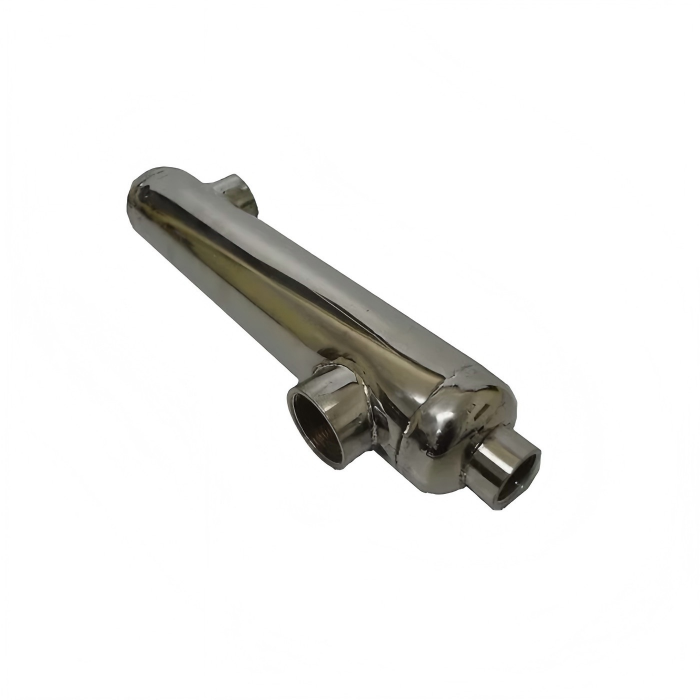
How a Titanium Heat Exchanger Pool System Works:
A pool heat exchanger transfers heat from a energy source to the pool water without mixing the two fluids. The most common configuration is a tube-in-shell design. Hot water or refrigerant flows through tubes while pool water flows around them. A titanium heat exchanger pool unit uses titanium tubes and sometimes titanium tube sheets.
.
In a swimming pool application, the heat source can be a boiler, heat pump, solar thermal system, or geothermal loop. The pool water circulates through the shell side of the titanium heat exchanger pool device, absorbing heat from the tubes. Because titanium resists both the pool chemistry and the heat transfer fluid chemistry, the system remains leak-free for decades.
.
Challenges of Welding a Titanium Heat Exchanger Pool Component:
Despite its advantages, titanium presents serious fabrication challenges, especially for heat exchanger applications. Titanium is highly reactive when exposed to oxygen, nitrogen, and hydrogen at elevated temperatures. During welding of a titanium heat exchanger pool unit, the weld zone must be completely shielded from atmospheric contamination. If shielding fails, the titanium absorbs these elements, resulting in embrittlement and cracking.
.
Heat exchangers involve tube-to-tubesheet welds, which are among the most demanding joints in fabrication. For a titanium heat exchanger pool component, each tube must be welded to the tubesheet with full penetration and complete shielding of both the weld face and the root side. This requires precise fit-up, back-purging with pure argon, and skilled welder technique.
.
Tube-to-tubesheet welding for a titanium heat exchanger pool typically uses automated orbital GTAW (gas tungsten arc welding) to ensure consistency. Orbital welding maintains exact arc length, travel speed, and gas coverage across dozens or hundreds of tube joints.
.
Critical Steps for Welding a Titanium Heat Exchanger Pool:
Successful fabrication of a titanium heat exchanger pool unit begins long before the arc is struck:
Material selection: Grade 1 or Grade 2 commercially pure titanium is standard for pool heat exchangers. These grades offer excellent corrosion resistance and weldability. Grade 2 provides slightly higher strength while maintaining formability.
.
Tube preparation: Titanium tubes must be cut square, deburred, and cleaned inside and out. Use acetone or isopropyl alcohol followed by a dedicated stainless steel brush used only on titanium. Any contamination leads to weld defects.
.
Tubesheet preparation: The tubesheet holes must be precisely drilled and cleaned. For a titanium heat exchanger pool component, hole diameters typically allow a 0.1mm to 0.2mm clearance for the tube. Too tight and assembly is impossible. Too loose and weld quality suffers.
.
Fit-up: Tubes should extend 1mm to 2mm beyond the tubesheet face. This extension melts during welding to create a reinforcing fillet. All tubes in a titanium heat exchanger pool must extend uniformly.
.
Back-purging: The inside of each tube and the back side of the tubesheet must be filled with pure argon at 99.999 percent purity. Without back-purging, the root side oxidizes, creating a brittle layer that leaks over time.
.
Welding parameters: Use orbital GTAW with a 2 percent ceriated tungsten electrode. Gas flow rates of 15 to 25 cubic feet per hour on the torch and 10 to 15 cubic feet per hour for back-purge. Post-flow must continue for at least 15 seconds after arc extinction.
.
Common Defects in Titanium Heat Exchanger Pool Welding:
Selbst erfahrene Schweißer können bei der Herstellung einer Titan-Wärmetauscher-Pool-Einheit auf Defekte stoßen.
Oxidation und Verfärbung: Silberne oder hellstrohfarbene Schweißnähte zeigen eine ordnungsgemäße Abschirmung an. Blau, Lila oder Grau bedeuten Verunreinigung, die eine Schweißnahtablehnung erfordert. Bei einem Titan-Wärmetauscher-Pool führen oxidierte Schweißnähte im Betrieb zu Undichtigkeiten.
Unvollständige Durchdringung: Die Schweißnaht verbindet sich nicht vollständig durch die Rohrwand mit dem Rohrboden. Dies führt zu schwachen Verbindungen, die unter Druck versagen. Passen Sie die Parameter an und qualifizieren Sie das Schweißverfahren neu.
Porosität: Gaseinschlüsse in der Schweißnaht ermöglichen Leckagen. Verursacht durch verunreinigtes Grundmaterial oder unzureichende Gasabdeckung. Lehnen Sie poröse Verbindungen ab und schweißen Sie sie neu.
Einbrandkerbe: Eine in den Rohrboden neben der Schweißnaht eingeschmolzene Rille. Erzeugt Spannungskonzentrationen und potenzielle Leckagepfade. Reduzieren Sie die Stromstärke oder passen Sie die Technik an.
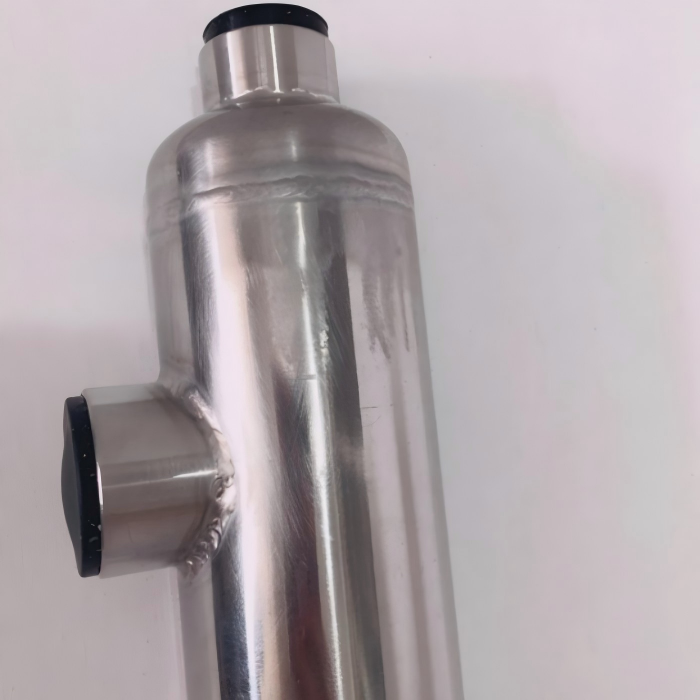
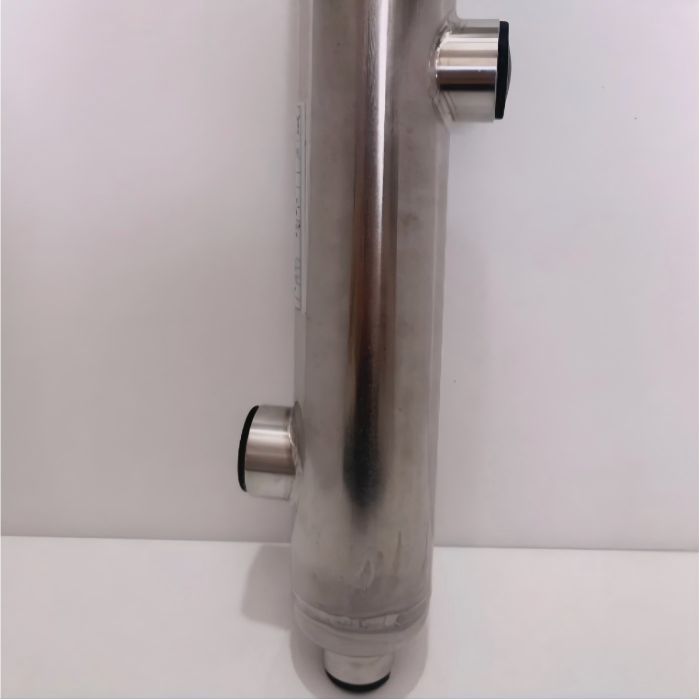
Applications and Market Demand:
Die Nachfrage nach einer Titan-Wärmetauscher-Pool-Lösung erstreckt sich über mehrere Märkte. Private Poolbesitzer, die langfristige Zuverlässigkeit suchen, wählen Titan, um wiederholte Wärmetauscher-Austausche zu vermeiden. Gewerbliche Pools, darunter Hotels, Fitnesscenter und kommunale Einrichtungen, spezifizieren Titan für reduzierte Wartungskosten.
Salzwasserpools sind besonders anspruchsvoll. Eine Titan-Wärmetauscher-Pool-Komponente ist für Salzelektrolyse-Systeme praktisch erforderlich, da Kupfer und Kupfernickel schnell versagen. Spa- und Whirlpool-Hersteller verwenden Titan-Wärmetauscher ebenfalls aufgrund ihrer kompakten Größe und Korrosionsbeständigkeit.
Fazit:
Eine Titan-Wärmetauscher-Pool-Einheit stellt die ultimative Lösung für die Poolbeheizung dar. Bei korrekter Schweißung durch erfahrene Fachleute bietet sie unübertroffene Korrosionsbeständigkeit, effiziente Wärmeübertragung und eine Lebensdauer, die in Jahrzehnten gemessen wird. Für Poolbesitzer und gewerbliche Betreiber, die Zuverlässigkeit fordern, ist Titan die klare Wahl.
Häufig gestellte Fragen zum Titan-Wärmetauscher-Pool:
F1: Warum ist Titan besser als Kupfer für einen Pool-Wärmetauscher?
A: Titan korrodiert niemals durch Chlor, Brom oder Salzwasser. Kupfer-Wärmetauscher versagen typischerweise innerhalb von 3 bis 5 Jahren, während eine Titan-Wärmetauscher-Pool-Einheit 20 Jahre oder länger hält.
F2: Kann eine Titan-Wärmetauscher-Pool-Einheit in Salzwasserpools verwendet werden?
A: Ja, Titan ist die ideale Wahl für Salzwasserpools. Es ist zu 100 Prozent immun gegen Chloridkorrosion, im Gegensatz zu Kupfer oder Edelstahl, die schnell versagen.
F3: Wie lange hält eine Titan-Wärmetauscher-Pool-Komponente?
A: Eine ordnungsgemäß geschweißte Titan-Wärmetauscher-Pool-Einheit hält 20 bis 30 Jahre und überdauert oft den Pool selbst. Für den Korrosionsschutz ist keine Wartung erforderlich.
F4: Ist ein Titan-Wärmetauscher-Pool teurer als Kupfer?
A: Ja, die Anschaffungskosten sind höher, aber der langfristige Wert ist besser. Sie werden einen Kupfer-Wärmetauscher während der Lebensdauer einer Titan-Einheit mehrfach ersetzen müssen.
F5: Kann eine beschädigte Titan-Wärmetauscher-Pool-Einheit repariert werden?
A: Ja, aber nur von einem Schweißer mit Erfahrung im Titan-Rohr-zu-Rohrboden-Schweißen. Allgemeine Schweißwerkstätten können keine Titan-Wärmetauscher-Reparaturen durchführen.