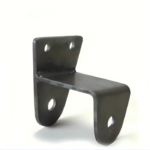
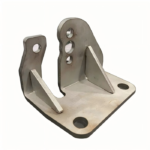
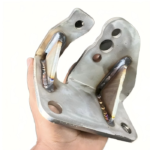
Saldatura d'Angolo Superiore con Staffa a L in Acciaio per Scaffalature e Racking
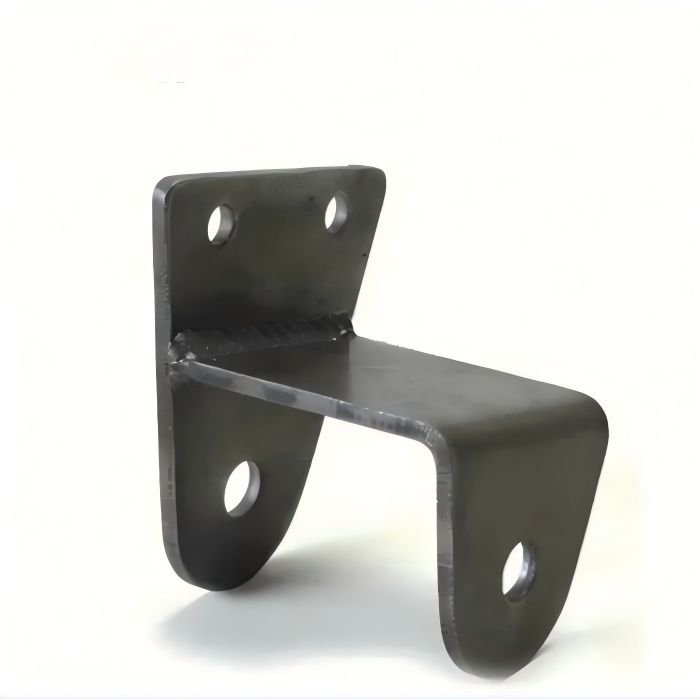
Staffa ad L in acciaio 4 pollici x 4 pollici presenta saldatura d'angolo per carichi pesanti per un supporto forte e affidabile in applicazioni di scaffalature, rack e strutturali.
Request a Quote
Enter the quantity you need and add to your quote list for pricing inquiries.
Product Details
Cos'è la saldatura di staffe angolari in acciaio?
Una staffa angolare in acciaio è un angolare strutturale con due gambe perpendicolari, tipicamente utilizzato per supportare scaffali, montare attrezzature o rinforzare telai. La saldatura di staffe a L in acciaio è il processo di unione di due pezzi di acciaio inossidabile con un angolo di 90 gradi per formare questa forma, o la saldatura di un rinforzo a gusset all'angolo di una staffa piegata. L'acciaio inossidabile contiene almeno il 10,5 percento di cromo, che forma uno strato di ossido passivo sulla superficie.
Our welding technique uses shielding gas—typically argon or a helium argon mix—to protect the molten weld pool from oxygen. This allows the chromium to re form its protective layer as the weld cools. A properly welded corner bracket will resist rust at the weld line as effectively as the base metal. For this specific product, we refer to it as L bracket steel throughout our quality documentation. We also control heat input carefully because too much heat causes chromium carbide precipitation, a condition known as weld decay. By using low heat input and proper technique, we prevent this problem on every L bracket steel project.
.
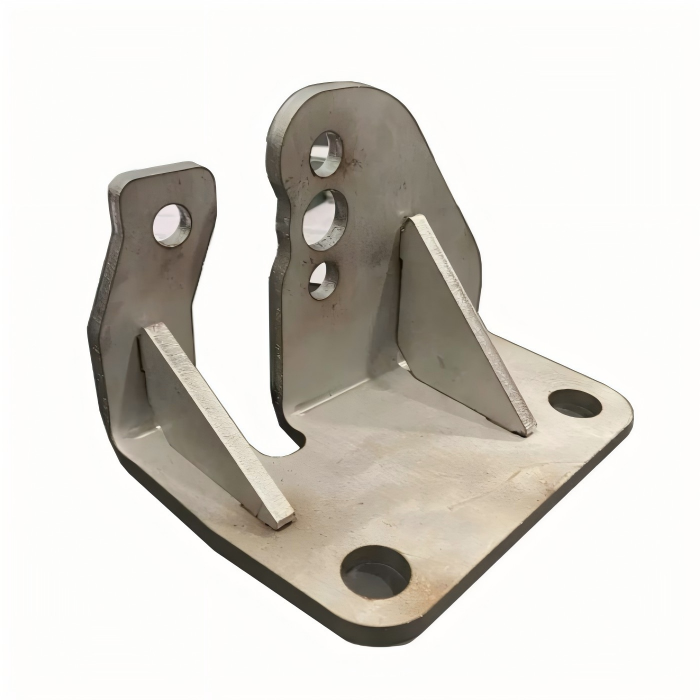
Corner Joint Configurations for Steel Brackets:
We offer three methods of welding the corner of a steel bracket, each suited for different load requirements.
.
External Fillet Weld – For light to medium duty:
Two flat legs are butted together at 90 degrees. A fillet weld is applied to the outside corner. This configuration is common for shelving and light equipment mounting. Fastest and most economical method for producing L bracket steel components.
.
Full Penetration Corner Weld – For heavy duty applications:
Both legs are beveled at 45 degrees then welded from the outside only but with parameters that achieve root fusion. This design provides much higher strength than a standard fillet. Used for structural support and machinery mounts where L bracket steel must handle high loads.
.
Double Sided Weld with Gusset – For extreme loads:
After the corner is welded, a triangular gusset plate is added and welded on both edges. This construction distributes stress over a larger area. Recommended for loads over 500 pounds or high vibration environments where L bracket steel undergoes constant cycling.
2. For each L bracket steel order, we document the joint configuration so you can reorder identical parts.
3. Material Selection for Different Environments:
4. Not all stainless steel performs equally in every application. We stock three alloys for producing L bracket steel components.
5. The workhorse alloy for most industrial and commercial applications. Good corrosion resistance and weldability. Our standard material for indoor use and general fabrication uses this grade when customers order L bracket steel for normal environments. Handles temperatures from cryogenic to 1200°F.
6. For marine environments, chemical plants, or outdoor installations near salt water. Molybdenum addition improves pitting resistance. A 316 L bracket steel costs more but lasts indefinitely in coastal or chemical exposure.
7. 409 Stainless Steel:
8. Cost effective alternative for mild environments. Less corrosion resistance than 304 but adequate for dry indoor applications. Our economy L bracket steel for non critical uses this material.
9. We do not recommend 400 series martensitic stainless for any bracket steel application. These alloys are brittle and crack under impact loading.
10. Edge Preparation and Cutting Methods:
11. The quality of any L bracket steel component starts with accurate cutting. We offer three cutting methods.
12. CNC Laser Cutting – For complex shapes:
13. Laser cutting produces a clean edge with minimal heat affected zone. Ideal for brackets with holes, slots, or curved profiles. Tolerances hold to plus or minus 0.005 inch for every L bracket steel we produce.
14. Precision Shearing – For straight cuts on thin material:.
For each L bracket steel order, we document the joint configuration so you can reorder identical parts.
Material Selection for Different Environments:
Not all stainless steel performs equally in every application. We stock three alloys for producing L bracket steel components.
Acciaio inossidabile 304:
The workhorse alloy for most industrial and commercial applications. Good corrosion resistance and weldability. Our standard material for indoor use and general fabrication uses this grade when customers order L bracket steel for normal environments. Handles temperatures from cryogenic to 1200°F.
Acciaio inossidabile 316:
For marine environments, chemical plants, or outdoor installations near salt water. Molybdenum addition improves pitting resistance. A 316 L bracket steel costs more but lasts indefinitely in coastal or chemical exposure.
409 Stainless Steel:
Cost effective alternative for mild environments. Less corrosion resistance than 304 but adequate for dry indoor applications. Our economy L bracket steel for non critical uses this material.
We do not recommend 400 series martensitic stainless for any bracket steel application. These alloys are brittle and crack under impact loading.
Edge Preparation and Cutting Methods:
The quality of any L bracket steel component starts with accurate cutting. We offer three cutting methods.
CNC Laser Cutting – For complex shapes:
Laser cutting produces a clean edge with minimal heat affected zone. Ideal for brackets with holes, slots, or curved profiles. Tolerances hold to plus or minus 0.005 inch for every L bracket steel we produce.
Precision Shearing – For straight cuts on thin material:
Shearing is fastest for simple rectangular legs. We deburr all cut edges before welding. Suitable for material up to 1/4 inch thick when making L bracket steel for light duty applications.
2. Water Jet Cutting – For thick plate or heat sensitive alloys:
3. Water jet creates a cold cut edge with no thermal distortion. Used for material from 1/2 to 1 inch thick. Slower but preserves material properties for L bracket steel requiring maximum strength.
4. For all L bracket steel projects, we inspect cut edges for squareness. Any leg with more than 0.010 inch deviation over 6 inches is rejected before welding begins.
5. Welding Processes for Different Leg Thicknesses:
6. We select the optimal welding process based on your leg thickness and production volume for each L bracket steel order.
7. GTAW for 1.5mm to 4mm thick legs:
8. Manual TIG gives fine control over the weld puddle. For thin material, we use low amperage to prevent burn through. Amperage ranges from 70 to 120 amps with 1/16 inch 308L filler. Produces the cleanest weld appearance for visible L bracket steel installations.
9. Pulsed MIG for 3mm to 8mm thick legs:
10. Pulsed spray transfer reduces spatter and allows high deposition rates. Our pulsed MIG runs at 180 to 230 amps with 0.045 inch 309L wire. Most cost effective for L bracket steel orders over 50 pieces.
11. For customers needing 200 or more identical units, robotic welding ensures each L bracket steel matches the last. We program weld paths directly from CAD files. Cycle time is typically 30 to 60 seconds per bracket.
12. Multi pass Welding for legs over 10mm thick:
13. Thick L bracket steel requires multiple weld passes to achieve full strength. Root pass, fill passes, and cap pass are each controlled for interpass temperature.
14. Our clients use our welding service for many purposes.
15. Equipment Mounting:
16. Shelving and Racking:.
Water Jet Cutting – For thick plate or heat sensitive alloys:
Water jet creates a cold cut edge with no thermal distortion. Used for material from 1/2 to 1 inch thick. Slower but preserves material properties for L bracket steel requiring maximum strength.
For all L bracket steel projects, we inspect cut edges for squareness. Any leg with more than 0.010 inch deviation over 6 inches is rejected before welding begins.
Welding Processes for Different Leg Thicknesses:
We select the optimal welding process based on your leg thickness and production volume for each L bracket steel order.
GTAW for 1.5mm to 4mm thick legs:
Manual TIG gives fine control over the weld puddle. For thin material, we use low amperage to prevent burn through. Amperage ranges from 70 to 120 amps with 1/16 inch 308L filler. Produces the cleanest weld appearance for visible L bracket steel installations.
Pulsed MIG for 3mm to 8mm thick legs:
Pulsed spray transfer reduces spatter and allows high deposition rates. Our pulsed MIG runs at 180 to 230 amps with 0.045 inch 309L wire. Most cost effective for L bracket steel orders over 50 pieces.
MIG robotico per produzione ad alto volume:
For customers needing 200 or more identical units, robotic welding ensures each L bracket steel matches the last. We program weld paths directly from CAD files. Cycle time is typically 30 to 60 seconds per bracket.
Multi pass Welding for legs over 10mm thick:
Thick L bracket steel requires multiple weld passes to achieve full strength. Root pass, fill passes, and cap pass are each controlled for interpass temperature.
Applicazioni e settori comuni:
Our clients use our welding service for many purposes.
Equipment Mounting:
Motors, pumps, compressors, and conveyors need sturdy support. Our brackets hold heavy machinery securely to floors or frames. Each L bracket steel used for equipment mounting includes pre drilled holes for bolts.
2. Shelving and Racking:
3. Industrial storage systems rely on thousands of corner brackets. We produce shelf brackets in any size from 4 to 24 inches. Welded construction prevents sagging when L bracket steel is loaded with heavy inventory.
4. Building frames, mezzanines, and platforms use corner brackets for connections between beams and columns. Full penetration welds ensure structural integrity of every L bracket steel in these applications.
5. Automotive and Truck:
6. Battery trays, tool boxes, and accessory mounts. Our brackets withstand road vibration and temperature extremes. 304 stainless is used for L bracket steel in vehicle applications.
7. Marine and Boat:
8. Seat mounts, equipment bases, rail supports. A 316 stainless corner bracket survives salt spray without rusting. Each L bracket steel for marine use receives electropolished finish.
9. Food Processing:
10. Equipment stands, washdown stations, conveyor supports. Our sanitary brackets have no crevices to trap bacteria. Welds are ground smooth and passivated on every L bracket steel for food plants.
11. Solar Panel Mounting:
12. Rooftop solar racks use corner brackets to attach frames to structures. Weather resistance is essential for L bracket steel exposed to sun and rain.
13. For each application, we adjust material grade, leg length, and weld size. A heavy duty L bracket steel for industrial use uses 1/4 inch thick legs with full penetration corner welds.
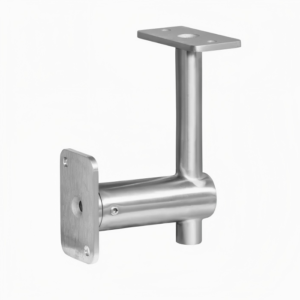
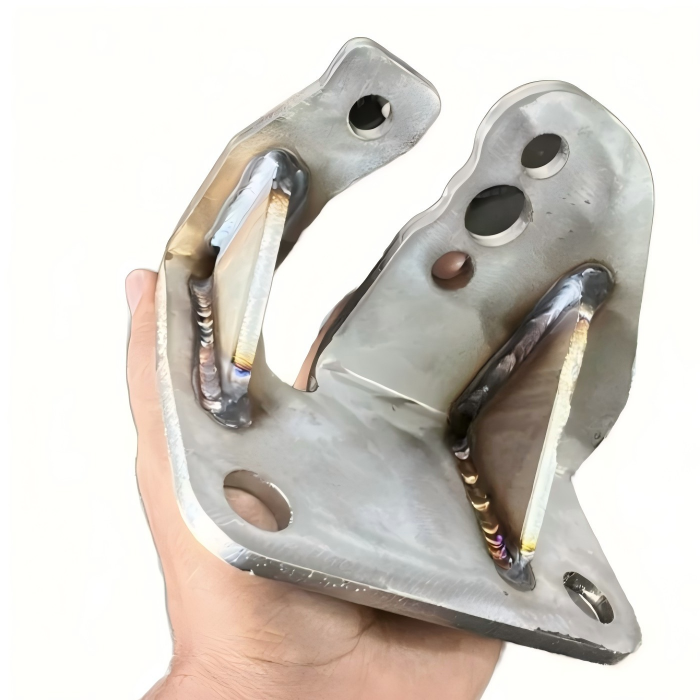
14. Welded steel angle bracket for industrial shelving and storage racks
15. L Bracket Steel 4 inch x 4 inch with heavy duty fillet welded construction
16. Steel L Bracket for shelving and racking support applications.
Shelving and Racking:
Industrial storage systems rely on thousands of corner brackets. We produce shelf brackets in any size from 4 to 24 inches. Welded construction prevents sagging when L bracket steel is loaded with heavy inventory.
.
Fabbricazione di acciaio strutturale:
Building frames, mezzanines, and platforms use corner brackets for connections between beams and columns. Full penetration welds ensure structural integrity of every L bracket steel in these applications.
.
Automotive and Truck:
Battery trays, tool boxes, and accessory mounts. Our brackets withstand road vibration and temperature extremes. 304 stainless is used for L bracket steel in vehicle applications.
.
Marine and Boat:
Seat mounts, equipment bases, rail supports. A 316 stainless corner bracket survives salt spray without rusting. Each L bracket steel for marine use receives electropolished finish.
.
Food Processing:
Equipment stands, washdown stations, conveyor supports. Our sanitary brackets have no crevices to trap bacteria. Welds are ground smooth and passivated on every L bracket steel for food plants.
.
Solar Panel Mounting:
Rooftop solar racks use corner brackets to attach frames to structures. Weather resistance is essential for L bracket steel exposed to sun and rain.
.
For each application, we adjust material grade, leg length, and weld size. A heavy duty L bracket steel for industrial use uses 1/4 inch thick legs with full penetration corner welds.
.